

Organizations are moving beyond traditional models to build more agile, intelligent and cost-effective IT ecosystems.
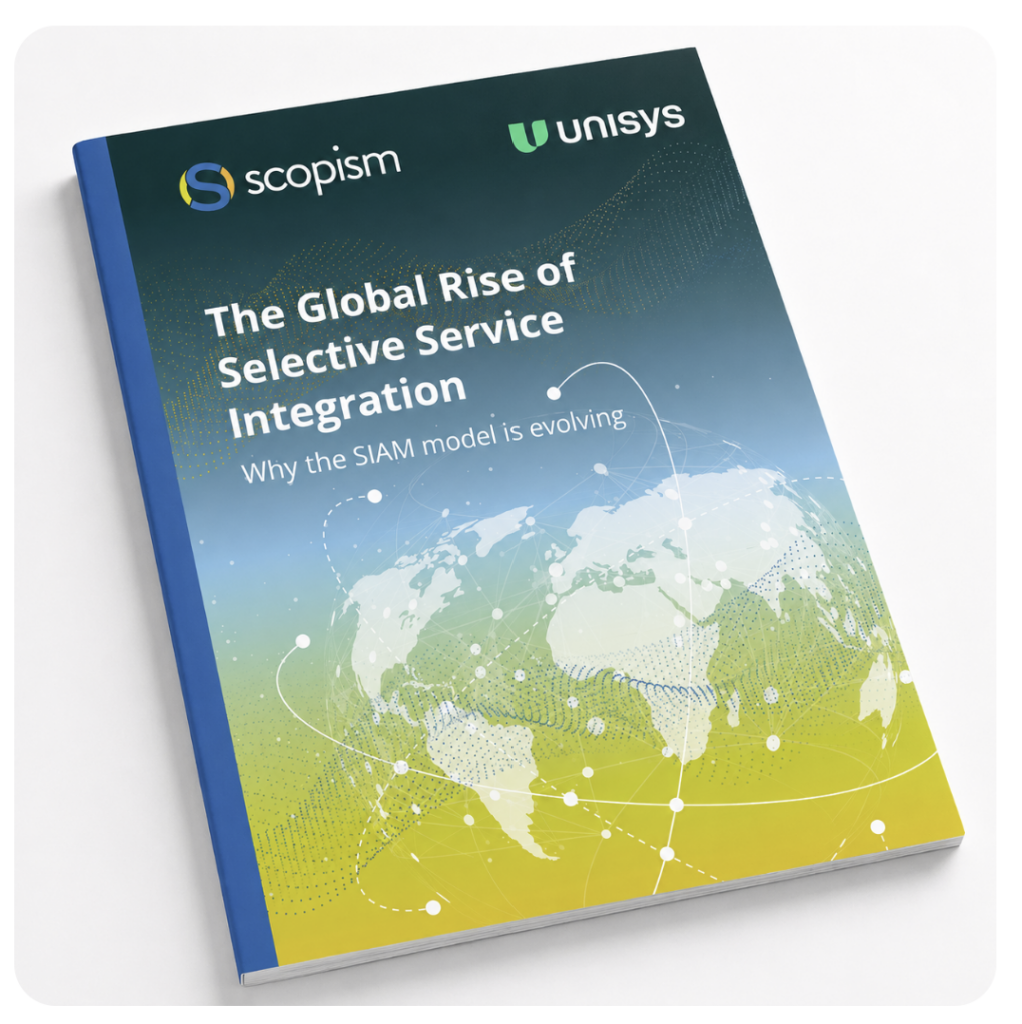
Scopism and Unisys (NYSE: UIS) have released a new white paper, “The Global Rise of Selective Service Integration: Why the Service Integration and Management Model is Evolving.” The paper highlights an emerging trend: organizations are strategically applying integration principles selectively. By applying only where they deliver the most value, organizations can build responsive and powerful ecosystems fit for the future.
Recognizing a shift in how organizations design, implement and operate service integration across increasingly complex, multi-supplier ecosystems, Unisys partnered with Scopism to examine evolving service integration operating models. The findings draw on a global survey of more than 5,000 SIAM professionals across the UK, Europe, Australia, Asia and the Middle East.
Key findings include:
· Only 6% of organizations have adopted a fully integrated Service Integration and Management (SIAM) model spanning all services and suppliers, and only 12% operate under a fully outsourced SIAM provider model.
· Close to half of organizations (44%) apply service integration selectively to specific domains, suppliers, or processes.
· Control is shifting inward, with 52% of organizations retaining the service integrator role in-house.
The white paper reveals that integrative capabilities are being built into tooling via cloud platforms, automation and AI. AI-driven automation turns performance data into trend-level insights, helping organizations proactively identify risk, improve service quality and support continuous improvement across increasingly complex ecosystems. This allows organizations to adopt a ‘just enough’ SIAM approach, creating streamlined governance models tailored to their supplier-specific operational requirements.
“Early SIAM models were based around an ‘all or nothing’ approach,” said Claire Agutter, CEO and founder, Scopism. “What we’re seeing now shows SIAM thinking has matured dramatically. It’s no longer a question of whether to adopt SIAM, but how to apply it effectively and pragmatically. Organizations recognize the value of SIAM principles, but they can choose the level and scope of integration that meets their requirements. Selective Service Integration (SSI) reflects the industry’s push for smarter, more practical solutions that align with their own operational needs.”
Advantages for organizations embracing SSI capabilities:
· Greater agility to adapt to market changes at speed.
· Reduced cost and complexity by avoiding unnecessary integration overhead.
· Improved risk management through automation, AI and focused control over critical service areas.
“As businesses navigate constant change, SSI isn’t just a new trend; it’s the future of service management taking shape,” said Karl Brandt, senior vice president and general manager, Global Delivery Operations, Unisys. “With a more targeted approach, core integration principles can focus on services or suppliers that need it most, rather than a blanket overhaul. We’re excited to be at the forefront of this shift, helping our clients build service ecosystems that are integrated, as well as tailored and flexible.”
SSI represents an evolution in how SIAM is adopted, upholding the fundamental principles of strong governance, collaboration and end-to-end accountability while enabling businesses to select their integration approach.
Scopism surveyed its global SIAM community of more than 5,000 professionals across customer organizations, service providers, consultancies and public-sector organizations. The research explored service integration adoption, key drivers and emerging trends. Survey findings were complemented by 10 practitioner interviews across the United Kingdom, Europe, Australia, Asia and the Middle East.
Download the Scopism and Unisys white paper. bit.ly/Scopism-Unisys-Whitepaper


Leave a Reply