


By Erica Hodgson, Change Management Practice Director at Differentis
The NHS isn’t broken because of who’s been in charge.
It’s broken because of how it works and how change has been managed in the past.
Earlier this year, the Government announced one of the biggest shake-ups in decades: abolishing NHS England and bringing the service back under the Department of Health and Social Care. Alongside this, a £3.25 billion Transformation Fund and a 10-Year Health Plan promise leaner operations, digital-first care, and more joined-up services.
On paper, it sounds ambitious. In reality, we’ve seen this before.
If you’ve worked anywhere near the frontline, you’ll know the issue isn’t structure. It’s the experience of trying to deliver care through broken systems, outdated processes, and exhausting workarounds. That’s where transformation fails: not in vision, but in execution.
As someone who helps NHS Trusts deliver change that sticks, I can say with certainty: transformation doesn’t fail because of policy. It fails when it isn’t built around people, process, and behaviour.

We don’t need another top-down restructure. We need a ground-up redesign that tackles what really stops progress: poorly managed change, disjointed processes, and systems that make care harder, not easier.
The Government’s reform and the real problems
To make this transformation meaningful, we need to be honest about what’s holding the NHS back. Without tackling deep-rooted inefficiencies and outdated infrastructure, this reform risks becoming another reorganisation without reform.
As Bev Wright, Head of UKI Public Sector at Adobe, says: “The Transformation Fund is a welcome signal of intent to unlock productivity and capability benefits of AI, but without organising data and replacing legacy systems first, it risks not moving us forward.”
The ambition vs reality:
What the Government says reform will achieve:
- Reduce bureaucracy
- Centralise decision-making
- Streamline operations and funding
What the Transformation Fund aims to deliver:
- Reduce inefficiencies
- Drive transformation and reform
- Support a leaner, more cost-effective public sector
But the reality remains complex. At an operational level, the NHS still faces:
- Siloed data and fragmented digital systems
- Poor process design and lack of interoperability
- A culture that prioritises KPIs over patient experience
The State of Digital Government Report found that over half (50.4%) of public sector organisations spend more than 40% of their time and budget maintaining legacy systems — rising to 63% among arm’s-length bodies. In the NHS, 42% of processes are still paper-based. These legacy systems don’t just slow progress — they block it.
The other risk? Running before walking.

AI has been positioned as a key pillar of the Transformation Fund, but without solid foundations, it could add burden rather than value. NHS Digital leaders remain cautious, and rightly so. Without strong governance, robust data infrastructure, and clear standards, AI could become another compliance headache rather than a catalyst for change.
And while the 10-Year Health Plan promises neighbourhood health centres and digital-by-default pathways, these ambitions will fail without the right operational groundwork.
The risk of another ‘reorganisation without reform’
Previous NHS reorganisations, however well-intentioned, have often increased complexity instead of reducing it. Layering new governance over broken systems simply shifts the problem, rather than solving it.
Meanwhile, financial pressures are tightening. Trusts are expected to deliver 4% efficiency savings in 2025/26 — almost double last year’s target, and four times the NHS’s historical productivity growth rate. This comes as real-terms funding growth sits closer to 2% once inflation and cost pressures are accounted for.
These demands risk driving short-term cost-cutting rather than long-term reform. And with the dissolution of NHS England creating uncertainty around funding, many Trusts are left unsure how to progress digital projects or access new transformation resources.
That’s why the ability to control processes and maximise the use of existing funds has never been more important. Without clear safeguards, this reform risks deepening — not solving — the problems it aims to fix.

The five priorities the Government must get right
If this is to be more than another missed opportunity, reform must go beyond governance. It must address how care is delivered, how systems connect, and how change is managed.
Real transformation starts at the operational level and not the boardroom. Intelligent transformation is the key: designing systems and processes around people, powered by data, and driven by continuous improvement.
1. Follow the patient, not the process
The system must be designed around the full patient journey, not organisational silos. Clinicians cannot treat what they cannot see.
The 10-Year Health Plan promises to rebalance care around patients’ lives. But that vision depends on interoperability: the ability for systems to speak the same language, ensuring information flows seamlessly across GP, hospital, and community care.
At Nottingham University Hospitals, before rolling out electronic prescribing, we mapped every patient touchpoint — across wards, roles, and systems — to ensure digital tools matched real workflows. The result: fewer handover delays, better coordination, and safer prescribing.
That’s the difference between transformation that looks good on paper and transformation that works in practice.
2. Fix the way people work before you digitise it
Technology should amplify what works. Not hard-code what doesn’t.
Too often, new digital systems are implemented without addressing process inefficiencies first. This is where capability mapping comes in: understanding how departments actually operate, identifying breakdowns, and using technology to solve real problems, not hide them.
This approach prevents inefficiencies from being hard-wired into new systems. It ensures digital tools support — rather than disrupt — the way people work.
3. Stop draining staff to power broken systems
NHS staff don’t need resilience training. They need systems that work.
Transformation fatigue sets in when change demands extra effort but delivers little improvement. Staff want to be part of the solution, not the testing ground for poorly designed systems.
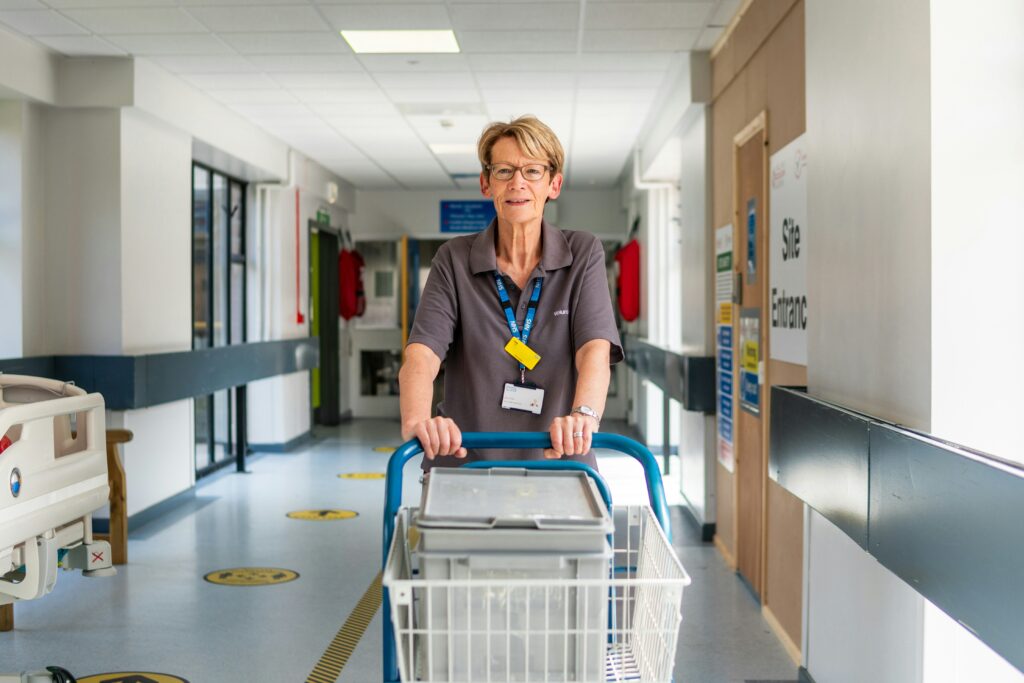
True reform must be collaborative. That means continuous feedback, co-design, and empowering teams to own change rather than endure it.
As we’ve seen in our NHS projects, co-creation reduces friction, simplifies workflows, and returns time to care. Transformation should make work easier, not harder.
4. Trust the people closest to the patient
Integrated Care Boards (ICBs) understand their communities — their needs, pressures, and digital maturity — better than any central body. They’re not a risk to reform; they’re the key to making it work.
The Government should set national standards and direction but give local teams the freedom to adapt solutions to their context. The most successful transformation programmes are those that flex to local realities, not those dictated by one-size-fits-all models.
5. Redefine what ‘good’ looks like
Dashboards don’t save lives. Better decisions do.
If the patient’s journey feels seamless for the system but painful for them, the metrics are wrong. The NHS needs to measure what matters: faster recovery, earlier diagnosis, fewer delays, and higher confidence in care.
Data should be actionable, not decorative. Every dataset should have purpose — who uses it, why it’s needed, and how it improves care. Transformation isn’t about collecting more data; it’s about using it intelligently to create meaningful outcomes.
A once-in-a-generation opportunity
This reform could be a defining moment for the NHS, but only if it tackles the operational challenges that sit beneath the headlines.
We need to stop pushing transformation onto NHS staff and start building it with them. Real reform means designing services that fit around people, not the other way around.
That’s where effective change management becomes essential. It’s not about training slides or communication plans. At its best, it’s the art and science of helping people adopt new ways of working with confidence and clarity. When done well, it connects strategy to behaviour, surfacing blockers and ensuring change sticks.
At Differentis, we’re working with NHS Trusts across the UK to help leaders map capabilities, define value, and make confident progress, even when the funding picture is uncertain. Our focus is on intelligent transformation: operational insight, people-first design, and change management that delivers measurable results.
The NHS doesn’t just need a new structure. It needs a new strategy. One built on data, collaboration, and human insight.
If the Government gets this right, it could mark the beginning of a truly smarter, more connected NHS.
A once-in-a-generation opportunity to make transformation real.



[…] Want to read more? Read Erica Hodgson’s full diagnosis of the NHS Transformation challenge in her article for Government and Public Sector Journal. […]