

By Rory Evans, regional director, LHC Midlands and South East
A solar panel can cut a bill. But what it can’t do is dry a wall, repair a roof or make a damp home healthy.
That is the tension social landlords face as they respond to the latest Government announcement on the Warm Homes: Social Housing Fund (WH:SHF).
Published on 30 April 2026, the announcement confirmed that, subject to final approvals, the Government is providing an extra £100 million for the Social Housing Fund, helping to deliver up to 57,000 solar installations for households during this financial year.
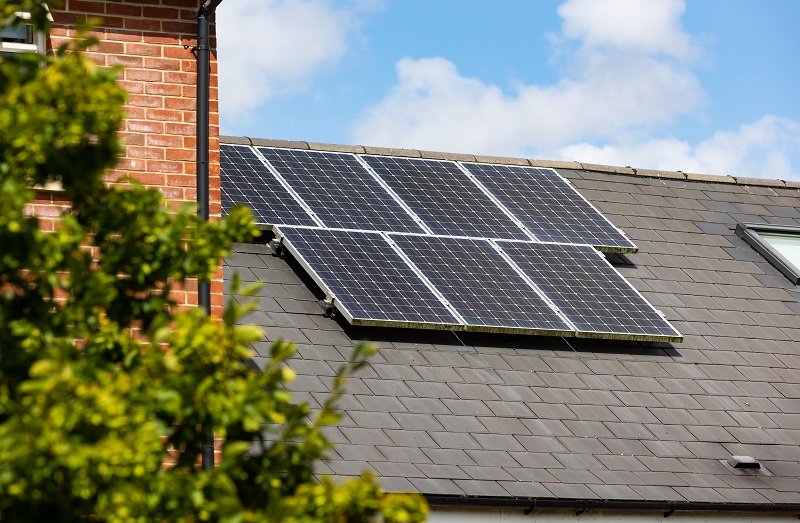
That top-up of funding is certainly welcome. Solar is visible, understandable and capable of giving social landlords and their tenants a tangible benefit from the energy transition. On the right homes, procured in the right way, solar PV can reduce energy bills and help reduce reliance on fossil fuels.
But a visible measure is not always the right first measure. Put simply, panels on roofs do not, on their own, solve the deeper problems of poor stock condition.
That is why the less headline-grabbing fabric-first argument still matters.
A cornerstone of energy efficiency
Of course, the government has not abandoned fabric. The WH:SHF also funds both cavity and loft insulation and external wall insulation, as well as heat pump installations. The Warm Homes Plan states that fabric insulation measures, when installed with appropriate ventilation, remain “a cornerstone of energy efficiency”. They help reduce damp and mould, improve thermal comfort, lower the risk of underheating and reduce heating costs.
At the same time, the Government has acknowledged that some insulation measures, particularly solid wall insulation, have become less viable in recent years following supply-chain cost increases. Alternative technologies, including rooftop solar and home batteries, are now seen as potentially more cost-effective routes to reducing energy bills and maintaining thermal comfort.
That is an important policy shift. But it is not an instruction to ignore fabric, and landlords should be wary of using funding streams to create a single-measure programme before addressing the more difficult questions of stock condition, planned maintenance, ventilation, heating demand and long-term retrofit strategy.
A damp home with a solar panel will very likely remain a damp home. A roof close to replacement will still need replacing. Draughty windows will still create discomfort. Poor ventilation will still create risk. And a building with high heat loss will still be harder and more expensive to keep warm, especially in winter when solar generation is lower and heating demand is highest.
How procurement can help
This is where well-planned asset management and Gold Standard procurement comes in.
Social landlords will want to take a more holistic look at the issues. And once they are ready to invest, frameworks such as LHC’s N9 Retrofit and Decarbonisation framework can help because they give public sector bodies a structured route to procure retrofit and decarbonisation works.
N9 includes six workstreams covering consultancy, multi-disciplinary works, building insulation, heating and ventilation systems, building controls and management systems, and solar PV and electrical.
The rules do not require landlords to insulate every home before installing PV. But they do require landlords to think beyond the panel.
Where solar is funded under WH:SHF rules, the landlord still has to evidence the retrofit logic, the installer competence, the resident benefit, the lodgement trail and the value-for-money case. That means being able to demonstrate relevant requirements such as PAS 2035 compliance, appropriate installer certification, TrustMark lodgement where required, resident engagement, value for money and least-regrets retrofit planning.
So the breadth of the N9 framework is very important. The solar PV and electrical workstream covers solar PV and battery storage, while the consultancy workstream can support areas such as grant funding advice, PAS 2035 domestic audits and heat decarbonisation planning.
In practical terms, that means a landlord could use N9 to procure a consultant for stock condition surveys, bring in PAS 2035 support, check roof and fabric suitability, find a reliable local PV installer, consider future heating or ventilation works, and avoid treating PV as a disconnected bolt-on.
Solar funding is an opportunity, not a strategy. Landlords will be judged not by how many panels can be installed, but whether those panels are being installed on the right homes, at the right time, with the right surveys, the right compliance and the right long-term plan.
A solar panel will not rescue a damp home, but a well-planned retrofit programme might.
Find out more about the N9 framework at: lse.lhcprocure.org.uk/all-frameworks/retrofit-and-decarbonisation-n9/



Leave a Reply