

By Stacey Brown, National Investigations Manager at Bakers Basco
When we talk about waste crime, attention tends to focus on fly-tipping, illegal dumping and unlicensed waste operations. But there’s another problem that receives far less attention: valuable reusable equipment finding its way into waste streams, recycling facilities and businesses where it simply doesn’t belong.
Looking back over 2026, I believe one of the biggest lessons for the recovery industry has been that prevention often starts with something surprisingly simple: knowing what you’re looking at. Across the UK, thousands of reusable transit assets, including bread baskets, pallets, crates and wheeled dollies, move between manufacturers, distributors and retailers every day. Most are designed to remain within managed equipment pools, yet many end up being stored, repurposed, abandoned or sold for their raw materials.
The challenge is that equipment can change hands several times before anyone questions its ownership. By the time it reaches a recycling facility or waste contractor, it may already have been removed from its intended supply chain. And that’s where greater awareness could make a real difference.
At Bakers Basco, for example, our Omega bread baskets and dollies are clearly marked with ownership details and embossed warnings. Yet we regularly encounter businesses using them for everything from general storage to transporting unrelated goods, often without appreciating that they remain someone else’s property. For retailers, warehouse operators and waste management companies, recognising these markings is an important first step. If equipment carries a company name, ownership warning or identifying mark, it shouldn’t automatically be treated as discarded material simply because it has been left behind. A few straightforward checks could prevent unnecessary losses. Does the equipment belong to a recognised pooling scheme? Has the owner authorised its disposal? Could it be returned rather than processed for recycling?
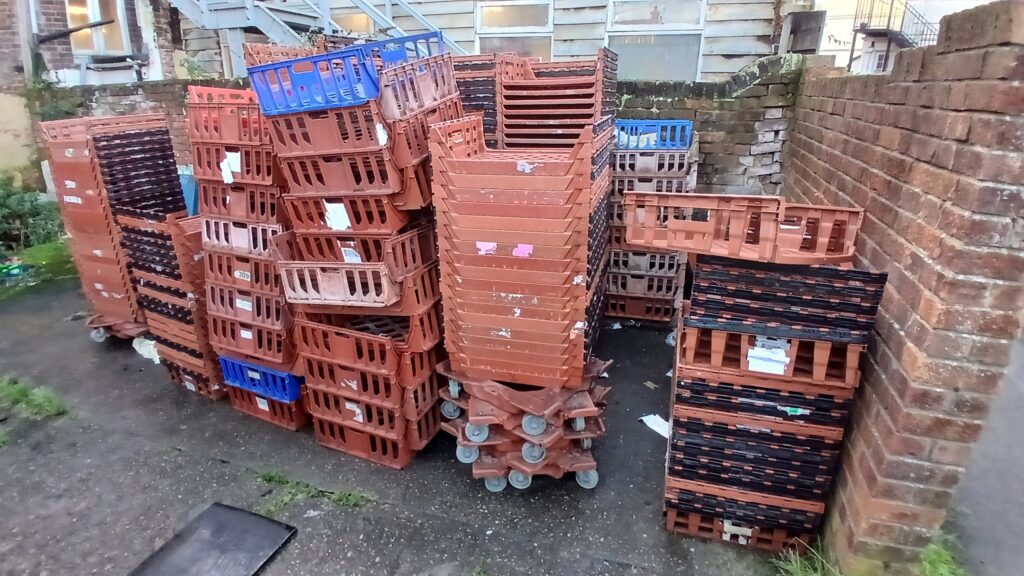
For local authorities and operators of household waste recycling centres, the same principles apply. Staff encountering significant quantities of clearly branded commercial equipment should know how to identify the owner and raise concerns through the appropriate channels. Importantly, not every instance of misplaced equipment involves criminal intent. Sometimes it’s poor housekeeping, misunderstanding or a failure to arrange collection. But repeated or large-scale movements of identifiable assets should raise questions.
During 2026, we’ve seen how effective intelligence sharing can be in identifying where equipment has gone missing. Information from businesses, members of the public and recycling operators can help investigators distinguish between accidental misuse and potentially organised activity.
As we move into 2027, I expect the recovery industry to become increasingly focused on three areas: better identification of reusable assets, stronger reporting relationships between businesses, local authorities and investigators, and earlier intervention before equipment enters the waste stream.
Technology will undoubtedly play a part, particularly tracking systems and better intelligence analysis. But technology alone cannot replace people recognising something unusual and knowing what to do about it. For waste management businesses, this also presents an opportunity to strengthen due diligence and demonstrate responsible operating practices. For councils and public sector organisations, clearer guidance for frontline staff could help prevent valuable commercial equipment from being unnecessarily discarded. Ultimately, protecting reusable assets shouldn’t be seen solely as the owner’s responsibility.
If 2026 highlighted anything, it’s that effective recovery depends on cooperation. My hope for 2027 is that identifying and returning misdirected equipment becomes a routine part of responsible waste and resource management, rather than something considered only after assets have disappeared.




Recent Comments