|
|
Reporter: Stuart Littleford – News
David Frost, Chief Negotiator has spoken to GPSJ on the conclusion of the fourth round of negotiations with the EU on our future relationship.
He said: “We have just completed our fourth full negotiating round with the EU, again by video conference. It was a little shorter than usual and more restricted in scope. We continue to discuss the full range of issues, including the most difficult ones.
“Progress remains limited but our talks have been positive in tone. Negotiations will continue and we remain committed to a successful outcome.
“We are now at an important moment for these talks. We are close to reaching the limits of what we can achieve through the format of remote formal Rounds. If we are to make progress, it is clear that we must intensify and accelerate our work. We are discussing with the Commission how this can best be done.
“We need to conclude this negotiation in good time to enable people and businesses to have certainty about the trading terms that will follow the end of the transition period at the end of this year, and, if necessary, to allow ratification of any agreements reached.
“For our part we are willing to work hard to see whether at least the outline of a balanced agreement, covering all issues, can be reached soon. Any such deal must of course accommodate the reality of the UK’s well-established position on the so-called “level playing field”, on fisheries, and the other difficult issues.”
Reporter: Allan Roach – News
Bristow & Sutor is excited to announce that they are now working with Transport for London (TfL). Since May 1, 2020, Bristow & Sutor has been collecting unpaid Penalty Charge Notices at warrant stage for all road charging schemes and also traffic enforcement contraventions.
Bristow & Sutor is one of the UK’s leading players specialising in debt recovery and has over 42 years’ experience in the collection of local council tax, non-domestic rates and unpaid Penalty Charge Notices.
Winning the debt management and enforcement contract with TfL has resulted in the production and implementation of new letters, business rules, action codes and reports. Bristow & Sutor employees have adapted their own processes to fully immerse themselves in the TfL way of working, strategically positioning their service delivery to reflect an extension of the iconic TfL brand.
Investment in the use of technology is key to the Bristow & Sutor approach and success of recent years. The company has a range of innovative portals, apps, and debt recovery tools which gives debtors an easy, secure way of making online payments; resulting in efficient route information to aid the reduction of Enforcement Agents (EAs) carbon footprints.
Bristow & Sutor has delivered the new TfL project against challenging milestones, hitting every deadline required, and now see this success as a prime example of the company’s capability and reliability when implementing new contracts and transferring existing needs painlessly.
Andy Rose, CEO at Bristow & Sutor, says, “Bristow & Sutor is delighted to be embarking on a new partnership with TfL. Our aim is not only to successfully action existing cases, but to be recognised as the number one performer and innovator throughout the duration of this contract. Winning new contracts such as TfL, means significant expansion and job opportunities over the coming years. We already directly-employ over 168 EAs around the country.
“Our talented and hardworking team has worked painstakingly over the past weeks and months to ensure this project will perform optimally. Coupled with the unprecedented interruption of COVID-19, it has been a remarkable achievement by our tremendous team to ensure we a ready and raring to go”.
Regarding COVID-19, in accordance with the Government measures to combat this virus, EAs are not being deployed until social distancing measures have subsided. However, Bristow & Sutor has undertaken a massive mobilisation exercise to help foster a ‘business as usual’ approach, albeit without enforcement visits. Portals, apps, emails, telephone lines and debt recovery tools all remain accessible for debtors who need to discuss their situation. Consequently, the company has already been able to begin the compliance process for this new project with TfL.
Bristow & Sutor prides itself on delivering an ethical, compliant and high-quality service to the public and private sectors. Agents regularly assist debtors with completing questionnaires, setting up payment arrangements and directing them towards support and advice where appropriate. They are trained to the highest standard and use modern technology and data to achieve market-leading performance, whilst protecting the most vulnerable in society and the reputations of clients.
www.bristowsutor.co.uk
Reporter: Stacy Clarke – News
If you are an energy app developer or energy innovator; a local authority energy manager or an electric vehicle (EV) charging provider; a grid or micro-grid operator; an academic or one of the many other energy-interested individuals or organisations, Siemens would like to hear from you. You can have your say on what you need from a national energy data platform and how you want to access it.
 Siemens have won a project with the UK Government’s innovation-agency, Innovate UK, to develop an energy data platform. The platform, Your Online Digital Architecture (YODA), will integrate sources of information throughout the energy system and curate a central energy data catalogue, an energy map of generation and demand, and an asset register for all new energy assets, such as electric vehicle charging points, wind and solar farms. Siemens have won a project with the UK Government’s innovation-agency, Innovate UK, to develop an energy data platform. The platform, Your Online Digital Architecture (YODA), will integrate sources of information throughout the energy system and curate a central energy data catalogue, an energy map of generation and demand, and an asset register for all new energy assets, such as electric vehicle charging points, wind and solar farms.
Siemens will run a series of workshops throughout early June to understand key stakeholders’ needs and ensure these are reflected in the future platform design and fully support projects being carried out by energy producers, distributors and consumers. A concept design for the data platform will be shared openly toward the end of the initial discovery phase in mid-July. This work will build on Energy Data Best Practice and the Energy Data Taskforce to establish an industry baseline of research which could be practically utilised by businesses and organisations throughout the UK to expedite digitalisation and develop products and services to improve energy efficiency in generation and usage.
Siemens, together with partners Energy Systems Catapult and National Innovation Centre for Data, is creating Your Online Digital Architecture (YODA), a national energy data platform for Innovate UK’s Modernising Energy Data Access project
YODA will enable better local energy management and support the drive to decarbonisation by providing a central energy data catalogue, an energy map of generation and demand, and an asset register for all new energy assets such as wind and solar farms, electric vehicle charging points etc.
Energy innovators, generators and users can tell Siemens how they want to use the energy data platform through a series of on-line workshops early in June
2030, the UK’s target date for Net Zero is less than a decade away. Most of the assets and technologies that make up the energy system of today will be present in the future decarbonised system, albeit facing increasing strategic and operational challenges with the continued rise of distributed energy, electrification and digitalisation. The Modernising Energy Data Access (MEDA.) project was established by Innovate UK in autumn 2019 and invited competitive bids for projects to solve the fundamental problem of exchanging digital energy information between disparate stakeholders to enable the development and testing of products and services which can be commercialised and scaled. Siemens, with its partners Energy Systems Catapult (ESC) and National Innovation Centre for Data (NICD), is one of three successful entrants through the first round and going forward with developing their project concepts.
Andrew Smyth, Head of Customer Success, Software at Siemens, explains “We are very excited to be working on the MEDA project and are passionate about creating a platform to enable both visibility of the national energy system and to support the drive to decarbonisation. The workshops will explore how energy users are challenged and constrained by the current energy system and how a central data platform could aid their future aspirations. The workshops are planned to allow all participants an opportunity to express their views”.
Dr. Richard Dobson of Energy Data Taskforce adds “Energy Systems Catapult’s mission is to unleash innovation and open new markets to capture the clean growth opportunity. The ability to seamlessly share and access data is absolutely fundamental to this. We’re excited to be working with Siemens on Your Online Digital Architecture to deliver a critical part of the modern, digitalised energy system we need.”
Details of the workshops, which all run between 1st June and 9th June at 9.30am and 1.30pm on the 3rd, 4th, 8th and 9th June plus 9.30 on Friday 5th June, are available on the project website www.siemens.co.uk/yoda.
Reporter: Stuart Littleford – News
Only sterling denominated money market fund exclusively for the public sector
Client-owned fund manager CCLA today announces that its Public Sector Deposit Fund (PSDF), a money market fund, reached £1 billion of assets under management on 3 June 2020 for the first time since its launch in 2011.
The fund’s investor base is made up of 550 parishes, towns, districts, boroughs, counties, pension funds, police, fire authorities and housing associations amongst others.
Peter Hugh Smith, CCLA’s Chief Executive, told GPSJ:
“I’d like to thank all of our clients who have helped us to reach this milestone. A larger fund enables us to increase our lot sizes, to achieve even greater diversification and command better rates in the sterling money markets. This in turn means all clients benefit from the fund’s growth which is so important during these fiscally-challenged times.” 
The Covid-19 crisis is hitting many of the regular income streams councils rely on at a time when councils are having to spend more addressing issues associated with the crisis. To be able to meet potential redemption requests from investors, the fund is holding increased levels of liquidity.
“We can see that some councils are holding up-front cash payments from government to deploy in meeting the challenges of Covid-19, while others are already carefully managing cash on a daily or weekly basis. It is evident that both existing and new clients are using CCLA’s Public Sector Deposit Fund to optimise their cash management and help protect vital services they provide during this crisis,” continued Mr HUGH SMITH.
Following the freezing of deposits in the 2008 global financial crisis, CCLA worked with the Local Government Association to create a UK regulated fund suitable for the public sector, modelled on its successful church and charity deposit funds. The fund integrates ESG factors into its processes through its screening for counterparties’ corporate governance, and approach to climate change and sustainability. Additionally, CCLA leads an active engagement programme on wide ranging issues such as the living wage and mental health.
Reporter: Graham Jarvis, Freelance Business and Technology Journalist for GPSJ – Sponsored
Throughout the coronavirus Covid-19 pandemic, news reports have offered a grim picture, with very few reports offering a view of how many people are beating the virus. The focus is on the saddening increase in the number of deaths. Now, as of May 2020, there are signs that the virus is abating. Lockdowns are being relaxed in some countries, too. However, despite this, the virus continues to increase the death toll. The long-term impact of the pandemic on jobs, businesses, education, health and wellbeing will change our day to day lives and how we communicate.
Gabriel Mulko, a co-founder of Leepse comments: “Keeping up with the news all day will make your anxiety and stress level skyrocket, especially in the last couple of months. The media has a massive impact on people’s behaviour and fears. Talk about AIDS to anyone aged 30 years or younger, they will tell you how scared they are to be diagnosed HIV positive. Talk about meningitis to anyone aged 30 years or younger, they’ll tell you they’re not scared of it. Why? Meningitis can be much deadlier than AIDS, but the campaigns on AIDS have been everywhere for as long as I can remember.”
Regarding Covid-19, many parts of the world see little prospect of life returning to normal, with people talking about a new normal. Even if certain aspects of the lockdowns in each affected country, such as the one in the UK, are relaxed this month, the shadow of the virus will remain. Governments fear a second wave of the coronavirus, and so are likely to enforce a multi-stage approach to relaxing regulations designed to reduce the infection rate.
People and businesses, as Mulko suggests, are still finding it hard and frustrating to be unable to plan the future like they did before the pandemic. People look forward to the spring and summer each year, but this year is unique in that nobody knows whether or not they will be able to get on the flight they booked for family holidays, forcing airlines, for example, to make employees and staff redundant.
Connecting online communities
However, thanks to technology, online communities can be created to offer friendship, comfort, reassurance and positivity, especially as a problem shared is a problem halved. Beyond the gloom, it’s good to talk to like-minded others to brighten the day. Life is better when everyone shares their struggle, and communities and apps such as Leepse offer a positive step forward by connecting people to bring them together – not just in this time of crisis, but at any point in their lives.
“This lockdown will have lingering consequences on the mental health of some people who can’t take the mental strains of being in lockdown for so long. There will be a lot of grieving, and people will need support and empathy”, says Mulko. For this reason, many people will be seeking to share their triumphs and their struggles. As humans we are after all, as Aristotle said, a social animal. No matter how hard we try to isolate ourselves, our instinct is to reach out to others.”
Mulko adds: “Greeks like Aristotle exploited the full emotional potential of art to purge themselves from negative feelings, such as fear or pity. They called it Catharsis. Now, today, we’re being forced to stay at home, and socially distance ourselves from our peers. Our only escape is to connect with people digitally.” Technology enables this at a time of social distancing, which will continue when the lockdowns are eased, to bring us all together as one or several online communities.
“Socially speaking, before Covid-19, people were combining online and offline interactions. During the lockdown, the online interactions had to fill in the gap to make up for this lack of physical contact and real-life interactions; and from what we can tell, apps and online communities are doing a great job”, he says. Due to the lockdown, Leepse has seen a significant increase in average user session times.
He therefore believes that the lockdown, and the self-isolating effects, create an opportunity for app developers “to build strong online communities that can act as a safety net in times like this.” At present, the most engaging apps are the ones that offer some relief from gloominess of the media reports of the pandemic. They are entertaining, and yet there are also online therapies seeing an increase in usage. “The real winners are the ones providing a moment of escape from all the trauma: People need to laugh, relax and think of anything but COVID-19”, claims Mulko.
He also finds that “hardships in the 21st century are always the source of great technological advances, and we perform better when we feel the urge to innovate.” Regarding the pandemic, Mulko believes everyone is in it together and that there is no stronger bond than joining together to support each other through the tough times and later on through the good ones. He adds: “It’s part of our identity and it always will be. In 30 years, we’ll be talking about the year 2020 and the quarantine. Because of this, we’ll feel closer to people who before were strangers to us. We now have a common experience with every human being on this planet.”
Sense of belonging
“Communities provide a sense of belonging, and highly personalised communities, such as Leepse, give a feeling of being amongst your peers, meeting new people who were meant to become your friends. We give them the opportunity to socialise with new people who’ll make their lives more thrilling, and whom they’ll hopefully meet in person when the crisis is over. There is a constant need for people who have a common interest or shared “characteristics” to build a community.”
Mulko explains: “Online communities are designed for everyone, yet they can give us a strong feeling of loneliness. Whereas with Leepse, we are enabled to overcome it, with the support of an empathetic community. It is much easier to find a community with a shared interest online than offline. But then you need to create a sense of belonging.” The goal of Leepse is to create online communities based on offline behaviours to ensure that people feel that they belong.”
He adds: “For example, why would you want to meet someone you talked to on a random Reddit group like ‘Showerthoughts’? They have nothing in common with you apart from their sense of humour, maybe. That’s what’s limiting in today’s online communities, they don’t represent real-life interests or issues. Leepse’s online community topics are as authentic as real-life scenarios. Leepse users are developing real relationships and are desperate to grab a coffee or dinner with a like-minded friend when the lockdown ends.”
The Showerthoughts group on Reddit says its purpose is for “sharing those miniature epiphanies you have that highlight the oddities within the familiar.” One topic is entitled at length, ‘Arguing with dumb people actually makes you smarter as you have to find simpler ways to explain yourself, which expands your grasp on the subject.’ Apart from whether someone would have anything in common with the author of this post, the tone is far off from being about empathy, support and community.
Offering support
Online communities can help people to bolster their health and wellbeing – not just during a pandemic. For example, in the early days of Leepse, many users were suffering from eating disorders. Mulko says, “the support Leepse provided users was amazing, as each individual had a strong and specific element in common and were able to easily connect and find common ground in shared experiences.
Users get the most relevant advice, are encouraged to make the right decisions, join the most fascinating conversations, all while boosting personal well-being.” People, after all, need a space away from the hustle and bustle of life: a space where you can have fun and where you can share and grow. More importantly, Leepse provides a secure space to be anonymous or be yourself. Leepse eliminates the useless small talk and the people you don’t identify with.
The new normal
“Right now, we all crave physical interactions, meeting people, hugging, kissing and being physically connected. We took for granted our social life pre-pandemic”, he rightly says.
Mulko concludes that, “the long-term impact on people’s social lives during the Covid-19 pandemic will be remembered by us all. The digitalisation of the workplace is taking place before our eyes and the same is happening with our social lives. So, even after the pandemic, people will still seek digital solutions to meet and socialise with new friends.”
Life is better when people can meet new people and talk about their struggles, their triumphs and their ideas. When we keep challenging moments and thoughts to ourselves, it can have a damaging long term impact. By sharing, people can learn from others, finding new ways to keep motivated during these extreme challenges to our natural social being.
By talking to people who get your life experience, who know what it’s like to be in your shoes, potential heartbreaking situations and impacts on personal health and wellbeing can be avoided. Isolation can lead to depression, anxiety, low self-esteem and worse. By connecting with apps like Leepse, there are new opportunities to expand your social circle during lockdown and post-lockdown, making life better for all of us, as part of an engaging and supportive community.
Nicola Haywood-Alexander, an experienced NHS chief information officer and co-founder of Tech4CV19, joins the expert group that advises the health tech agency and its clients
Reporter: Stacy Clarke – News
Highland Marketing has welcomed a new member to its advisory board of respected NHS IT leaders and health tech industry professionals.
Nicola Haywood-Alexander, a chief information officer and digital transformation adviser, who has worked in both the NHS and the wider public sector, has joined the expert group that provides advice to the health tech agency and its clients.
 Nicola Haywood-Alexander Nicola is also co-founder of Tech4CV19, a volunteer group of digital health and care leaders working with industry bodies to make sure tech companies can support the health service through the coronavirus emergency.
One of the advisory board’s current concerns is how to maintain the NHS and care sector ‘pivot to digital’ during the Covid-19 crisis as it starts to resume routine activity, and Nicola will bring a fresh perspective to its debates.
Susan Venables, co-founder and client services director at Highland Marketing, said: “We met Nicola through our own involvement with Tech4CV19 and were immediately impressed by her commitment and determination to make a difference to the NHS.
“Tech4CV19 is looking to identify the role that tech can play in supporting the health and care system and to make sure that companies with innovative solutions can put them in front of policy and decision makers.
“That aligns perfectly with Highland Marketing’s long-standing ambition to find “health tech to shout about” and to communicate it to the NHS. We are looking forward to working with Nicola as the service emerges from the Covid-19 crisis and looks to reset, not just to recover, for the future.”
 Highland Marketing Advisory Panel Nicola was CIO at Portsmouth Hospitals NHS Trust prior to her recent decision to embark on healthcare entrepreneurial activities to help move digital transformation at pace in the area of greater need. She has spent most of her NHS career in Yorkshire, where she was digital director at South Yorkshire and Bassetlaw integrated care system, and CIO at Sheffield Health and Social Care NHS Foundation Trust.
Before moving into the NHS, she worked in the higher educational and research, local and regional government and engineering sectors
Nicola said: “This will be a great opportunity to engage with other colleagues and contribute to the thinking and understanding, and to shape the new direction digital healthcare is taking. I’m especially keen to maintain momentum around designing and delivering solutions that are patient centric and data driven.
“Highland Marketing is the most influential PR and marketing company in the sector, so I had no hesitation in accepting the invitation to join its advisory board. I am sure it will be a great vehicle for promoting those discussions and helping to shape future thinking.”
The Highland Marketing advisory board meets regularly to discuss issues around healthcare IT. It also acts a sounding board for the agency’s content, marketing and PR teams and for strategic clients.
Reporter: Allan Roach – News
Statkraft, Europe’s largest producer and a developer of renewable power, has pre-qualified as new supplier for the Re:fit Energy Performance Contract framework. The Norwegian state-owned energy company can now provide public organisations in the UK with fully funded behind the meter solar solutions. Re:fit is jointly owned by the Greater London Authority and Local Partnerships and helps public organisations to save time and money, by avoiding lengthy procurements.
“We are so proud of being part of the framework. It’s a great example where Statkraft can deliver what matters,” says Alex Goodall, Head of UK Solar – Markets, responsible for Statkraft’s fully funded solar turnkey solutions for private and public sectors. “Statkraft can provide a funded off-balance sheet solar solution, without incurring any type of land lease. This efficiently helps to lower bills and carbon emissions for local councils, government departments, the National Health Service, universities/colleges and schools. We support public organisations with the renewable energy revolution, reducing CO2 in response to the climate emergency.”
Statkraft’s offering
Statkraft will offer solar power purchase agreements (PPAs) that fund install, maintain and insure any solar PV and storage solutions, on or near sites. It would be a private wire (“behind the meter”) PPA, regardless of whether the public organisation leases or owns these buildings and/or sites.
Given that the proposition is capex free/fully funded by Statkraft, the consumer would be able to achieve PnL savings from day one, in the region of approximately 30% on delivered power. The solution is also lease-free and off-balance sheet, e.g. does not constitute an operating lease under IFRS16.
This funding approach is very suitable for public sector customers, as the generated renewable electricity is paid for via the PPA. This ensures that public sector funding and any savings generated, are used to support front line services.
About Re:fit
The renewed Re:fit framework is live from April 2020. It has a capacity to deliver up to £1.5 billion of public sector energy improvements, over the next four years. In the past eight years Re:fit has been a successful tool for public organisations to provide tailored energy renewable and efficiency solutions. The programme will help to provide lower bills and CO2 emissions for local and/or government authorities.
The renewed Re:fit framework is jointly owned by the Greater London Authority and Local Partnerships, a joint venture between the Local Government Association, HM Treasury and the Welsh Government. It helps public organisations in England and Wales to save time and money while at the same time enabling the public sector to reach net zero emissions by 2050.
Reporter: Stuart Littleford – News
The UK based, leading medical software company, Lexacom, has been awarded a place on the new NHS Shared Business Systems (SBS) Digital Dictation, Speech Recognition and Outsourced Transcription Framework.
This award will allow NHS trusts and other healthcare organisations to directly access Lexacom’s portfolio of software and hardware. This comes at a time when NHS organisations require market leading solutions to assist their critical work during ever more complex and unprecedented times. 
“In the coming months, the backlog of nonCovid-19 patients is going to place a further strain on UK healthcare administration. Lexacom is proven to increase efficiency and speed up turnaround times of referrals, letters and other documents. NHS trusts require quick answers as soon as possible and Lexacom provides the security and accuracy that medical professionals need. Our solutions can also be instantly accessed and embedded into existing admin systems and can be used remotely. This will be essential for future working practice,” said Dr Andrew Whiteley, Managing Director, Lexacom.
Lexacom is the UK’s leading supplier of digital dictation, speech recognition and transcription software to primary care, with over 60% of practices using the software and continues to improve the links between primary and secondary care. “This award further strengthens the long-standing relationship we have as a trusted and approved partner within the healthcare sector and we are proud to be recognised for this,” said Dr Whiteley.
For further information, please contact sales@lexacom.co.uk or see www.lexacom.co.uk.
Reporter: Stuart Littleford – News
Peers have launched a new inquiry to ask what lessons for our public services can be learned from the coronavirus pandemic.
The House of Lords Select Committee on Public Services, set up to examine the transformation of public services to ensure that they are fit for the 21st century, will look into what the COVID-19 experience can tell us about their future role, priorities and shape.
The inquiry will focus on key areas including:
- Integration of services;
- Inequalities in access and outcome;
- Relationships between local and national services; and
- The role of civil society (private sector, charities, volunteers and community groups) during the pandemic.
Baroness Armstrong, chair of the committee, told GPSJ:
“COVID-19 has presented our public services with one of the gravest challenges in recent history, and we have seen heroic efforts from frontline staff to ensure our communities are supported during lockdown.
“However, the crisis has also highlighted some fundamental weaknesses in the design of public services, such as the lack of integration between health, social care and other services. The Committee will explore how the lessons from coronavirus can inform public service reform.” 
The pandemic has already encouraged radical thinking in some areas, such as the establishment of numerous community initiatives to support people during lockdown – schemes which have seen collaboration across the voluntary sector, NHS and social care providers, police; local authorities and community services to ensure that the needs of local communities are met.
The crisis has also demonstrated the ability of government to increase the capacity of public services quickly when necessary – as seen in the NHS.
Baroness Armstrong added: “The pandemic has shown what’s possible, but how can government and leaders ensure that the transformation seen in some services remain once the crisis is over?”
The committee is due to hold its first public evidence session on 3 June.
The committee’s Call for Evidence is here.
 ProGuard+ arriving in Spain Reporter: Allan Roach – Sponsored
Evolve Scientific Products (ESP) based in Chesterfield has announced an international order for its ProGuard+ multi-surface cleaner. A surface cleaner that provides long-lasting effective protection against the Covid-19 virus that could make moving towards an end of lockdown safer and securer for everybody, particularly those in key professions.
Mark Nolan, Director of ESP told GPSJ: “We are so proud of ProGuard+, a cleaning agent developed over the last 30 years here in the UK. Originally the product was designed to act as an anti-mold agent, but with technological developments and refinements it’s now recognised as an eco-friendly multi-surface cleaner that kills then protects against bacterial infections and germs. ProGuard+ attacks surface biofilms then coats the area with a positive electrostatic charge that repels any nasties for up to 4 weeks.”
“The product can be used as a general cleaner on any surface but also due to its formulation it can be used on areas such as door handles, banisters, lift buttons, and general touchpoints by just spraying and leaving. The coating wraps itself around such points giving long-lasting protection. Other such toxic disinfectants become obsolete once dry allowing infections to re-contaminate and spread.
 ProGuard+ Available in a premixed 750ml Spray, Concentrate and Santising wipes Pro Guard offers a great cost-effective way to not only clean but protect areas for hours, even weeks. This is proving to be a great success in hotels, nursing homes, public transport and general meeting areas. ProGuard+ is also a deodorizer leaving a fresh scent behind from its nontoxic formula.
“We are of course keen that this product is used to help the UK’s fight against the virus, but currently most of our orders are for export, particularly Spain, Eastern Europe and the United States. This is good for the UK economy during this shutdown but it would be nice to have more interest here in Britain,” he continued.
ProGuard+ uses a unique electrostatic cleaning technology that has been developed by UK scientists over the last 30 years to provide the highest level of long-term protection that no other SINGLE product can deliver. Safe to humans and animals, plant-based, non-toxic, non-corrosive and biodegradable ecologically sanitises to hospital-grade standards. Neutralises odours without leaving residual chemical smells. Suitable for food preparation areas and taint free. It removes biofilm formation on 99% of surfaces.
Tested to: ISO9001, ISO13485, EN1276 (MEDICAL GRADE)
“ProGuard+ A revolutionary all-purpose cleaner that replaces the need for multiple conventional sanitisers, disinfectants, enzymes, bleaches and biocides!”
For further information please visit: www.evolve-sp.com
Or email: info@evolve-sp.com
 Reporter: Graham Jarvis, Freelance Business and Technology Journalist for GPSJ – News Reporter: Graham Jarvis, Freelance Business and Technology Journalist for GPSJ – News
There is nothing better than being able to walk out of the house to exercise in the park, the countryside or even to stroll by the sea. Just the ability to go outside gives us a new sense of perspective, and enables us to maintain our health and wellbeing.
Even now that lockdowns are being eased in several countries around the world, including to some degree in the UK, social-distancing can still be a lonely experience. We are disconnected from the friends and family that don’t live in our home. People are taking precautions to be more guarded and are still fearful that they could become infected with Covid-19. When you look around, you can see the concerned expressions on people’s faces, and the reality is that our ‘new normal’ is unsettling.
Come together
People need to talk to family and friends, to meet new people, to organise support for our individual and collective health and wellbeing. This brings to the forefront a key message: A shared crisis, such as a pandemic, is potentially a shared opportunity to use technology and online community apps to connect. After all, as social-beings we need connection and contact with other people at work, at home and to engage socially.
Leepse is the new community app which was created to provide users the opportunity to engage and meet like-minded people, during these social-distancing times. Just having a connection with others can make a huge difference to our self-esteem, our ability to feel loved and valued and to our competence in day-to-day life.
Community matters
Gabriel Mulko, co-founder of Leepse, adds: “Social-distancing and self-isolation hurt, a lot. We realise we can’t go to the office to work, we can’t play football, and in some countries we haven’t been able to go for a run or hang out in the park. Prior to the lockdown, we would socialise with people we enjoy and each interaction supported our health and well-being.
Dramatic rise in suicides: www.dailymail.co.uk/news/article-8320473/Suicides-England-Wales-rise-deeply-concerning-11-cent-4-620-deaths-2019.html
We’ve seen that the most vulnerable are hit the hardest. The elderly, or less tech-savvy population group aren’t using social platforms, which only isolates them even more. Great things come from hard times, and we hope that tech executives will work towards building technology adapted to these groups, much as Leepse is doing for all ages.”
Lockdowns take away the key thing that most of us take for granted, albeit for the greater good: our freedom to go where we want, when we want and to do what we want without having to justify it. Mulko believes that’s what hurts people the most, sometimes without them knowing it. He adds: “Would they have gone out a lot more if it wasn’t restricted? Maybe, maybe not. But the mere fact that we haven’t had that option and some people still don’t, is overwhelming.”
The loneliness that many people are feeling, including young singletons who can socialise or date, as Mulko suggests, exacerbate our everyday issues. “Socialising with people makes us forget about our struggles, our fears and our insecurities. Communing with others allows us the freedom to stop looking into ourselves”, he explains.
Uncertainty’s impact
Mulko is right to underline that as humans, we often hate uncertainty. Some people can cope with it and even thrive with it, but there are many of us who can’t, for whatever reason, tolerate it – including those on job furlough schemes, ironically designed to protect employment, but suggest to employees that they could still lose their job.
You only have to look at the airline industry, with companies such as Virgin Atlantic and British Airways, to realise that the economic impact of lockdown is going to be potentially quite severe. British Airways is set to cut around 12,000 jobs, and Virgin Atlantic is to cut at least 3,000 jobs. So, the potential issues that people are facing will inevitably impact their health and wellbeing in some way, shape or form.
Mulko adds: “Humans love to know everything about anything. Is it going to be sunny tomorrow? Are we going to Uncle Joe’s birthday party Saturday? Planning helps to make most people feel comfortable and relaxed. While we can survive not knowing when we’ll see Uncle Joe, we can’t survive not knowing when our next holiday is.” He says a sizeable number of people dislike their jobs to a certain extent, and yet they’re still working hard every day, every week, of every year. But this is to bring them closer to the goal of working towards holidays and vacations, a time for rest, relaxation and time with family and friends.”
At the moment the uncertainty is about whether travel and tourism, and the impact on the hospitality industry, will be able to return to full operations this year. This brings about many unanswered questions. Will people have to self-quarantine once they return home? Will they need to have a Covid-19 test hours before they fly to their destination? These restrictions will further reduce the amount of people taking holidays this year, leading to financial stress about whether or not they will be able to get their money refunded and the cost to wellbeing and health long term.
Enabling conversations
While apps alone won’t solve these issues, they can enable people to talk through these issues by using them – perhaps even to find solutions or a common ground to boost morale. Mulko explains: “Socially speaking, before Covid-19, people were combining online and offline interactions. With the lockdown, the online interactions are filling the communication gap to make up for the lack of physical contact and real-life interactions. Based on user activity, we can tell apps and online communities like Leepse are doing a great job of connecting people across a variety of topics. We also see an increase in public figures providing content and pushing existing online communities for support.
For International Nurses’ Day on 12th May 2020, members of the British Royal Family, including HM Queen Elizabeth, made calls to nurses to thank them, and shared a video of the event. The Queen, who made her first public broadcast on wireless in 1940, broke ground once more at the age of 94 by allowing , as The Telegraph put it, “the first broadcast of audio from an all-family video call to thank nurses for their very important work.” It was the first Zoom engagement by the Royals as a team. The video keeps the moments shared available for posterity, while bringing cheer during the pandemic.
“The lockdown and the self-isolating effects are an opportunity for us, as app creators, to build strong online communities that can act as a safety net during difficult times. The trend we’re seeing is that the apps that are captivating people’s attention are the entertaining ones. Yes, online therapies are also seeing an increase in usage, but the real winners are the ones providing a moment of escape from all the trauma. People need to laugh, relax and think of talk about anything else, but COVID-19.”
Sense of belonging
Mulko also reminds us that we’re in this pandemic together. So we can help each other with the support of online communities to get through it. With apps such as Leepse, he suggests we can “feel closer to people who before were strangers to us. For the first time ever, we have a common shared experience with every human being on this planet.” What is key to him is that communities provide a sense of belonging, which is why Leepse communities are personalised to give users a feeling that they’re in a safe space and amongst peers – people that could potentially become offline friends too, when the crisis is over.
“We give Leepse users an opportunity to meet people they could have met if it wasn’t for the COVID-19. Users are now able to socialise with new people who will make their lives more engaged, and who they could meet when the crisis is over, at a distance of course” he explains, before adding:
“We’re given an opportunity to do all the things we always wanted to do, guilt-free: Reading books you’ve been stacking on the shelf, learning a language you’ve always wanted to learn, being watch the TV shows you’ve always wanted to watch, and those long baths that you never had time for before. This is how you make the lockdown as enjoyable as possible.”
People can also survive the pandemic, lockdown, self-isolation and enforced quarantine by remembering it’s good to talk to new people, and the opportunities haven’t ended because of Covid-19, but are showcasing new ways to engage and connect online.
Talking hasn’t changed
Perhaps this is why Mulko believes that the crisis hasn’t changed much some aspects of our lives: “There is not a single thing that is good to do in lockdown that is not good to do when we aren’t. When you read newspaper headlines and articles, it sounds like the pandemic has changed the world, but it’s simply wrong.
It’s always been good practice to exercise at home, to go for a walk, to talk about your struggles, to connect with like-minded people.” For these reasons it’s good to talk to people during the Covid-19 pandemic – online and offline where possible within social distancing rules. Talking and connecting is more important than ever to preserve and promote health and wellbeing and online supportive communities offer this ability to everyone isolated and social-distancing during this pandemic.
Reporter: Allan Roach – Sponsored
Universal Partners FX (UPFX) is delivering foreign exchange services, at zero profit to the company, to all organisations bringing in vital COVID-19 equipment. This service is listed by The Crown Commercial Service, the official procurement body. The founders of UPFX, Dhaval Patel and Oliver Carson, introduced the extraordinary measure to give practical support during the current crisis. They are believed to be the only FX company offering this service.
UPFX has created a special team, who prioritises COVID-19 payments. No fees are added to these transfers and it can mean extending credit limits to facilitate faster transactions.
Many UPFX clients were protected by forward contracts coming into the lockdown, meaning they had certainty over the rates they will pay during this time of high volatility. However, UPFX could see that some were struggling, and this was delaying vital supplies reaching hospitals.
Dhaval Patel, co-Founder and Director of UPFX, explained; “We could see that foreign exchange issues were slowing down the procurement process. Those delays meant that medical teams weren’t getting vital supplies in time (including PPE and hand sanitiser), which could lead to loss of life. 
In addition, with sterling rates moving over 10% in a short space of time, many UK businesses saw increased costs on imports. By forward buying, our clients saved that 10% and that value translated to more vital supplies being available to those on the front-line.”
Pai Skincare, a natural and ethical cosmetics company, created a hand sanitiser especially for coronavirus and have donated 8,000 units, so far, to schools. UPFX converted $150,000 and EUR 170,000 for them in March.
Sarah Brown, the Founder of Pai Skincare explained; “We are a global business. There has been so much volatility in the markets with Brexit and now Covid-19. Universal Partners has kindly provided their service at cost during the Covid-19 crisis, as we are providing essential items related to Covid-19.”
JAG UFS, a logistics solutions company, has brought in 10 x 747 aircrafts carrying PPE (including 10 million face masks in each aircraft) to supply NHS Scotland & Wales.
UPFX has been forward buying on $7million for supplier payments.
Gary Wilcox, the CEO of JAG UFS commented; “UPFFX has been instrumental in the PPE deliveries, allowing us to forward buy on currency. During so much uncertainty, they have really added value to our business and to the NHS in Scotland and Wales.”
UPFX has also donated care packages to local hospitals. These include additional hygiene supplies and snacks.
UPFX is renowned for their extraordinary growth. Founded in 2017, they achieved a turnover of £113m during their first year. In 2019 their turnover had grown to £945 million with £2.8 million profit
Oliver Carson, the co-founder of UPFX concluded: “We’ve been extraordinarily successful, and it was time to give back. This virus has affected all our lives, we’re pleased to be able to play our part in the work to fight it.”
Reporter: Stuart Littleford – News
As a result of the increasing pressures being placed on the Adult Social Care system as a result of COVID-19, Knowsley Council has allocated funding and agreed system changes to enhance its support for care providers across the Borough.
These enhancements recognise the increasing demand on services, higher than usual staff absences amongst care providers due to COVID-19 and the additional costs being incurred across the entire system. The Council is extremely grateful for the support of frontline social care staff and wants to ensure that those working in this sector feel as valued as they possibly can at this time.
Councillor Sean Donnelly, Knowsley Council’s Health and Social Care Cabinet Member for commented: “Care workers really are the unsung heroes of the health and social care world. They work incredibly hard to provide important care and support for our residents when they need it most. The pressure on the system currently is incredible and organisations and individuals really are struggling in the face of the significant challenges arising from COVID-19.
“We have been working closely with our care providers to understand their challenges and do what we possibly can to support them during this difficult time. This is why we have today announced some practical and meaningful changes which we hope will help providers to continue to deliver such a valuable service. We also want all workers within this sector know just how much their contribution is valued.”
The Council has announced that it will:
- Increase payments permanently by 7% to all domiciliary care providers – to ensure that workers across the private care sector are paid at least the National Living Wage rate
- Increase payments by 5% to all providers until the end of June 2020 (with the option to extend by a further three months if the crisis continues)
- Make further payments to all providers to meet the costs of sickness absence across their workforce during the COVID-19 crisis
- Make changes to the payments system in order to get money to providers even more quickly
The Council is hopeful that these changes, which will be implemented with immediate effect, will provide crucial additional support for a system that is already under significant pressure. The cost of these measures is expected to be in the region of £2.4 million in 2020/21.
Councillor Donnelly added: “COVID-19 presents an unprecedented challenge for us all. There is no magic wand to wave and we will be dependent on Government support to help us to meet these costs, but there is a real will to do what we can in Knowsley to look after those who most need our help. And if that means ensuring the people and organisations delivering some of that care have some more support practically and financially then we will do what it takes to do just that.”
 VC Professor Shearer West Reporter: Stuart Littleford – News
An online fundraising appeal to support coronavirus (COVID-19) research and ease student hardship has been launched by the University of Nottingham.
The University is at the forefront of global efforts to understand and control the coronavirus pandemic, with a multidisciplinary team working to find the best vaccine to combat COVID-19, discovering vital new treatments and protecting the world against future outbreaks that could save many thousands of lives.
The University is also supporting students at home, in the EU and internationally, for many of which the coronavirus pandemic has created overwhelming hardship.
Professor Shearer West, President and Vice-Chancellor of the University of Nottingham told Government & Public Sector Journal: “The world has dramatically changed for us all in such a short period of time. I am incredibly proud of the many ways our community is leading the fight against COVID-19.
“Our talented researchers are undertaking essential work to protect us against future outbreaks and develop new treatments to care for those suffering from the disease. Meanwhile our Student Services team is providing urgent support to help ensure the students hit hardest by the financial impact of the pandemic can continue their studies.
“Nottingham is in a unique position to help tackle the pandemic, but access to flexible funding is essential.”
Annually the University allocates over £300,000 to support students through times of hardship and crisis, but is already seeing unprecedented need. More than 200 students have so far applied for emergency financial assistance directly as a result of the pandemic, with 60 requests for help based on anticipated hardship which cannot be supported at this time.
Professor Jonathan Ball is the Director of the University’s Centre for Research on Global Virus Infections.
 Professor Jonathan Ball He said: “We bring together virologists across veterinary and human virology. The University of Nottingham has a leading vet school and a leading medical school – this rare combination allows us to fully understand the dynamic interplay between animal and humans that allows deadly spill over events like the coronavirus outbreak to occur.
“Working with active clinicians means our ideas and inventions can be rapidly progressed to help prevent and treat current and future virus outbreaks.”
Donations of all sizes will have an immediate impact on the University’s response to the crisis, filling gaps in funding to ensure that clinical trials can continue, that supply lines keep moving, and that researchers are able to work at both speed and scale.
Find out more and donate by visiting the University of Nottingham’s COVID-19 research effort fundraising page.
Further information about the work being undertaken across the University can be found on the University’s Response to the Coronavirus webpages
 Reporter: Stacy Clarke – Advertorial Reporter: Stacy Clarke – Advertorial
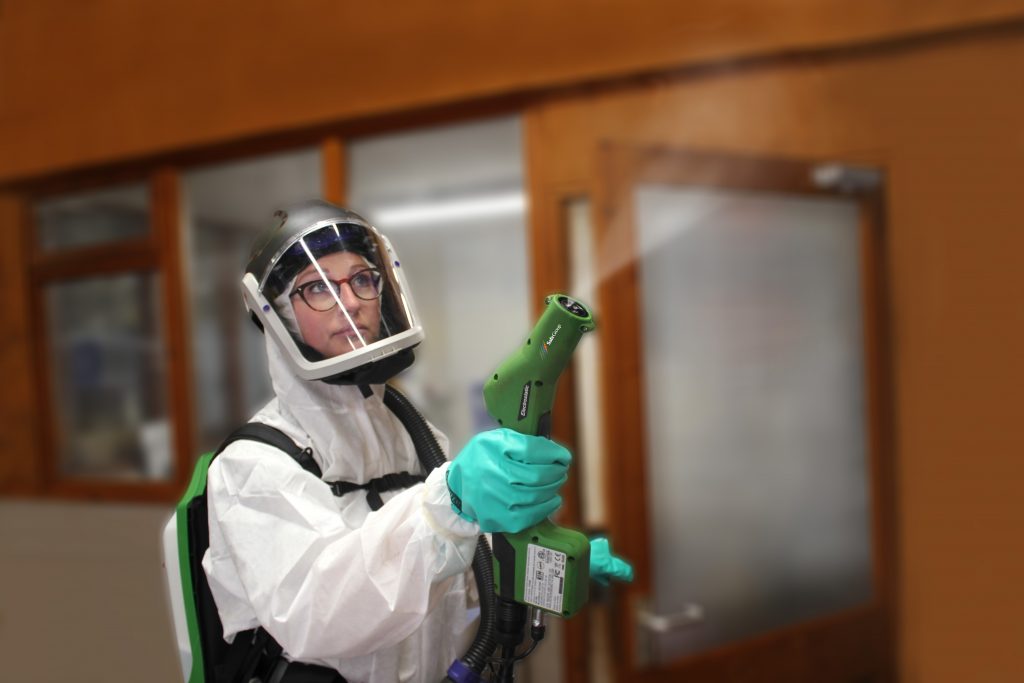
A leading emergency soft FM specialist has launched a disinfection and testing service that aims to deliver industry-leading Covid-19 protection and help employers reduce the anxiety of staff and clients as workplaces reopen after lockdown.
The three-step process, developed by SafeGroup Services Ltd, involves a premises deep clean and a revolutionary Covid-19 (Coronavirus) treat and protect service. It also includes, for the first time, Covid-19 testing of treated surfaces to allay the predicted fears of staff and customers as they return to the workplace.
The service is being taken up by organisations and companies across the public and private sectors, including schools and care providers, where a wide range of stakeholders, some in high risk groups, need assurance that all efforts are being made to make premises safe.
Cygnet Healthcare, which provides mental health care, is one customer. Regional Facilities Manager Craig Keates said: “Our environments are high risk. SafeGroup provides the best in market disinfection services that we need 24/7 and our staff and clients have full peace of mind.”
Schools see the service as a way to underpin other measures to make classrooms Covid-19-secure, such as social distancing, by greatly reducing the risk of transmission from person to surface to person, while tackling the concerns of parents, pupils and teachers.
SafeGroup Chief Executive Office Steve Broughton said: “Our Covid-19 Back to Business Clean and Safe service is a comprehensive cleaning and disinfection response to the major challenges facing businesses as they leave lockdown and reopen their premises.
“They recognise they have a duty of care to ensure their workplaces are safe and clean. They are having to address the very real wellbeing and mental health concerns of their employees and customers.
“They also want their workplace to have long-term protection against Covid-19 so staff and customers have peace of mind over the weeks to come. Our Back to Business Clean and Safe service delivers all three.
“Businesses and FM providers alike know they don’t have the in-house expertise, technical capability or capacity to carry out disinfection to the standard customers, staff and regulators expect, which is why interest in our new service has been intense.”
During the pandemic, SafeGroup has provided Covid-19 decontamination services for a wide range of businesses, including facilities management providers, hospitals, care homes, schools and manufacturers.
One of them is London Stansted Airport. Nick Henderson, the airport’s Business Continuity and Resilience Manager, said: “We needed to respond quickly to reassure passengers and staff that decisive action was being taken on their behalf. SafeGroup’s decontamination service has been an important component of our strategy.”
The new Back to Business Safe and Clean service is tailored to deliver a complete package of technically advanced cleaning and disinfection services to support businesses as the government seeks to phases out the Covid-19 lockdown.
Step 1 – Deep Clean: a full and thorough mechanical clean of premises using professional techniques and chemical products to create a clean and fresh workspace. Staff and employer organisations, including the CIPD, have emphasised the need to carry out deep cleans as part of a Covid-19 return to workplace strategy.
Step 2 – Treat and Protect: SafeGroup is treating premises with a revolutionary broad spectrum anti-microbial chemical treatment proven to be greater than 99.99% effective against Covid-19 and which provides surface protection against the virus for up to 30 days. It is delivered as an microfine electrostatic spray, maximising coverage.
Step 3 – Testing: SafeGroup will collect multiple test samples and arrange to have them analysed for Covid-19 at a scientific laboratory, with results returned within 72 hours. The testing process is the same as the one used by Public Health England.
All three elements will be carried out to an exemplar standard, including the use of full microbiological PPE where necessary.
SafeGroup Strategic Business Director Chris Macdonald said: “Covid-19 has reframed the response to workplace cleanliness. Our discussions with businesses tell us that they see making sure employees having confidence in workplace hygiene standards as being a critical priority as the Covid-19 lockdown is phased out.
“This is a key reason why we’re offering the Covid-19 testing service and why it has been enthusiastically welcomed by customers. It gives businesses scientific evidence that workplaces are Covid-19-free. Combined with the long-lasting effectiveness of our disinfection treatment, staff can be confident everything is being done to keep them safe.”
SafeGroup expects its Back to Business Clean and Safe service to be particularly attractive to business services providers, like banks and insurance companies, operating large office spaces, as well as government agencies and retailers.
The service is also ideal for service organisations that have been working hard to protect against Covid-19 throughout the pandemic, including hospitals, care homes emergency services and transport providers.
For more information, contact SafeGroup: backtobusiness@thesafegroup.co.uk
Tel: 0800 668 1268. www.thesafegroup.co.uk.
Reporter: Allan Roach – Advertorial
Over ninety-two percent of midsize businesses use at least one cloud-based application. And the majority of enterprises expect at least half of their management infrastructure to be cloud-based. Cloud-managed networking, often provided “as-a-service,” is rapidly growing in popularity.

What is cloud-managed networking?
Cloud-managed networking is commonly used when referring to the ability to manage Wi-Fi, wired and SD-WAN network infrastructure as a cloud-based service. This service is typically hosted in the cloud by a 3rd party as a subscription-based purchase model.
An immediate benefit is the cost and time savings achieved by eliminating the need for hardware and the resources needed to host traditional on-premises services. And because there’s virtually no ramp-up time, cloud-based solutions provide significant time-to-market and time-to-value that help businesses achieve a competitive advantage. These same benefits apply to managing a network infrastructure. Cloud-managed networking, which refers to the ability to manage network hardware and software using the SaaS model, is also increasing in popularity. In fact, Gartner research states that the adoption of cloud-managed networking is expected to double by the end of 2023.
Here, we highlight the key benefits of cloud-managed networking:
- Centralized Visibility & Control – a single location for Wi-Fi, wired, and WAN networks, devices and clients
- 24/7 Anywhere Access – perform management, monitoring and control from any device at any time
- Stable & Secure Platform – avoid legacy maintenance and redundant configurations to ensure uptime
- Significant Resource Savings – over deploying and managing appliance based on-premises solutions
Presented by Aruba and European Electronique.
To learn more, please visit: cloud-managed-networking.com/ee/
 Colonel Tom Moore (left) with General Mark Carleton-Smith, CGS – (photo courtesy of the MoD) Reporter: Stuart Littleford – News
Hero fundraiser Colonel Tom Moore is to be knighted, following a special nomination from the Prime Minister.
Col Tom, who celebrated his 100th birthday last month, is to be recognised for his extraordinary fundraising achievements after capturing the hearts of people across the country.
The Second World War veteran became a national hero after raising £33m for the NHS – a Guinness World Record – having walked 100 laps of his Bedfordshire garden.
Following Col Tom’s amazing charity feats, the Prime Minister personally recommended Col Tom be exceptionally honoured to Her Majesty the Queen.
Prime Minister Boris Johnson said:
“Colonel Tom’s fantastic fundraising broke records, inspired the whole country and provided us all with a beacon of light through the fog of coronavirus.
“On behalf of everyone who has been moved by his incredible story, I want to say a huge thank you. He’s a true national treasure.”
Col Tom’s honour, which has been graciously approved by Her Majesty the Queen, is due to be formally announced tomorrow.
The Government is also set to give further details on plans for how frontline heroes, who have been fighting coronavirus across the country, will be honoured in the coming months and how the public will be able to play their part.
A Government spokesperson told GPSJ:
“We know there is huge appetite to say thank you to all those supporting the nation during this emergency and doing incredible things day in, day out, up and down the country.
“We will ensure these unsung heroes are recognised in the right way, at the right time.”
 Sascha Giese, Head Geek™, SolarWinds By Sascha Giese, Head Geek™, SolarWinds
Imagine being able to design a digital version of just about anything in the real world, infuse it with data, and use the knowledge it provides to create or improve its real-life physical entity. This is the concept behind “digital twins,” which first emerged in an industrial and manufacturing context. Since then, it has grown to describe the creation of digital replicas of physical devices, entities, people, processes, and places. By creating a digital twin, activities such as product development may be cheaper and quicker, and performance may improve.
The Endless Possibilities of Digital Twins
Today’s digital twins are more than simulations—they use real-world, real-time data to power replicas. As such, the growth in technologies such as the internet of things (IoT) have helped accelerate their use. It’s an exciting concept, and as our capacity to build more powerful and complex IT systems has increased, so has the ability to develop digital twins for bigger and more complex use cases.
These use cases include testing aircraft engines and landing gear components using sensors on real-world equipment to generate the data necessary to make performance and durability predictions. In Formula 1, teams use digital twins to measure a huge range of informative data points to improve reliability, performance, and safety. Some organisations also use them to support their software development process, improving efficiency and reducing time to market. These uses all add up to a growing market; and according to Grand View Research, this market will be worth more than US$26 billion by 2025.
Applied to the government across the board, the scope is truly enormous. Imagine the possibilities, for instance, of creating a digital replica of an entire city and using this replica to plan transportation infrastructure. This is particularly important in the current era of rapid transportation technology changes and the need to change public policy to improve the environment over the long term. The emergence of autonomous vehicles, for example, is a transportation concept in which no one has much experience. As a result, digital twins are likely to become an important planning and prediction resource for government bodies needing to understand, predict, and maximise the benefits of this rapidly emerging trend.
As Gartner put it in its “Hype Cycle for Digital Government” report last year, “In the midterm, governments will use digital twins for automated command-and-control operations that will require fewer staff to respond to incidents. Over time, digital twins will be used to test scenarios related to policy and legislation. That’s when this technology becomes truly transformative.”
One day, we may see entire government functions and infrastructure created as digital twins. Artificial intelligence, machine learning, big data, and IoT will contribute to the development of more complex, accurate, and reliable digital twins. Some expert commentators predict digital twins will be used to understand, predict, and manage public health issues. In the longer term, we may all possess a digital twin of our own bodies, which will be used as a preventative healthcare tool and to help us recover from illness and injury. Clearly, the principle will be of interest to those with the job of funding and delivering public healthcare systems, which are already stretched thin by a growing and ageing population.
Don’t Run Before You Can Walk
Despite the potential of digital twins, there are various technology and process hurdles to overcome. Securing data from the real device to the network, from the network to the digital twin, and from the monitoring stations viewing this data is tremendously important. If the data can be viewed, copied, interrupted, or manipulated and reinserted surreptitiously, then serious problems are likely.
There’s also the issue of cost. Creating the infrastructure, whether done securely or not, represents a duplication of efforts and budget, which begs the question of whether the investment will reduce costs sufficiently to pay for the new twinning technology. Similarly, scaling digital twinning to a large environment—particularly when security is critical—requires a large and highly available network on which you can communicate reliably and store the twins’ data.
In practical terms, however, governments have been increasingly committed to the study, development, and use of digital twins. In the U.K., for example, organisations such as the National Infrastructure Commission have argued strongly in favour of creating a digital twin of our national infrastructure. This work was taken forward by the Digital Framework Task Group (DFTG) and others with the objective of developing the National Digital Twin programme, which has since delivered an initial roadmap. Clearly, there’s much more to come, and future generations will work with and benefit from digital twins on a routine basis. It’s yet another exciting and transformative digital trend to watch closely.
www.solarwinds.com
The Bill takes back control of UK borders and paves the way for a new points-based immigration system
Reporter: Stuart Littleford
The Immigration and Social Security Co-ordination (EU Withdrawal) Bill 2020 introduced on 5 March will have its Second Reading in the House of Commons today (Monday 18 May) just six months since the British people voted to introduce a points-based immigration system.
This represents an important milestone in paving the way for the new immigration system that will deliver for the UK for years to come and puts an end to the European Union’s rules on free movement.
The Bill signals the Government’s commitment to delivering a fairer and skills led immigration system, attracting people based on the skills they have, not where they are from.
The Home Secretary, Priti Patel told GPSJ:
“This historic piece of legislation gives the UK full control of our immigration system for the first time in decades and the power to determine who comes to this country.
“Our new points-based system is firmer, fairer, and simpler. It will attract the people we need to drive our economy forward and lay the foundation for a high wage, high skill, high productivity economy”
This is a once in a generation opportunity to build a future that works for the whole of the UK and for employers to focus on upskilling and investing in the workforce this country has. 
This Bill gives the UK flexibility and control over its borders so it can attract top talent from around the world to complement the skills already here.
Talented doctors, nurses and paramedics from all over the world are currently playing a leading role in the NHS’s efforts to fight coronavirus and save lives and we thank them – and all our NHS staff – for the work they are doing.
Our new immigration system will make it easier and quicker for medical professionals around the world to work in the NHS through a new fast-track NHS visa.
Further information on the points-based system will be detailed in the Immigration Rules published later in the year.
 Real-Time Payment Notifications provide real-time updates on card acceptance transactions Real-Time Payment Notifications provide real-time updates on card acceptance transactions
Payment specialist allpay limited, has launched Event Driven Payment Analytics. Real-time payment notifications now provide instant updates on card acceptance and payment transactions.
Teejay Townsend, card acceptance product manager allpay explains: “We are now offering this new feature to update organisations instantly on payments made over the internet, via our mobile app or over the phone. This is of particular benefit for bill payers, as it prevents them being chased needlessly for payments they have already made.
“Previously, a payment information file (PIF) would be sent to the receiving organisation within 24 hours but for urgent, time sensitive payments for court fines or eviction notices for example, this may be too slow or even too late. Real-time notification could also stop tenants being charged for rent areas if they have already paid too and, it is also helpful when paying deposits, as systems and customer balances can be kept up to date as bills are paid. PIF files will still be available as usual the next working day.
“Real-Time Payment Notifications cover successful payments, declined payments and refunds. In addition to providing a better service to customers, the implementation of Event Driven Payment Analytics can cut the resources required to recover late payments, as staff are acting on the most up to-date information.
“Event Driven Analytics is now available for a small one-off fee and low monthly cost. We hope this new real-time payment notification service will be helpful for government organisations and housing associations taking regular payments, to ensure that they are always able to respond to the most up to date information available for the benefit of their users.”
For more information please see: www.allpay.net/our-solutions/credit-debit-cards/real-time-notifications/
|
NEED AN UP TO DATE DATABASE? 
|





Recent Comments