|
|
 By Sascha Giese, Head Geek™, SolarWinds By Sascha Giese, Head Geek™, SolarWinds
For many people, the pandemic—and the global response to this once-in-a-lifetime event—was a game-changer. The enforced and rapid move to the cloud meant carefully prepared plans for phased IT migration were thrown out the window.
Instead, the explosion of hybrid office environments left public sector IT workers forced to cope with a remote workforce as people abandoned the office to work from home instead.
But as we now know, though this response to the pandemic was pivotal in helping government departments continue to provide essential public services, it did so at a cost.
A study published in June 2022, the SolarWinds® IT Trends Report 2022—Getting IT Right: Managing Hybrid IT Complexity, found the rapid uptake of hybrid IT during this period “increased network complexity for most organisations and caused several worrisome challenges for public sector IT professionals.”
What it discovered is running workloads and applications across both cloud and on-premises infrastructure—and the speed at which these changes were introduced—has proven to be a major challenge.
Facing Up to a New Post-COVID IT Reality
According to the IT professionals surveyed as part of the report, the job of IT teams has become much harder thanks to the new realities of hybrid IT. When pressed, tech pros said they’re unsure about how best to manage this new reality.
Almost one in five (17%) said the acceleration of hybrid IT has increased the complexity of their public sector organisations’ IT management.
When asked to explain why, 50% blamed the increased complexity on the adoption of new tools and/or technologies. And while 40% reported increased technology requirements added to the problem, a similar proportion (31%) blamed “outdated staff skill sets.”
When asked about how confident they were with their organisations’ ability to manage IT complexity, only 12% said they felt “extremely confident.” Half of the respondents (50%) admitted they weren’t “fully equipped to manage complexity” and felt “only somewhat confident” to do so. Only a third of tech pro respondents (33%) said they were confident their organisations are equipped to manage IT complexity adequately.
The Issue of IT Complexity Is Becoming Ever More Complex
When speaking to IT professionals working on the front line of public sector IT projects, the issue of complexity comes up time and time again. It’s as if IT teams are in a downward spiral, with issues of complexity made worse because of limited visibility into networks, apps, and infrastructure.
And as this visibility becomes harder to focus on, it becomes increasingly more challenging to conduct tasks such as anomaly detection, easy root cause analysis, and other critical processes to ensure the availability, performance, and security of business-critical applications.
Though it may be easy for some to dismiss such concerns as being a “post-COVID hangover” or “teething troubles” associated with the new hybrid way of working, the findings from the survey paint a different picture.
Nine in 10 (88%) of those questioned agreed return on investment (ROI) was impacted during an IT project they oversaw in the past 12 – 18 months. A third (36%) said the IT projects took four to seven or more months more to complete than scheduled, and 52% said these projects were extended by up to three months. The reason? Hybrid IT complexity.
The Impact of Hybrid Working Has to Be Taken Seriously
No one can doubt the way public sector IT professionals responded to the pandemic helped governments keep functioning.
But public sector organisations need to take stock of what happened over the last couple of years and speak to those on the front line of this extraordinary IT event if they are to gain valuable insights.
If they do, they’ll discover IT pros want more time and resources to help implement observability strategies and manage hybrid IT realities more effectively. By listening to IT pros, decision makers can gain a better understanding of the impact hybrid working has had on increasing operational complexity.
Blackhawk Network finds four priorities local governments should consider when providing funds to people in need
Since 2020 there have been significant increases in the need for ‘alternative payment’ such as voucher schemes and prepaid cards, to deliver financial support to people in need, as opposed to traditional methods such as cash, cheques or BACS. Blackhawk Network actively provided pandemic emergency relief support and helped to issue more than $2.5 billion in 2021 alone. As we continue to battle the cost-of-living crisis and enter a recession, Blackhawk Network uncovers how local governments can best support in distributing funds and presents vouchers as a positive solution for communities hit the hardest by the current climate.
The research included input from over 1,000 lower-income individuals who received the funds last year. It found almost all (97%) were concerned about making ends meet and a need to support them with utility bills (82%), food (67%) and rent (44%) as a priority during the cost-of-living crisis.
While many people in need are feeling the strain of the current economic climate, local authorities must consider the most effective ways to reach those in need and help overcome their own challenges. The research defines four priority areas that communities would appreciate most:
- Speed to accessing funds: Research found 30% had received a voucher within a day or two but only 11% had to wait more than two weeks. While for cash, this was significantly higher, with 17% waiting two or more weeks.
- Ease of claiming: Vouchers were considered by 71% of the respondents to be an easy way to claim support over pre-loaded bank cards, direct or cash transfer and cheque. 81% agree ease of claiming is essential.
- Choice: 84% of respondents wanted to see some level of control over what the support is spent on with utility bills and food being the most appreciated.
- Ease of spending: Only 7% of participants believe that spending vouchers would be very or fairly hard.
Additionally, insight into national policy makers and local authority representatives highlighted the challenges they face. Resourcing means many authorities aren’t geared up to deal with the volume of disbursements from grants and crisis funds. It can also become a significant administrative burden, with lengthy back and forth regarding financial information. Different methods to distribute funds can also vary in cost-effectiveness, with some, such as BACS, incurring additional transactional fees.
Ultimately, vouchers gained the most positive response when thinking about being awarded funds from local authorities or organisations. While local authorities said it significantly helped alleviate many challenges when using a third-party provider to disburse payments via vouchers.
Chris Ronald, VP EMEA B2B at Blackhawk Network said: “During incredibly testing economic times, we are conscious of the financial struggles communities across the UK are facing, which is why it’s essential that those need help most are receiving support quickly and with ease of access.. While local authorities may not have the resources or tools in place to manage fund distribution effectively, alternatively payment solutions should certainly be considered, and vouchers are an option that ticks all the boxes. They’re an effective way to reach the right people quickly and in a way that’s convenient to them.”
For more information about the research and how to act please download the eBook: blackhawknetwork.com/uk-en/resources/ebook-speeding-payments-people-need
The energy infrastructure expert aims to bring greater flexibility of choice to organisations entering the EV charging market through its advocacy of the Open Charge Point Protocol (OCPP)
Fully-funded and part-funded service options will help remove the financial barriers businesses face when deploying the technology at scale
Energy solutions business, SMS plc, has launched an end-to-end electric vehicle (EV) chargepoint infrastructure solution to help UK organisations establish, manage, and grow their car charging networks.
The new service offers businesses looking to invest in and monetise EV chargepoint assets a full life cycle proposition, from initial consultancy and design of electrical infrastructure, through to technology procurement, installation, and ongoing operation and maintenance (O&M). SMS will deliver its managed chargepoint solutions as a fully funded or part-funded service, helping to significantly lower the financial barrier organisations face when deploying the technology at scale.
 In partnership with charge point operator (CPO) and software-as-a-service (SaaS) company, Clenergy EV, SMS will also offer access to innovative chargepoint management software that allows organisations to manage and monitor all aspects of their business charging network via an Open Charge Point Protocol1 (OCPP)-compliant platform. In partnership with charge point operator (CPO) and software-as-a-service (SaaS) company, Clenergy EV, SMS will also offer access to innovative chargepoint management software that allows organisations to manage and monitor all aspects of their business charging network via an Open Charge Point Protocol1 (OCPP)-compliant platform.
With a recent report commissioned by Transport and Environment (T&E) highlighting that there are currently more EV chargepoints in workplaces (33,000) than public chargers (31,500), SMS looks to assist private and public sector organisations across both of these key market segments, supporting the UK Government’s EV Infrastructure Strategy to reach 300,000 chargepoints nationwide by 2030.
In addition to workplace and public charging, SMS is also targeting the destination charging market – which broadly refers to chargepoints installed by leisure, retail, and hospitality businesses – as well as the fleet sector.
SMS brings to the EV charging marketplace significant energy consultancy and engineering heritage, with the company having played a leading role in delivering some of the UK’s flagship utility infrastructure programmes over recent years. This includes the Government-mandated smart meter rollout, the development of grid-scale Battery Energy Storage Systems (BESS), and expert electrical infrastructure support for the telecom industry’s new 5G networks.
Guy Bartlett, Managing Director of SMS Energy Services division, said: “As an independent, tech-agnostic EV charging partner, other than our considerable expertise helping establish the UK’s critical electrical infrastructure, what we look to bring to the rapidly growing chargepoint market is a crucial flexibility of choice. Unlike many of our closed network competitors operating in this space, our goal is to help customers seize total control over who supplies their chargepoint estates, helping select the hardware that best fits their precise business needs, whilst also providing the engineering skills to deliver an optimum charging solution.
“At SMS, we believe that encouraging and enabling interoperability across the UK’s EV chargepoint network is essential to helping create the best possible experience for drivers, which will in turn improve general uptake of EVs and ultimately help strengthen the business case for investing in chargepoint infrastructure. That is why we’ve chosen to partner with Clenergy EV and offer our customers the benefit of OCPP-compliant software, which allows network owners to control chargepoints from multiple manufacturers via one platform.
“We also believe that cost should not stand in the way of businesses who wish to benefit from the many commercial and environmental advantages made available by EV charging assets. We’re proud therefore to offer the marketplace our funded solutions that remove one of the major obstacles to asset investment.”
- The smart energy infrastructure specialist, SMS, is the first meter installer to bring the device to the UK market
- Until now, thousands of customers with larger gas supplies – such as large domestic dwellings or commercial properties – have not been able to switch their traditional analogue meter to a smart meter
The UK’s first ever U16 gas smart meter has been installed at a domestic property in Berwick-on-Tweed, Northumberland, marking another milestone for the UK’s smart meter rollout.
The U16 gas smart meter –which has been produced for the UK market by the Danish meter manufacturer, FLONIDAN and supplied to SMS plc by ACLARA – was installed by SMS plc at the home of an Octopus Energy customer.
Until now, the U16 meter, which is roughly twice the size of the standard U6 gas meter typically installed in domestic households, has not had an updated model manufactured and approved to Smart Metering Equipment Technical Specifications (SMETS). This means that customers with larger gas supplies of 16 cubic metres per hour – such as large domestic dwellings or commercial properties – have not been able to switch their traditional analogue meter to a smart meter.
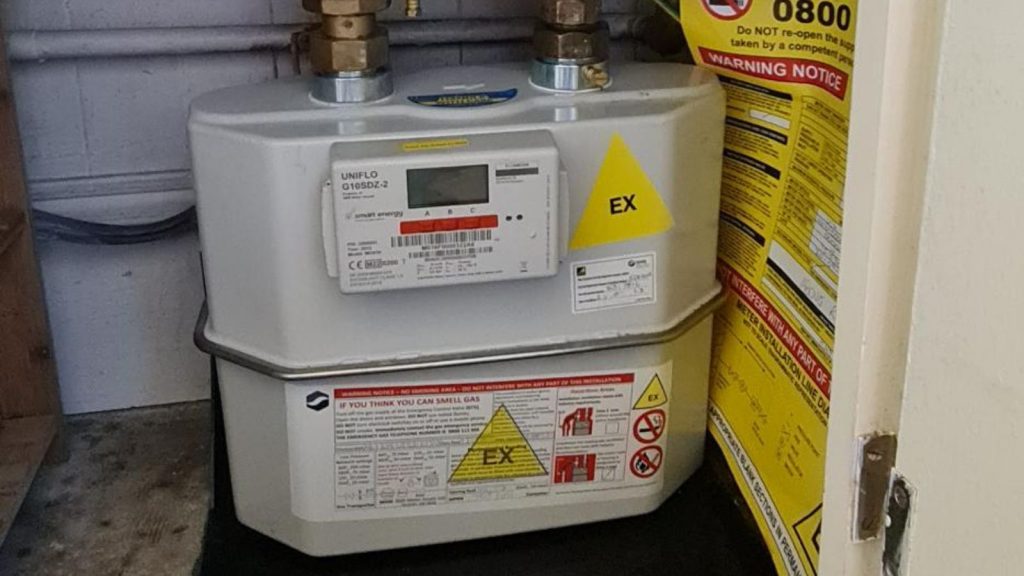 U16 smart meter This latest development in the metering industry is significant as the U16 represents the last remaining common meter variant currently installed within the UK domestic market, either gas or electric, to transition to a SMETS-compliant model.
Whilst some business energy consumers have already been able to avail of advanced meters or other automatic meter reading (AMR) devices in order to digitally record their gas usage from U16 meters, the variant’s transition to SMETS opens up the option for all U16-supplied customers, domestic or commercial, to benefit from smart meter technology.
The smart meter rollout is a foundation stone of the UK Government’s Net Zero 2050 programme, with the technology considered a key enabler of domestic and industrial energy efficiency and demand-side flexibility, enabling technologies such as electric vehicles to be cost-effectively integrated with renewable energy sources.
Energy infrastructure specialist SMS – the meter installation partner of Octopus Energy and various other UK energy suppliers – worked with ACLARA, FLONIDAN and the Data Communications Company (DCC) to test, commission and approve the new U16 smart meter ready for market-wide rollout at its dedicated meter test lab in Bolton, Lancashire.
Tom Woolley, SMETS specialist at SMS, said: “The new availability of SMETS2 U16 meters gives energy suppliers and their domestic and commercial customers simple and effective access to secure energy data, which can be used to help improve energy efficiency and, in turn, lower carbon emissions. Given the current climate, the well-established ability of smart meters to enable more efficient and more intelligent energy consumption is not to be sniffed at. The development of the dual-band U16 smart metering device is therefore a much-welcomed new technological advancement, and we are excited to be the first to bring the device to the market. Our focus now is to help energy suppliers with rolling out this technology to those consumers who want and need it.”
For further information please visit: www.sms-plc.com/solutions/metering/
To contact SMS: www.sms-plc.com/contact/
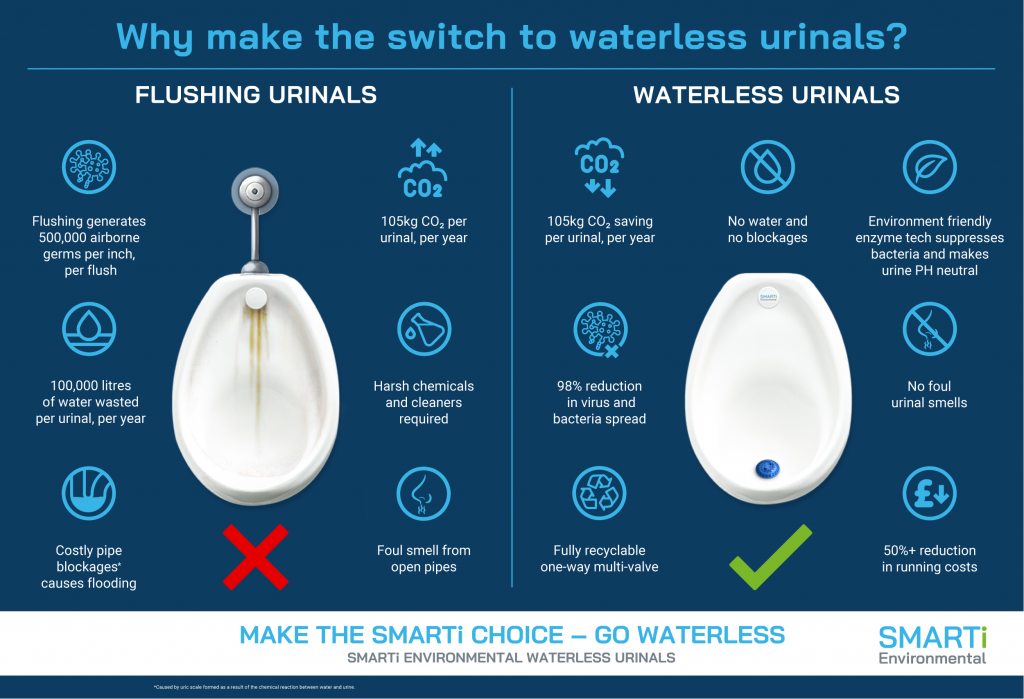 Public sector bodies could save many hundreds of thousands of litres of water, at the same time as slashing CO2 footprints, and saving thousands of pounds each year, simply by switching to waterless urinals. Public sector bodies could save many hundreds of thousands of litres of water, at the same time as slashing CO2 footprints, and saving thousands of pounds each year, simply by switching to waterless urinals.
The findings have been released by Smarti Environmental following one of the longest droughts in living memory, increasing concerns over water shortages. This comes at the same time as intensifying pressures on public sector spending, and increased focus on Net Zero targets.
These pressures are forcing public sector organisations to seek solutions that not only help save money, and reduce impact on the environment, but which also reduce water use.
Smarti Environmental’s retro-fit waterless valve technology, which converts urinals in less than a day without the need to change existing urinal bowls, is seen by many – including the NHS – as a perfect solution that addresses this triumvirate of issues.
Its latest product, the retro-fit, eco-friendly Vortex triple seal valve (TSV), cuts urinal running costs by more than half, by ending the need for flushing urinals. On average this saves 100,000 litres of clean water per urinal, each year. On three urinals alone, converting from flushing to waterless can generate savings as high as £1,200 annually. For organisations with double or triple-digit numbers of urinals, the savings can be significant.
Going waterless also prevents airborne infections caused by spray during flushing, which has been shown to spread 500,000 germs per inch, per flush, landing on skin, surfaces and clothing, spreading viruses including Covid-19, influenza and norovirus. It also removes 105kg of CO2e generated by individual flushing urinals, each year.
Fitting 98% of all flushing urinals, The Vortex TSV, is the fastest flowing waterless urinal solution on the market. The fully recyclable, British-manufactured, hygienic one-way multi valve system traps all odours so that foul drain smells become a thing of the past.
Accelerating the flow of urine down the drainpipe, the Vortex TSV uses an eco-friendly bio-block enzyme ring and integrated bio-tablet to break down uric acid and bio film proteins. This makes urine PH neutral – a world first – and means that less energy is required during sewerage treatment processing, further enhancing its environmental credentials. When the enzyme ring depletes, it turns from blue to clear, ready to be replaced using a simple non-touch key change-out system.
Combined with Smarti Environmental’s SteriKleer enzyme in-pipe pipe-pods, the Vortex multi-valve solution actively lubricates sewerage pipes, breaking down all biofilms and uric salts. This prevents blocked pipes and dramatically cuts plumbing and maintenance bills.
With the absence of water, calcium build-up caused by the chemical reaction between water and urine cannot occur. This ends the all-too-common experience of floods and overflow when water-flush urinal pipes become calcified and back-up; a particular problem where low flow valves are used to reduce water bills.
Using 100% environmentally friendly enzyme technology – including its 24-hour odour and bacteria suppressing SteriKleen surface spray – Smarti Environmental eliminates the need for harsh bleaches, cleaning fluids or drain un-blockers too.
Commenting on its positive impact for the public sector Kimberley Hill, New Business Development Manager at Smarti Environmental, said: “Fitting waterless Vortex triple seal valves guarantees an end to foul-smelling urinals, but more than that, it cuts wasteful water use, saves money, slashes CO2 and reduces environmental impact, helping public sector bodies as they strive to hit Net Zero targets.”
Kimberley added: “We’re committed to helping government and public sector organisations as they deal with budget cuts, which is why we are offering public sector bodies with 100 or more urinals a free washroom trial for 3 months, and free installation of our retro-fit waterless valves.”
As part of the Vortex TSV valve offer, Smarti Environmental undertakes a free site survey, identifying the current amount of water used and projected savings. For the trial, urinal drainage pipes are checked and, if in need of replacement, are installed at no cost within the fully serviced package option. Cisterns are removed and waterless valves fitted, all typically in just one day, minimising down-time.
Visit smartilimited.com/ for more information, or call 01392 311 202 for a no obligation washroom survey and quote.
People will benefit from better joined up care as the PRSB standard allows Orion Health and its early adopter sites to share information for care when and where it is needed
Orion Health has been awarded the Professional Record Standards Body Quality Mark for conformance with the Core Information Standard – the first supplier to achieve this watershed on the journey to interoperable shared care records.
This achievement proves that information in people’s health and care records can be shared wherever and whenever it is needed for care. Professionals with access to shared care records will have critical information for care at their fingertips and people won’t have to repeat their story to each professional they encounter during their care and treatment.
The milestone was achieved through close co-operation between the two organisations, which interrogated each line of the standard to ensure Orion Health’s shared care record captured and displayed vital information to support professionals providing care.
The PRSB is now encouraging more suppliers to follow suit, to advance connectivity and to enable integrated care. A number of its existing partners are now preparing to embark on the standards conformance process, with achievement recognised by the PRSB Quality Mark.
Lorraine Foley, Chief Executive of the PRSB, said: “Orion Health’s achievement marks a genuine milestone on the journey to improve digital information sharing in health and care. We are delighted to congratulate Orion Health on becoming the first of our partners to put themselves through rigorous, independent assessment of the Core Information Standard and come out of it successfully. Both organisations have learned and gained from the process and we are applying the learning going forward.
“The standard is fundamental to sharing people’s care records and is the cornerstone of Integrated Care Systems’ shared care records.
“As the first organisation to successfully navigate the assessment process for this standard, Orion Health has demonstrated that standardised shared care records are entirely achievable, and I hope the dedication they have shown paves the way for more innovators to follow suit.”
Ben Wilson, Product Solution Director for Orion Health, said: “We are delighted to be the first supplier to achieve conformance against the PRSB Core Information Standard.
“The standard defines a set of validated information that can potentially be shared between systems in different sites and settings, amongst health and care professionals using the service for the purpose of direct care. To ensure information flows through the system for the benefit of patients, we need to be focusing on interoperability standards; what data is required and how should it be shared.
“The Core Information Standard will advance these conversations. We will all be able to say: ’this is our common understanding of the information that needs to be shared in order to help drive operational efficiency and improve patient outcomes, so this is what we as an industry need to be sharing – now let’s work out the best way to do it. We fully encourage other suppliers in the industry to get an appreciation for the standard.
“A large part of the conformance process involved an open dialogue with the PRSB team and we highly valued their guidance and clinical expertise based on real-world experience throughout the process. We have now embedded the standard into our core product development lifecycle and will use it to help inform all future product design activities. Our updated system is already available to a subset of customers, and we are excited about rolling the solution out further.”
Imprivata OneSign Spine Combined Workflow Plus replaces the need for physical smartcards – streamlining clinical workflows at NHS pilot site
Imprivata®, the digital identity company for healthcare and beyond, has achieved full assurance from NHS Digital for Imprivata OneSign® Spine Combined Workflow Plus which includes Imprivata Virtual Smartcard. As part of the assurance process, the virtual smartcard solution was successfully piloted at South Tees Hospitals NHS FT, where there was enthusiastic user adoption as it was proven to dramatically reduce time to login to the NHS Spine. The solution also reduces the number of logins required during a shift and streamlines clinical workflows, reducing the barrier to technology, and releasing clinicians’ time and attention back to patient care. A second pilot at an NHS Trust in the South of England is also successfully complete.
 Angela Hopton, ICT System Support Services Manager, Registration Authority at South Tees Hospitals NHS FT commented; “The Trust is currently deploying Imprivata OneSign, so when we heard about Imprivata Spine Combined Workflow Plus, which includes Imprivata Virtual Smartcard, we were delighted as it solves a number of issues for us. The pilot has been run in the Diabetes Care Centre, with positive feedback from clinicians. As well as providing a better experience for users, Imprivata Virtual Smartcard takes up significantly less resource for ICT, as well as removing issues such as sourcing physical cards, printers, consumables and card readers.” Angela Hopton, ICT System Support Services Manager, Registration Authority at South Tees Hospitals NHS FT commented; “The Trust is currently deploying Imprivata OneSign, so when we heard about Imprivata Spine Combined Workflow Plus, which includes Imprivata Virtual Smartcard, we were delighted as it solves a number of issues for us. The pilot has been run in the Diabetes Care Centre, with positive feedback from clinicians. As well as providing a better experience for users, Imprivata Virtual Smartcard takes up significantly less resource for ICT, as well as removing issues such as sourcing physical cards, printers, consumables and card readers.”
NHS Digital and Imprivata have been working together to agree the design and implementation for the Imprivata OneSign Spine Combined Workflow Plus solution that meets all of NHS Digital’s requirements. This solution includes Imprivata’s virtual smartcard.
The enhanced product, using versions of the software outlined below, has now been through that review process – our cyber security team has confirmed the design of the solution can be used for authentication (authentication to systems only) and our clinical team have approved the deployment of the solution following a successful pilot. For more information please visit: digital.nhs.uk/services/registration-authorities-and-smartcards/smartcard-services#imprivata-virtual-smartcard.
Imprivata Virtual Smartcard provides fast, secure No Click Access® to NHS Spine-enabled applications without the need for physical cards. The new solution improves security by eliminating smartcard workarounds and supports compliance with NHS information governance standards. Imprivata Virtual Smartcard removes the need for clinicians to remember login details, saving time throughout the day as they access the NHS Spine, allowing greater focus on delivering patient care.
Andrew Harrison, Principle Product Manager, International at Imprivata commented; “At Imprivata we have always been committed to providing solutions that remove the barrier to technology for clinicians enabling them to focus on their patients, while safe-guarding sensitive patient data. The Imprivata Virtual Smartcard is a significant evolution in access management. Clinicians only need to tap on to a computer to log into Spine-enabled applications from any location or device without the near half minute wait associated with physical smartcards. We received great feedback from clinicians, registration authorities and the IT department at South Tees.”
Imprivata has also marked a cyber security milestone after achieving its Cyber Essentials Plus (CE+) accreditation, the highest level of certification offered under the Cyber Essentials scheme. Cyber Essentials is a UK government-backed, industry-supported certification for cybersecurity. The certification demonstrates that the company has sufficient technical controls in place to defend against the vast majority of common cyber-attacks. CE+ requires independent verification by an external auditor who conducts a series of technical assessments to ensure the company is protected against various attack scenarios. In addition, Imprivata has completed the NHS Data Security Protection Toolkit (DSPT) further strengthening the level of organisational compliance with required standards. Both the DSPT and CE+ are completed annually and demonstrate commitment to ensuring that processes continually evolve and improve to meet the changing requirements of the NHS and industry best practices.
With no printing required, Imprivata Virtual Smartcards can be created and deployed to users at scale, facilitating efficient, secure compliant access without the need for expensive hardware. Imprivata OneSign Spine Combined Workflow Plus supports role-based identities enabling users to swiftly switch roles for varying clinical functions and, to support data governance requirements, providing a full audit trail of all interactions with Spine applications.
About Imprivata OneSign Combined Workflow Plus including Virtual Smartcard
Imprivata OneSign Spine Combined Workflow Plus provides the following benefits to NHS Trusts:
- Streamlines clinical workflows and simplifies NHS Spine access, thereby ensuring strong user adoption
- Increased clinician productivity with No Click Access® saves up to 25 seconds per login for improved focus on patient care
- Fast access to secure patient data encourages adherence to secure working practices while secure walk-away features protect un-attended workstations
- Compliance and information governance proven by accurate reporting on authentication and smartcard usage
- Application integration with leading EHRs and most specialised clinical applications
Imprivata Virtual Smartcard is part of the Imprivata OneSign family which includes; Imprivata Confirm ID – for comprehensive identity and multifactor authentication for remote access, and clinical workflows; Imprivata Mobile Access – for mobile authentication that can be used with shared medical devices and applications, and; Imprivata Medical Device Access – for fast, secure authentication of medical devices.
For more details please visit: www.imprivata.co.uk/nhs-spine-access.
 L to R: Innovative Ash Solutions Director Robert Green; Built Environment – Smarter Transformation’s (BE-ST) Head of Sustainability Programme Jennifer Smart; and Zero Waste Scotland Built Environment Manager Stephen Boyle Lanarkshire-based Innovative Ash Solutions (IAS) has launched a new environmentally-friendly replacement for pulverised fly ash (PFA), a key but increasingly scarce ingredient used in cement production. IAS has developed a new process, which transforms air pollution control residues from municipal and wood biomass incinerators, to create its new PFA replacement, the first to be given ‘End of Waste’ accreditation by the Scottish Environment Protection Agency (SEPA).
According to the UK trade body Minerals Products Association, around 15m tonnes of cementitious materials – which includes cement, concrete and grout – are manufactured in the UK each year. The closure of UK based coal fired power stations has resulted in a reduction in the availability of PFA, with an increased reliance on imports, rising from 76,000 tonnes in 2012 to 325,000 tonnes in 2019. This new breakthrough PFA replacement, produced in Scotland, reduces this increasing reliance on imports and provides a lower carbon solution, enabling a more circular and sustainable approach to cement production.
With its new ‘End of Waste’ status the PFA, replacement can be marketed for use as a Supplementary Cementitious Material (SCM) in the production of CEMII, the most common form of bagged cement used for general construction purposes. It can also be used in a variety of other applications including mortar, render, screed and grout.
Over the next five years, IAS intends to build three full scale industrial plants, and has been granted planning permission for the first of these. Initially the plant will produce up to 54,000 tonnes of PFA replacement annually. The company estimates it can ultimately produce up to 500,000 tonnes of its product from UK-produced air pollution control residues
IAS is a 50/50 joint venture between Levenseat Limited, a leading player in the Scottish waste and resource management sector, and Organic Innovative Solutions Limited.
Last year Levenseat launched a new stream of accredited low carbon aggregates products which provide a more sustainable and lower cost alternative to virgin aggregates used by the construction sector. These products were the first from any Scottish company to secure end-of-waste status from SEPA.
Innovative Ash Solutions Director Robert Green said: “We are excited to bring this new product to market. Innovative Ash Solutions are the first and, so far, the only company in the UK to have achieved ‘End of Waste’ accreditation for a PFA replacement for this type of use. Our research shows there is potential to produce more than 500,000 tonnes of PFA replacement from UK air pollution control residues every year which would reduce the need for importing materials and support the decarbonisation of cement and concrete products.”
Zero Waste Scotland Built Environment Manager Stephen Boyle said: “A circular approach to closing the loop, and therefore keeping resources in use for longer, is necessary to help reduce carbon emissions from the construction industry and to help reach the Scottish Government’s ambitious target to become a Net-zero emissions society by 2045. We are pleased to have supported IAS in the development of this innovative PFA replacement, which utilises existing waste streams to keep resources in use for longer.”
Built Environment – Smarter Transformation (BE-ST) Head of Sustainability Programme Jennifer Smart said: “We welcome the development of this new PFA replacement and the opportunities it provides in supporting the construction sector on its net-zero journey.”
Andrew Sullivan, from SEPA’s National Waste Unit, said “SEPA supports new circular approaches which maintain a high level of environmental protection. IAS has developed a new solution for air pollution control residues, creating a pulverised fuel ash replacement for CEMII cement. By achieving ‘end-of-waste’ status, they can produce a recycled product which is no longer subject to waste controls and help reduce the carbon impact of cement use.”
Local authorities and housing providers can now access a free resource aimed at reducing veterans’ homelessness. The No Homeless Veterans toolkit has been designed as part of a collaborative campaign by the Sir Oswald Stoll Foundation (Stoll), Homeless Link and the National Housing Federation.
The toolkit contains a self-audit for local authorities and housing providers to complete to assess how well they’re meeting the housing needs of veterans. It provides detailed information on requirements, guidance on ways to improve and examples of best practice and innovation. Tailored versions have been created for England, Scotland and Wales.
Most Armed Forces veterans make a smooth transition from military to civilian life. Yet every year around 300 to 400 veterans end up homeless, and at any one time up to 4,000 require urgent support to find accommodation.
 Despite the Armed Forces Covenant, which is a duty of care to support people who leave military life, veterans can find themselves sleeping rough, sofa surfing or living in hostels that aren’t adapted to their specific needs. Help to find appropriate housing is available, but sometimes people miss out because they aren’t identified as a veteran or those helping them don’t have access to all the information they need. Despite the Armed Forces Covenant, which is a duty of care to support people who leave military life, veterans can find themselves sleeping rough, sofa surfing or living in hostels that aren’t adapted to their specific needs. Help to find appropriate housing is available, but sometimes people miss out because they aren’t identified as a veteran or those helping them don’t have access to all the information they need.
Richard Gammage, CEO of Stoll, said: “We know that those supporting homeless veterans are working hard to identify them, but that not all have a sufficiently robust system in place. We can now help with that. It’s vital that veterans have a safe place to live to help them rebuild their lives. That’s why we’re supporting local authorities, housing associations and supported housing providers with the tools and information they need to drive down veterans’ homelessness.”
The toolkit will help frontline housing staff identify and provide the right support to veterans, outlining the actions needed to end veterans’ homelessness for good. It has been produced for all housing staff – strategic officers within local authorities, homelessness and housing options teams, housing association staff and supported accommodation providers.
Rick Henderson, CEO of Homeless Link, said: “We want to ensure that veterans who are experiencing homelessness or at risk of homelessness are identified and steered to the support they’re entitled to as quickly as possible. This free toolkit will give staff all the information they need to be compliant with statutory guidance and go above and beyond to support veterans’ housing needs.”
The toolkit contains examples of best practice from across the UK, including councils in Cambridge, Barnsley, Doncaster, North Lanarkshire, Caerphilly and Hammersmith & Fulham. Other innovative projects featured include housing associations like Riverside and Haig Housing.
Together with the toolkit, Homeless Link is offering free training for all housing staff in local authorities, housing associations and supported housing providers to learn and develop their skills around housing veterans. The online sessions will show people how to identify veterans by asking the right questions, and will provide them with the necessary knowledge to help veterans by linking them into the wide range of services available.
Kate Henderson, Chief Executive of the National Housing Federation, said: “The toolkit and training are both valuable resources to help customer-facing housing staff to think about veterans’ needs. This will help to ensure no veterans slip through the net and miss out on the support that’s right for them. The training will give local authorities and housing associations the skills they need to work confidently with ex-Service people.”
Visit www.nohomelessveterans.org.uk/resources/ to access:
The free toolkit. There are tailored versions of the toolkit for England, Scotland and Wales, and tailored self-audit tools for local authorities, housing associations and supported housing providers.
Introductory webinars. Recordings of initial webinars, which introduced people to the No Homeless Veterans Campaign and to the toolkits, will be available shortly.
Training. Information about further detailed, practical training sessions – to be held (online) in October and November for England, Scotland and Wales – will also be available soon.
Government & Public Sector Journal were saddened to hear of the passing of Her Majesty Queen Elizabeth II and wishes to extend their sympathy to King Charles III and the Royal family at this very difficult time.
At this time of mourning, the Government has announced that Monday 19 September 2022, will be a national bank holiday to enable individuals, businesses, and organisations to pay their respects to Her Majesty.
As a mark of respect, we will follow the Government’s guidance, with the company closing for the day, to observe a day of National mourning for Her Majesty’s passing.
We thank you for your understanding and business will resume as normal the following day.
 Reporter: Stuart Littleford Reporter: Stuart Littleford
Law firm Freeths LLP yesterday won a landmark environmental case in Harris vs Environment Agency. The High Court has ruled that key European nature conservation laws remain enforceable against the Environment Agency (and by implication other public bodies), despite the UK having left the European Union.
The Court agreed with Freeths’ clients, husband and wife campaigners Mr and Mrs Harris, that the Environment Agency failed to do enough to protect rare wetland species and habitats of international importance in the Norfolk Broads from the impacts of water abstraction licenced by the Environment Agency for agricultural and other purposes.
The Court found the Environment Agency acted irrationally, in breach of European law (the Habitats Directive) and in breach of domestic law. This was because the Environment Agency’s work to address environmental damage from water abstraction was limited to only very small parts of the Broads’ protected conservation areas, when much wider areas were potentially equally impacted.
In deciding the case, the Court recognised and applied a key, but little-known, legal provision in the UK’s EU-exit legislation. This says that, even though the UK has left the EU, rules in European Directives remain enforceable against UK public authorities if those rules had been recognised by a court as being enforceable prior to Brexit. In this case this legal provision applied to the enforceability of rules under the Habitats Directive which protects designated conservation areas.
The Court also ruled that a lack of Environment Agency funding was not a valid justification for failing to comply with its legal duties in this case, even though the availability of funding could be relevant to how those duties may be met.
Penny Simpson, Environmental Law Partner at Freeths LLP, who brought the case for Mr and Mrs Harris, said: “This is a very important Court judgment for both East Anglia and the UK.
“For East Anglia there must now be significant and urgent work by the Environment Agency to prevent damage from water abstraction to the large Broads conservation area.
“For England and Wales, we now know that public authorities must take appropriate steps to prevent harm to sites protected under the Habitats Directive where those public authorities are charged with the legal powers to do so. In this case the Environment Agency regulates water abstraction activities and so it was their duty to protect the Broads’ conservation areas from damage arising from water abstraction.
“For the UK as a whole, this case has wide-reaching implications. It recognises that, even though the UK has left the EU, the UK has not escaped the direct influence of European Directives if, prior to Brexit, those rules had been found by a court to be directly enforceable against public authorities. Where this applies, individuals can continue to rely upon those rules against public authorities. This would be the case even if Parliament were to amend or remove specific existing domestic legislation which implements a European Directive.
“European Directives regulate wide ranging aspects of our lives such as consumer protection, energy, health and safety, finance, data protection as well as environmental protection, so this is an important ruling with wide-ranging implications. We can expect to see other cases like this come forward in other areas”.
A spokesperson for the Environment Agency told GPSJ: “We are working to restore, protect and enhance the environment but like every public organisation we have limited resources, so focus our efforts on the greatest threats to the environment.
“Originally the scope of this investigation was to evaluate the impacts of abstraction in the Ant Valley to protect the Ants Broad and Marshes SSSI. As a result of the judgment in this case we will now look at how we can expand our work to cover further protected sites whilst recognising the resource constraints.
“We remain committed to working with landowners, abstractors and Defra bodies to ensure that we continue to address unsustainable abstraction.”
- New recruit brings insights from inside the NHS
- Track record of delivering significant digital transformation programmes
- Appointment follows significant contract wins
 Andy Haywood, Channel 3 Consulting CHANNEL 3 Consulting has recruited former NHS heavyweight Andy Haywood as it continues to deliver digitally enabled transformation programmes to the health and social care sectors.
Before joining Channel 3, Andy was a board member and chief information officer at the Welsh Ambulance Services NHS Trust (WAST).
As WAST’s first digital executive, he was responsible for the delivery of digitally enabled services to over three million people, including the introduction of a new electronic patient record, the rollout of personal tablets to paramedics, delivery of a new 111 website and improvements to 999, emergency medical and patient transport services.
John Howard, CEO at Channel 3, believes Haywood’s first-hand experience within the NHS will be of significant benefit to the company’s clients:
“Andy knows better than most the day-to-day challenges that face anyone trying to implement digital change. He also knows – and can articulate – the huge opportunities and benefits to be gained. We are confident that the insights he brings will enable us to speak with even greater empathy and understanding when we are supporting our health and care clients to do make better use of technology to do great things for their patients, service users and staff.”
Of his appointment, Haywood told GPSJ: “I am passionate about delivering meaningful change through technology and am genuinely thrilled to join Channel 3 at a time when the need to digitalise the health and care sector has never been greater. We made huge leaps forward during the pandemic but the crisis is still here. We need to accelerate the rate of change, rather than return to the norms of 2019 and before.
“Ambulance Services and Emergency Departments are beyond capacity and hospitals are unable to discharge into the community due to challenges in community and social care.
“The NHS workforce is formed of an incredible group of individuals and we need to harness the power of technology and information to empower them to be the best they can be and reduce unnecessary burden in the process. Likewise, technology gives patients the opportunity to own their own care like never before.
“There are so many opportunities, it can be difficult for an organisation to know where to start, which is why consultancies like Channel 3 are invaluable. By providing impartial and practical advice based on many years’ experience, we are able to help organisations select and implement the most appropriate digital solutions for their particular needs.
“When I joined WAST, patient data was recorded on paper and crews had to return to base to queue for a desktop to access anything digital. After just a couple of years, staff were able to access electronic patient records and work from anywhere with new devices and a full suite of services. I’m genuinely excited about now being able to help multiple organisations and CIOs on their own transformation journeys.”
How are trusts and health tech suppliers going to find the people they need to develop deploy and optimise critical clinical information systems in the future? Highland Marketing’s advisory board invited Paul Rice from Bradford Teaching Hospitals NHS Foundation Trust to outline how he has been thinking about the challenge.
The NHS is facing “the worst staffing crisis in its history” according to the Commons health and social care committee. An inquiry led by former health and social care secretary Jeremy Hunt concluded that the service could be short of as many as 50,000 nurses and 12,000 doctors; and the government has no plan to deal with that.
Medical vacancies inevitably command news-site headlines. But it isn’t just doctors and nurses that the NHS needs. As digital, data and information technology systems play a bigger and bigger role in its operations, it also needs people who can build, maintain, and innovate with them.
That will mean recruiting, training, and promoting a new cadre of digital and data professionals. Yet the NHS is likely to face some tough challenges when it comes to doing this.
It is going to be looking for staff from a shrinking pool of young and working age people, as the UK’s natural population ages and demand for its services increase exponentially. And it’s going to be up against stiff competition from international companies with a strong local presence.
At the same time, the NHS will need to make sure that clinical professionals are engaged with new systems and that frontline staff have the digital skills they need to make the most of the innovation coming on stream.
 Paul Rice NHS IT teams are big teams that require many skills
Paul Rice, the chief digital and information officer at Bradford Teaching Hospitals NHS Foundation Trust and Airedale NHS Foundation Trust, has been thinking about these challenges in the context of his own organisation and the West Yorkshire Association of Acute Trusts.
Specifically, he told the Highland Marketing advisory board, he has been thinking about how to put a team together to implement some big systems (a new electronic patient record for the West Yorkshire Association of Acute Trusts, and a laboratory information management system for the local pathology network).
“We need a whole range of talents to push and pull in the right order,” he said, indicating that these will range from a chief clinical information officer who can effectively engage clinicians, to a project management office to run the deployments.
Also, from people with the infrastructure and data skills to “keep the lights on” while generating clean information for analysis, to people who can analyse it, to legal and procurement professionals because “we spend a fortune on these systems, and we don’t tend to invest in the specialist expertise that we need to procure them.”
Once he’s got a team together, Rice said he wanted to “avoid the Grand Old Duke of York model” in which “we march everybody up to the top of the hill” for go-live and then let them “depart rapidly at the other side” because “to get the best out of these new tools we will continue to need significant input and expertise to continuously improve and optimise.”
Creating sustainable, meaningful careers
Also, he said, these big projects should be an opportunity to start creating meaningful careers that will attract scarce people and support the local economy. “An EPR contract, a LIMS contract, will run for a decade,” he pointed out, “so we need to attract, develop and maintain a broad base of skilled people for the long haul.
“This offers the prospect of developing genuinely sustainable career pathways because, if you find yourself working in a corridor that covers Airedale, Bradford, and Calderdale for example, you should be able to build and use your skills for a very long time.
“I have been encouraging colleagues to think about creating a ‘Centre of Digital Excellence’, where we can recruit and retain, identify and retrain people on our doorstep.”
While a centre of excellence is still an ambition, Rice has been thinking about the organisations that would need to be involved. He told the advisory board that he has been talking to the universities and further education institutions on his patch and to vendors of consultancy services, accredited skills providers, and digital systems.
“It’s hard for Cerner to support [my trust] from London,” he pointed out. “I would love them to come and work with me in Bradford and to build a resource pool at home in the North. I’d also want to partner with established local businesses with proven capability like TPP who remain central to our ambitions, and they are just up the road. I must go and talk to TPP founder and chief executive Frank Hester about the opportunities.”
Think like an anchor institution
More broadly, Rice said he has been thinking about how digital and data can play a key role in supporting the NHS operate as an ‘anchor institution’. The idea of an anchor institution argues that the sustainability of a large, typically public-sector, institution is tied to the wellbeing and make-up of the population it serves. It can contribute through local employment and procurement.
“Bradford has one of the youngest populations in Europe,” Rice said. “There is just this incredible diversity and richness, and as an anchor institution we need to make sure that we can tap into that and make sure that our communities get opportunities to build good careers locally.
“That means taking seriously the idea that we need to uplift skills – core technical ones, programme management, improvement science, data analysis – with people operating with digital sensibilities at every level of the organisation. And it means getting diverse views in the room, to create those diverse opportunities.”
Education, vendors and trusts all have a part to play
Jeremy Nettle, the chair of the advisory board, asked how much engagement Rice was getting. For example, he asked, were local universities competing to provide the skilled staff that the NHS is going to need?
Rice said he was talking to them and that he hoped Bradford’s success in becoming the UK Capital of Culture in 2025 would increase its profile and appeal further.
Andy Kinnear, a consultant at Ethical Healthcare Consulting, who used to run an NHS commissioning support unit, said he had taken three things from the presentation. “The first is that we should learn something from Covid, and that is the importance of having a single goal,” he said.
“Being able to tell people that they are working on something worthwhile, like improving health in Bradford, should help to drive us forward. The second is the vendor piece. We definitely need to work with vendors so they can give back more to the system, while still making money.
“And the third is specialist skills. I think we need parity of esteem between digital/data skills and clinical or finance skills, because that will help to create career paths with salaries to match.”
Facing a problem? Solve it locally
Neil Perry, the CIO at Dartford and Gravesham NHS Foundation Trust, and James Norman, EMEA health and life sciences director at Pure Storage, were also interested in the development of roles at the top of NHS IT.
Perry noted that some organisations are developing a CAO – or chief analytics officer. While Norman noted that an increasing number of organisations are appointing CNIOs – chief nursing information officers – alongside the more established CCIOs – or chief clinical information officers.
 Were these good ideas? Rice said that these roles were all vital and that it was critical to work in partnership with clinical colleagues to better understand workflows and pathways, audit requirements and research aspirations. If he had a concern about CCIOs and CNIOs it was that people take up these roles quite early in their careers, and there needs to be a real commitment to support progression and professional ambition Were these good ideas? Rice said that these roles were all vital and that it was critical to work in partnership with clinical colleagues to better understand workflows and pathways, audit requirements and research aspirations. If he had a concern about CCIOs and CNIOs it was that people take up these roles quite early in their careers, and there needs to be a real commitment to support progression and professional ambition
But, in an ideal world, he’d have all of them: “A CCIO and a CNIO doing clinical engagement, a CIO, a CAO, and also a CTO doing transformation work. I’m looking to engineer some of that in Bradford and Airedale. My own ambitions are to assemble a team of all the talents to deliver the over-arching ambition of higher quality patient care and outcomes, working with patients and communities in a digitally enabled way.”
Digital nurse leader Anne Cooper concluded by asking Rice where other CIOs should start. In response to which, Rice suggested the most important thing is to start.
“So, the first thing is just to carve out some time to understand both the scale of the challenge and the pipeline on your doorstep. Because if Covid showed us anything, it showed us that local matters; and as anchor institutions we should be committed to solving this locally,” he said.
He has been lead for substantial national digital transformation programmes including Programme Director for the Global Digital Exemplar Programme, Director of the Long-Term Conditions programme in Yorkshire and Humber and a policy lead in the Department of Health.
Paul holds a BA degree in Law and Accounting, a Masters in Informatics Leadership and a Doctorate in Medical Law and Bioethics. He is also a Fellow of the British Computing Society, a member of the national CIO Advisory Board and a trustee of Yorkshire Cancer Research.
Lyniate Rhapsody will help enable Northern Ireland on its path to becoming the first UK country with a single, connected electronic patient record
Lyniate, a global leader in healthcare data interoperability, has been selected by the Department of Health in Northern Ireland to provide data integration technologies for its encompass
programme—a national digital transformation initiative designed to improve patient outcomes by better supporting health and care professionals.
encompass, which includes the rollout of Epic to supply integrated electronic health records across Health and Social Care Northern Ireland (HSCNI), aims to create a single digital record for every citizen, with the goal of modernising health and social care in the country. The Department of Health selected Lyniate Rhapsody to integrate multiple health and social care systems containing the electronic records of thousands of patients and service users across Northern Ireland. Rhapsody will go live in 2023 as part of the Epic rollout.
 Erkan Akyuz – chief executive officer at Lyniate The encompass programme will give patients and service users the ability to view and update their own health information. It will also make it easier for health and social care staff to view important information about their patients and service users across every episode of care.
Lyniate offers flexible, healthcare-focused data integration solutions and support services. Lyniate Rhapsody, which is used in 79 NHS Trusts, provides seamless integration with disparate systems across healthcare organisations, such as the electronic patient record, laboratory information system, and diagnostic imaging.
“Although Rhapsody works in the background, it ultimately helps improve frontline services for clinicians and patients,” said Dan West, Department of Health Chief Digital Information Officer. “While continued efforts have seen staffing numbers across the HSC increase, demand for services continues to outpace that expansion. Interoperability across our information and systems along with the roll-out of the new clinical platform unlocks the potential that exists for digital to play an important role in closing the capacity gap. Having Rhapsody as part of our IT infrastructure will help Northern Ireland on our path to becoming the first UK country with a single, connected electronic patient record. The solution will also help future-proof our IT environment so we can be more cost and time effective for care professionals and service users, enabling us to focus on delivering the safest and highest quality of care to the people of Northern Ireland.”
Erkan Akyuz, chief executive officer at Lyniate, added “We are 100% dedicated to solving healthcare problems and are honoured that HSCNI chose Rhapsody to improve the accessibility of, and trust in, health data as the country accelerates digital healthcare transformation. With Rhapsody, HSCNI can ensure the right data is in the hands of the right people at the right time.”
Headline Keynote Speaker will be Matt Parker, the Stand-up Mathematician
Registration for the UK’s leading data and analytics event open now
Visitor registration has opened for Big Data LDN (London) – the UK’s leading data and analytics event, organised by RX (Reed Exhibitions Ltd). The exhibition and conference will run from Wednesday 21-Thursday 22 September 2022 at Olympia, London. Visitors can register to secure their free ticket now.
The Opening Keynote Speaker has been announced as Zhamak Deghani, who founded the concept of Data Mesh in 2018. Zhamak is CEO and founder of a stealth tech startup dedicated to reimagining data platforms with Data-Mesh-native technologies to get value from data rapidly, sustainably and at scale. In her talk, Rewire for Data Mesh: atomic steps to rewire the sociotechnical backbone of your organisation (21 September, 10:00am), Zhamak will tell the story of what happened before Data Mesh, where we’re heading, and what the future looks like – alongside what is keeping organisations from moving forward, fast. The audience will leave with practical steps to rewiring an organisational brain – behaviour and technology – to make changes toward Data Mesh and move to new heights.
 The Headline Keynote Speaker will be Matt Parker, known as the Stand-up Mathematician. Matt has performed sold-out gigs at some of the UK’s most iconic venues. He can regularly be seen talking maths on the BBC and Discovery Channel, and in The Guardian newspaper. Author of Humble Pi, the first maths book to be a Sunday Times no.1 bestseller. His YouTube videos have attracted more than 100 million views. Matt will be delivering the closing Headline Keynote presentation on 22 September at 16:20pm. The Headline Keynote Speaker will be Matt Parker, known as the Stand-up Mathematician. Matt has performed sold-out gigs at some of the UK’s most iconic venues. He can regularly be seen talking maths on the BBC and Discovery Channel, and in The Guardian newspaper. Author of Humble Pi, the first maths book to be a Sunday Times no.1 bestseller. His YouTube videos have attracted more than 100 million views. Matt will be delivering the closing Headline Keynote presentation on 22 September at 16:20pm.
Visitors to Big Data LDN will be able to meet face-to-face with providers and consultants from 130 exhibiting organisations, to find solutions to solve their data challenges and deliver an effective data-driven strategy for their business. On the show floor, there will be a feast of opportunities for data professionals to view live demos and get hands-on with the latest product releases and software launches to enhance their capabilities.
More than 200 expert speakers will be in the spotlight across Big Data LDN’s incredible 12 technical and business-led theatres. The extensive and curated conference programme features must-see experts sharing unique stories, peerless expertise and real-world use cases that visitors won’t hear anywhere else. On each of these specialist stages, experts from organisations including Starburst, Snowflake, LNER, Deliveroo, Microsoft, Actian, Confluent, Dataiku and Deloitte will be taking a deep dive into topics ranging from Modern Analytics and DataOps to Data Governance and AI & MLOPS.
The Big Data LDN Keynote Theatre is the centrepiece of the content programme, where subject matter experts will present the latest intelligence and opinion on the industry’s hottest topics. In addition to the foremost speakers in the industry, the keynote track contains remarkable enterprise case studies and transformation journeys from high-profile brands including Parkdean Resorts, VTTI, Checkout.com, KFC UK and Ireland, and Roche Diagnostics.
Also featured will be three must-see Keynote Panel Debates which promise to get ideas flowing and the venue buzzing:
- Data Mesh – what you need to know (Wednesday 21 September, 13:20pm). Featuring Starburst CEO, Justin Borgman; founder of the Data Mesh concept, Zhamak Dehghani; Omar Khawaja, Head of Analytics at Roche; Cindi Howson, Chief Data Strategy Officer at ThoughtSpot; Kevin Petrie of analyst firm Eckerson Group.
- The Great Data Debate (Wednesday 21 September, 16:20pm) – our conference Chair, industry analyst Mike Ferguson, will be joined by leaders from Google, SAP, Select Star, DBT and Snowflake.
- Rise of the Data Engineer(Thursday 23 September, 13:20pm) Simon Whiteley, Director of Engineering with Advancing Analytics, will lead a panel of experts to discuss the dramatic rise in importance of the Data Engineering role, and the newest trends and technology available to help you build a high performing team.
Bill Hammond, Big Data LDN’s Event Director, says: “This year’s Big Data LDN is going to be our biggest yet – the event has doubled in size since 2019. This reflects the astronomical growth of the data sector, as the information an organisation holds plays an increasingly significant role in its ability to innovate, operate efficiently, build the brand, and also stay on the right side of regulations. Our conference programme and exhibitor listings cover every corner of the data industry – from both technical and business perspectives – making Big Data LDN an event that every single member of the team can attend and learn from.”
VENUE: Olympia London, Hammersmith Road, Kensington, London, W14 8UX
DATES: 21 September 2022 | 09:00 – 18:00; 22 September 2022 | 09:00 – 17:00
CONTACT: bigdataldn@rxglobal.com
JOIN THE CONVERSATION: #BIGDATALDN
Exterro FTK Gets Evidence Into the Hands of Investigators Faster Than Ever
 Harsh Behl Today, Exterro, Inc., the preferred provider of Legal GRC software specifically designed for law enforcement agencies as well as in-house legal, privacy, and IT teams at Global 2000 and Am Law 200 organizations, announced the debut of Exterro FTK® 7.6, which offers the fastest scalable processing engine on the market. The newest update applies to the entire portfolio of FTK products including FTK, FTK® Lab, FTK® Enterprise, FTK® Central, and FTK® Connect, and is purposely designed to assist investigators working at law enforcement agencies, corporate legal departments and ALSP’s.
Offering mobile phone parsing with limitless scalable processing power, FTK can cut through mobile evidence up to 10 times faster, allowing investigators to pinpoint critical evidence, rapidly close cases, and bring criminals to justice sooner. In addition, Exterro FTK Connect can automate and simplify investigation workflows, as well as integrate with cybersecurity platforms (i.e., SIEM and SOAR/XSOAR), case management systems, e-discovery applications, and other third-party software tools including home grown systems. This integration speeds up investigations, from collection to processing to review, and reduces the risk and expense of passing data between platforms.
“The enhancements to the FTK 7.6 portfolio of products are a gamechanger for investigators in the corporate and law enforcement arenas, as they will now have one platform where they can review evidence from mobile devices, computers and cloud data — all in one solution, providing better insights and actionable intelligence into the case,” said Harsh Behl, Director of Product Management at Exterro.
For internal investigations, FTK 7.6 remote agent solutions offer the ability to preview the contents of potentially compromised endpoints that are online but not connected to the VPN. Investigators can view the endpoint’s folder structure, filter for specific file and data types, and view files of interest before performing a collection, all within a Zero Trust infrastructure.
Behl added, “Using Exterro FTK 7.6, forensic and IR teams can build seamlessly integrated lab workflows that power their investigations using best of breed solutions. Our remote triage and IR capabilities accelerate investigators’ ability to resolve incidents in situations where every second counts.”
Exterro FTK 7.6 offers investigators the following new features and functionality:
- Lightning-Fast Mobile Data Processing. Investigators can process information for all types of evidence faster than ever with FTK solutions.
- Providing support for Andorid and iOS operating systems, FTK 7.6 allows the processing and parsing of both mobile and computer evidence in a single database, allowing investigators to find common connection across data sources and cutting through mobile evidence up to 10 times faster.
- As a certified Grayshift Technology Alliances Partner, FTK can fully and accurately import and parse mobile iOS and Android extractions created by GrayKey.
- Industry-first Live Triage of Off-Network Remote Endpoint Data. FTK solutions are essential in securing modern organizations’ remote workforce.
- Examiners can now perform a rapid risk assessment of a suspected compromised endpoint—even if it is disconnected from the VPN network—by previewing the live contents of an off-network endpoint before performing a time-consuming collection.
- Perform faster than ever keyword searching by enabling indexing at the endpoints.
- Complete scalability to meet heavy demand. Exterro FTK 7.6 can scale up to meet the advanced requirements of large labs, case sizes, and case volumes by offering:
- FTK Central’s PostGres compatibility helps organizations of all sizes become processing powerhouses at an affordable cost.
- Advanced SQL configurations offer truly unlimited scalability and reliability. SQL Multi-Server Setup lets you divide case files between servers, while SQL High Availability safeguards against interrupted processing, with one server taking over if another fails.
Exterro FTK 7.6 will be available in early September.
To learn more details about the product, please visit exterro.com/ftk76.
 Lancashire PCC Andrew Snowden A partnership which aims to reduce crime, tackle disorder, and make our communities safer has celebrated its 30th anniversary.
Lancashire Partnership Against Crime (LANPAC) is a unique collaboration between Lancashire Constabulary, Lancashire Businesses and Public Services working together to reduce levels of crime and disorder across the county.
The Partnership is a registered charity and a company limited by guarantee and its primary role is to support various crime prevention and community safety schemes throughout Lancashire submitted by Lancashire Constabulary employees.
A Board of Directors drawn from our partners in the public, private and voluntary sectors allocate grants to enable employees around the county to operate local crime reduction initiatives that would not otherwise have been affordable.
On average, their work allows one new crime reduction project to begin almost every week – protecting the vulnerable elderly, tackling crime, drug abuse, street robbery and burglary, making people feel safer on the streets and in their homes, as well as providing a wide range of educational services and recreational opportunities to help our young people lead safe, productive lives.
This has resulted in over £4 million being awarded to projects across the county over the past three decades.
On Tuesday (August 23), a celebrating 30 years of LANPAC event was held at Lancashire Police’s Hutton Headquarters, with speeches from LANPAC chairman David Smith OBE, Chief Constable Chris Rowley and Police and Crime Commissioner Andrew Snowden.
 From left to right: Phil Davidson BSc (Hons) MSc MAPM RPP from BAE Systems; Lancashire PCC Andrew Snowden; Wendy Walker QPM, LANPAC Vice Chairperson; David Smith, LANPAC chairman; and Chief Constable Chris Rowley They were followed by a community safety project supported by LANPAC and the event was closed with a speech from Edwin Booth, executive chair at E.H Booths & Co Ltd.
Mr Smith said: “Our aim is a simple one, to help the Constabulary’s efforts to reduce levels of crime and disorder across the county.
“Over the last 30 years LANPAC has allocated some £4m to fund countless initiatives, some quite small and localised, others with a county wide spread, but all of them directed at making the people of Lancashire feel safe and reassured in their homes and within their local neighbourhoods.”
Chief Constable Rowley said: “LANPAC is a unique partnership which brings the police and key community stakeholders together with the shared aim of reducing crime. The work of LANPAC empowers people of all ages to make a real difference in their communities and, I am certain, has changed many lives for the better.
“We, as a Constabulary, are determined to ensure Lancashire remains a safe place to live, work and visit and the work of LANPAC plays an invaluable role in that.”
Mr Snowden added: “Effective partnership working is a key part of taking the fight to criminals and keeping our communities safe.
“LANPAC is a great example of the difference we can make by working together and, in leading the fight against crime, I will continue to work closely with our partners and stakeholders across Lancashire.”
For more information about LANPAC visit www.lanpac.co.uk/.
Just like every other part of government, local authorities are currently trying to figure out how to help the UK reach its 2050 carbon net zero aspirations. One way of doing this is to encourage more people into electric vehicles (EVs) – but this requires a significant increase in the number of public chargepoints, whether that’s on-street, in car parks, or at retail and leisure destinations.
The Policy Exchange think-tank released a report last year which stated that, to meet the anticipated EV charging demand that the end of petrol/diesel-based vehicle sales will create, we need 400,000 public chargepoints by 2030, compared to the 33,000 that currently exist.
Yet a recent Freedom of Information request by the electrotechnical and engineering services body ECA found that two-thirds of local authorities have no plans for installing public chargepoints, with over a half also claiming that chargepoints were prohibitively expensive to install. And with a sector that’s potentially as volatile and unpredictable as the EV market, forward planning is difficult – where’s the best place to install chargepoints, and how much will they cost?
For the past three years, SP Energy Networks’ Charge Project has been focused on addressing these issues, and in collaboration with its partners EA Technology, PTV Group and Smarter Grid Solutions, has been conducting a series of trials and analyses in the company’s Manweb licence area: Cheshire, Merseyside, North Shropshire, and North and Mid-Wales.
The Charge Project’s key output so far has been ‘ConnectMore’, an innovative free-to-use online EV planning tool that can help local authorities and other stakeholders to both identify the optimal location for chargepoints and get an instant quote for how much it will cost to connect them to the electricity network.
There are two key elements to ConnectMore:
The ConnectMore Interactive Map combines current and future transport patterns with existing network capacity in the Manweb region, and enables informed predictions to be made – covering the period 2025-2050 – about where demand for chargepoints will be highest, as well as identifying where their installation can be accommodated by the electricity network with the minimum need for new cables or equipment.
Once optimal locations have been identified, the ConnectMore EV Connection Cost Estimator can provide immediate estimations of the cost to connect chargepoints to a specific point on the electricity network. By trying out different options regarding the location, ground type, distance, existing demand constraints, potential network reinforcement work, and size of the connection, the tool can be used to identify the most cost-effective chargepoint connection.
John Orr, Design Engineer, SP Energy Networks, and Charge Project Lead, comments: “The ConnectMore Cost Estimator is another significant step forward in fulfilling our mission of accelerating EV chargepoint roll-out. ConnectMore is designed to make this process as quick and easy as possible, from beginning to end. Now, users can go from identifying the best chargepoint locations to getting a connection quote in a matter of minutes. Having budgetary information like this at your fingertips is a major boon when progressing EV charging projects.”
Establishing a ‘business case’ for chargepoint installation is not always easy, and is a major reason why local authorities continue to be put off from investing in public charging infrastructure. Up to now, establishing demand, feasibility and cost has often been too time-consuming and complex a process. This is what the Charge Project – and ConnectMore – is trying to change, by accelerating this process from months to hours.
The EV revolution is coming, and local authorities have to be ready for it. By quickly delivering the hard evidence that’s needed to get projects off the ground, we believe that ConnectMore is a potential game changer for public chargepoint installation, and can also play an important role in helping us all enjoy a cleaner, greener future.
 Solar and wind A new report from ThermoSphere – ‘Working towards Net Zero’ – sheds light on the attitudes toward direct electric heating in the construction industry, with many preferring it as a means of retrofitting small homes and apartments. Alistair Bell, ThermoSphere’s managing director discusses the mood in construction, and the industry’s opportunity for growth.
Since the UK government set its target of Net Zero by 2050, significant efforts have been made to reduce emissions across the economy. In the construction industry this means decarbonising supply chains, replacing non-renewable energy with renewables, and using low-carbon heating methods.
The most recent Climate Change Committee (CCC) parliamentary report highlighted that to meet the UK’s target of Net Zero, half of the current heat demand for buildings must be supplied by low-carbon sources by 2035.
While the need to change to low-carbon alternatives applies to all UK buildings, residential homes are by far the largest contributor to UK buildings emissions, making up almost 80% of the total.
Against this backdrop, a recent report commissioned by direct heating solutions provider, ThermoSphere, has revealed attitudes within the construction industry towards the decarbonisation of heat and direct electric solutions. The sector sees the need for change, that insulation and low carbon heating are essential, and that direct electric solutions paired with renewable tariffs are a low carbon option.
Priorities first
Decarbonising heat in UK buildings is not a single solution problem. There are several means of reducing emissions that can be used in tandem to reach the UK government’s goals; one size doesn’t fit all. What the ThermoSphere report reveals is that installing low-carbon heating is ranked as the most or second-most important method for reducing carbon emissions by 48% of the construction industry. Above that, efficient insulation is considered to be the top priority by construction industry workers.
As the UK grid incorporates more renewable energy, direct electric heating has become a viable low-carbon heating method for the construction industry. Ultimately it is the electricity grid’s ‘generation mix’ that determines the carbon intensity of any form of electric heating. But, as renewables continue to replace fossil fuels, electricity is becoming a low-carbon source of energy. Pairing a direct electric heating method, such as underfloor heating or electric radiators, with a renewable electricity tariff, will prove to be one of the most effective ways of decarbonising heating in residential and non-residential settings.
There are 29 million homes that need to have low-carbon heating methods retrofitted by 2050, which is one of the main priorities for the CCC. This outlook is shared by the construction industry, with 62% reporting that retrofitting is the biggest challenge to decarbonisation.
The construction industry is prepared to tackle this challenge, and direct electric heating solutions are a preferred method. Direct electric heating is considered a better overall solution by almost half of the construction industry, second to the use of hydrogen boilers. But, importantly, 52% believe that direct electric solutions are the right solution for modest properties and apartments, due to the fact they’re smaller, easy to install, and do not require external equipment that would be difficult to install on multi-storey buildings.
Prices are up, but so is demand
ThermoSphere’s report reveals an increase in consumer interest in low-carbon heating alternatives. But current energy prices are high, and electricity is often unfairly seen to be a more expensive form of energy than oil or gas. 79% of respondents in the construction industry believe that high running costs have deterred customers from installing direct electric heating.
What’s required is a change of image. Too many people have negative associations based on old, outmoded electric heating solutions like storage heaters. 71% of the construction industry believe these older electric heating methods have a negative impact on how consumers perceive modern, low-carbon direct electric alternatives.
This need not be the case. Modern direct electric heating solutions are much more efficient than older solutions, and direct electric is 100% efficient at the point of usage, compared to gas heating where energy is lost throughout the system. They also require lower installation and maintenance costs and won’t be phased about by the UK government over the next 15 years.
Growth and gaps
The construction industry is keen to use low-carbon direct electric heating solutions, particularly in retrofitting older, less spacious buildings, and in multi-storey buildings. But the industry also sees the challenge of retrofitting as an opportunity for growth. 64% of those surveyed believe decarbonisation is an opportunity.
But, as with many areas in the UK economy, there is a skills gap between the currently available talent, and the required talent. 69% of construction workers believe that while there’s an opportunity for growth, there isn’t sufficient workforce expertise to embrace that opportunity. What’s needed is a concerted effort to upskill the current workforce. If the industry can do this sooner rather than later, it won’t miss the chance for growth and it will more easily meet its own decarbonisation goals. As direct electric involves less paperwork and is significantly easier to install, the upskilling requirement will be less onerous for the industry.
Over the coming decades, the construction industry is on track to transform. Heating solution providers that offer viable, low-carbon alternatives can help to usher in that transformation.
For more insights download ThermoSphere’s ‘Working towards Net Zero’ report www.thermosphere.com/working-towards-net-zero-press
A new survey of 885 UK-based retail investors has revealed how investors are managing their portfolios in light of high inflation, low growth, subsequent recession risks and the Conservative leadership contest. It found:
- The majority (62%) of investors believe the UK will enter a recession before the end of the year, irrespective of the outcome of the Tory leadership contest
- Investors showed a slight preference for Rishi Sunak as PM (36%), compared to 31% who favour Liz Truss and 33% who have no preference
- 50% are concerned that interest rate hikes are not enough to tame inflation, posing the biggest threat to their portfolios
- Investors plan to decrease their holdings in crypto (33%), classic cars (44%), private equity (35%) compared to Q1 figures
- Stocks (19%) and gold (12%) are among the most popular asset classes to invest in overall
 Conservative leadership contest UK investors are bracing for a recession before the end of the year, new research commissioned by HYCM has found.
The trading broker commissioned an independent survey of 885 UK-based investors, all of whom have investments in excess of £10,000, excluding the value of their residential property and workplace pensions.
It found that the majority (62%) believe the UK will be plunged into a recession before the year’s end, despite the outcome of the ongoing Conservative party leadership contest.
With economic policy a divisive factor between candidates, investors showed a slight preference for Rishi Sunak as Prime Minister (36%), compared to 33% of those who showed no preference and 31% who favour Liz Truss for the role.
In the current high inflation, low growth economy, half (50%) showed their concern that the Bank of England’s interest rate hiking cycle will not be enough to stamp out soaring inflation in the coming months, posing the biggest threat to their financial portfolio.
A further 45% expressed their alarm over the prospect that interest rate hikes will dampen economic growth, which they predict will trigger a recession in the next 12 months. That said, 27% of forex investors are looking to increase their FX investment over the next 12 months, as central banks hike their base rates at different paces.
Elsewhere, in the current economic climate, more than half (56%) describe themselves as ‘risk averse’. Meanwhile 38% said that safe haven assets were their prime focus in the current investment landscape.
When asked about their investment strategy for the rest of the year, 33% of crypto investors plan to decrease their investment, up from just 11% in Q1. However, it is also noteworthy that 27% of crypto investors are planning to increase their crypto holdings. This mixed picture perhaps reflects the growing acceptance of crypto as an asset for the medium to longer term.
Meanwhile 44% and 35% of investors plan to reduce their holdings in classic cars and private equity, up from 14% and 11% in Q1, respectively.
On the contrary, stocks and shares were the most popular asset class amongst those surveyed, with 19% overall planning to invest in this asset within next 12 months, with property (14%), social and impact investments (13%) and gold (12%) following closely behind.
Giles Coghlan, Chief Currency Analyst, HYCM, said: “With the Conservative leadership contest gaining momentum, all eyes are falling firmly on economic policy in the bid for the prime minister role. As Sunak warns that the lights are flashing red on the economy and urgent action must be taken to tame spiralling inflation, Truss and her backers are casting doubt on current thinking from the Bank of England (BoE). Whatever course is taken, our research shows that investors clearly view a recession as inevitable.
“Heeding warnings of a five-quarter economic decline, our findings suggest that investors are not only acutely aware of the prolonged impact of the current economic crisis, but they are also questioning the BoE’s mandate on inflation and adapting their portfolios for a difficult road ahead. As the cost-of-living crisis continues to bite, it is therefore unsurprising to see many investors reducing their holdings in some riskier and more speculative assets in favour of those that characteristically provide a safe haven in times of uncertainty.
“However, given that 19% of investors overall plan to invest in stocks and shares and interest in forex remains high it is important to acknowledge that, although subdued, risk appetite is not entirely dead.”
|
NEED AN UP TO DATE DATABASE? 
|



 By Sascha Giese, Head Geek™, SolarWinds


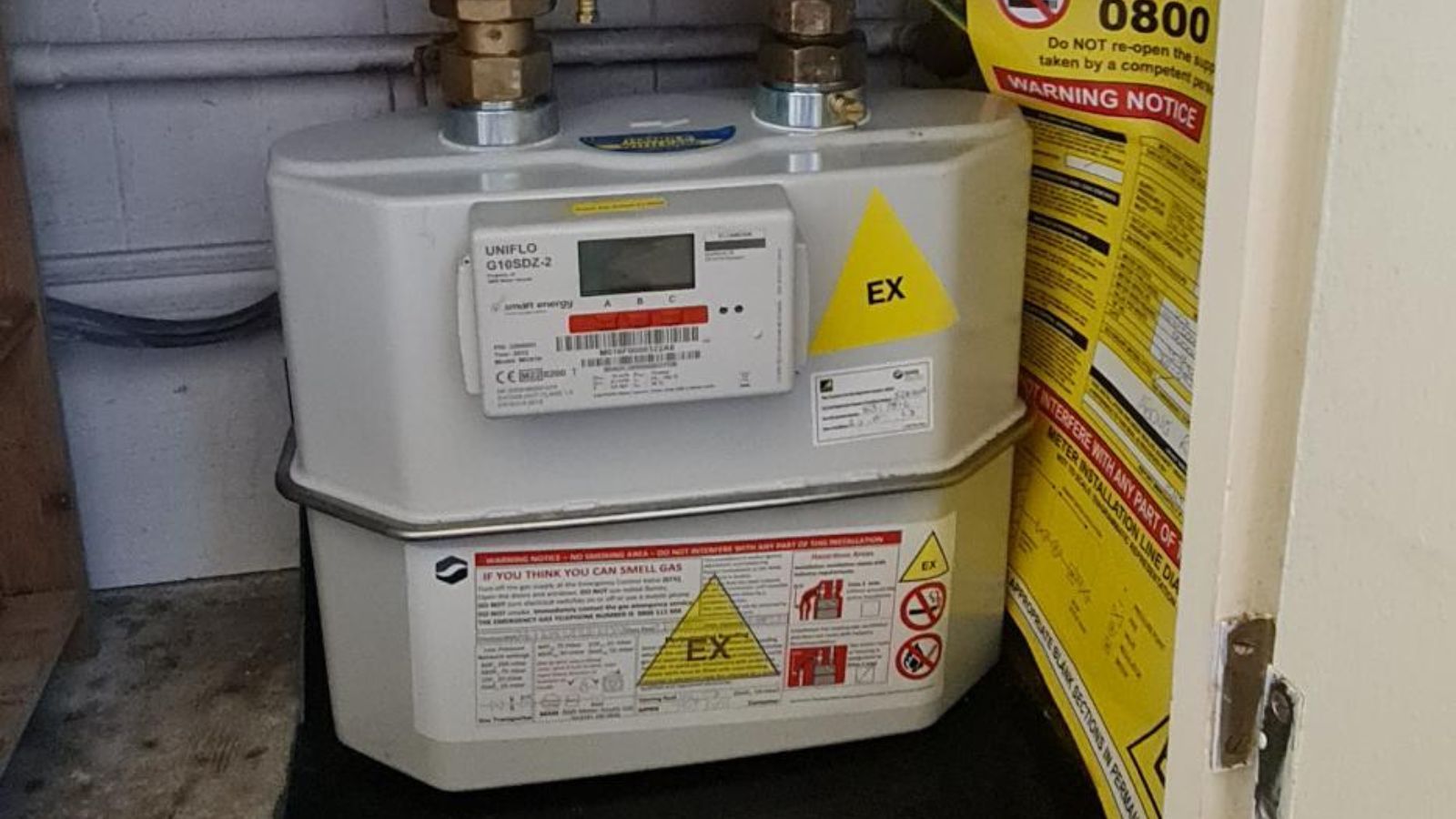
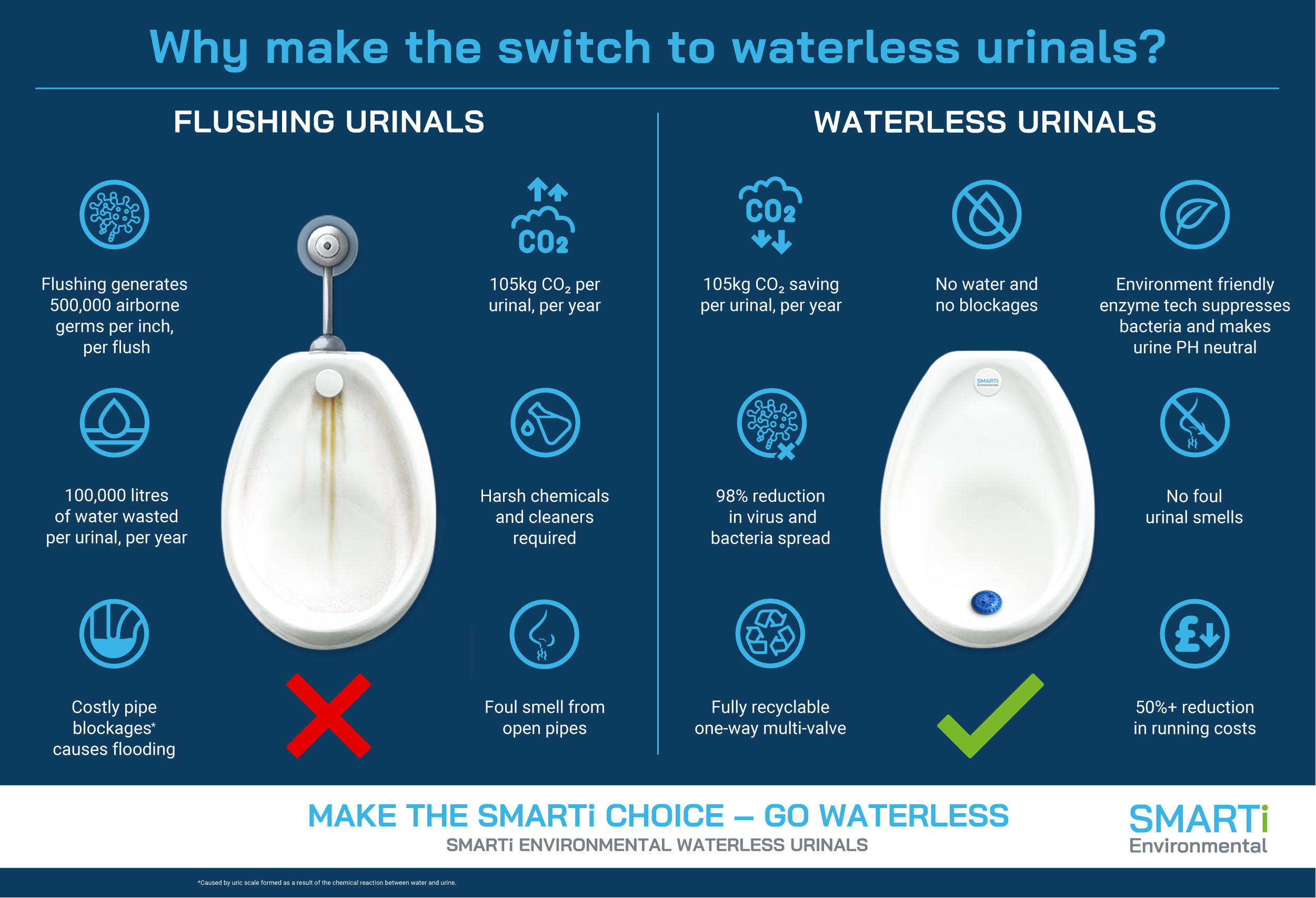


















Recent Comments