The Harrow Council enforcement incident that has recently attracted national media attention is deeply concerning, not only because of the behaviour captured on camera, but because it raises wider questions about accountability, oversight and public trust when councils outsource frontline services.
While Harrow Council and its contractor acted swiftly once the incident came to light, dismissing the individuals involved, the story highlights an issue that every public sector organisation should take seriously. When local authorities contract out services, they cannot contract out responsibility.
Whether an individual wears a council badge or the uniform of a third-party contractor, members of the public see them as representatives of the local authority. Their actions reflect directly on the council, its values and its commitment to serving the community.
Across the UK, councils increasingly rely on specialist external providers to deliver services ranging from environmental enforcement and parking management to security, facilities management and social care support. These partnerships can deliver valuable expertise and operational efficiencies, but they also create additional risks if robust screening, monitoring and governance measures are not in place.
The footage reported in the Daily Mail is particularly troubling because it appears to show enforcement officers deliberately disabling body-worn cameras before making threats towards a member of the public. Regardless of the circumstances leading up to the incident, this represents a serious breach of professional conduct and undermines public confidence in both the contractor and the authority that engaged them.
For me, the key lesson is that councils must apply the same scrutiny to contractor personnel as they do to their own employees. Too often, organisations assume that because a supplier has recruited and employed an individual, the responsibility for vetting, monitoring and managing risk sits entirely with that supplier. In reality, public sector organisations should remain accountable for the conduct of people acting on their behalf.
This is particularly important where contractors have direct contact with the public, access to sensitive information, enforcement powers or responsibilities that can significantly affect residents’ lives. Local authorities should have clear visibility of the screening standards being applied, the ongoing monitoring processes in place and the training provided to individuals representing them in the community.
Screening, however, is only one part of the picture. Effective oversight requires regular auditing, contractual accountability, robust incident reporting procedures and a culture that prioritises professionalism and ethical conduct. Councils should be asking not only whether their suppliers are carrying out background checks, but whether those checks are appropriate for the role, regularly reviewed and supported by ongoing compliance measures.
Ultimately, public trust is one of the most valuable assets any local authority possesses. Every interaction between a resident and someone acting on behalf of a council has the potential either to strengthen or erode that trust.
The Harrow case should serve as a reminder to all public sector organisations that contractor risk is organisational risk. Councils have a duty not only to select reputable suppliers, but to ensure that the people deployed under those contracts meet the same standards of integrity, professionalism and accountability that taxpayers rightly expect from public servants themselves.
Growing fire safety organisation Fire Aware has sent a stark message to those working across multiple sectors with decisions to make about fire safety – change needs to start now.
Fire Aware CEO Gavin Skelly made the call as the fire safety industry starts to understand the implications of the post-Grenfell era and the legal process that is underway.
Gavin Skelly said: “There is a wave of change – and reality – sweeping those sectors with a particular responsibility to protect people. Those inhabiting the built environment are vulnerable from the poor moral performance of those who hold a duty of care to keep them safe.
“We are making a call to the decision-makers in the supply chains serving these sectors to examine their procurement commitments in the interests of public safety and to be clear about their responsibility.
“This is a widespread responsibility and means a much to the owner of a restaurant, as it does to the owners of care homes, schools or shopping centres. The change we are seeing is in those business owners, and many others, realising that they are directly responsible and that it is not acceptable to offset that responsibility to suppliers.
“Our own members are proud to commit to our Code of Conduct and our specific charters which take the safety process beyond legislation. This is a vocation, not a job, and we are all in this together.”
Dame Judith Hackitt – who led the Grenfell Inquiry – has called for cultural change through moral and ethical behaviours, recently supported by the new independent Building Safety Regulator (BSR) which has been created to ‘promote competence and higher standards.’
Skelly said all of those involved in the design, construction, management, maintenance and letting of the built environment need to understand that they have an obligation to fire safety even if their business is not directly connected with fire specialisms.
Fire Aware continues to focus on the moral responsibility of all those working in the fire safety supply chain including designers, developers, asset owners, managers and other stakeholders.
It aims to change the culture of the built environment sector with its moral Code of Conduct via a series of charters designed to influence how member companies behave in upholding their duty of care.
Fire Aware is a recognised membership body serving the built environment and related sectors with a common aim to work and trade responsibly to all best practice standards in the interests of the safety of the general public.
As educators, school leaders, SEND professionals and families, we need to understand what these reforms will mean for already overstretched budgets, pressure on EHCP thresholds, and how the system will ensure schools are equipped to meet these ambitions. When the Government announced its plans for “Experts at Hand”, it was a welcome step, but with some uncertainty on how it would be delivered.
We know that local authorities are already facing significant pressures, including rising levels of need, demand for stretched specialist services, and budget cuts. With many simply asking, ‘So where do we start?’
Many staff in the sector are overworked and have too much on their plates, so assuming that we will have to take on even more can leave us thinking about how we can best adapt to these changes. But looking at “Experts at Hand” with a different view, it could be really transformative and just what the sector needs.
Imagine if we finally addressed one of the biggest challenges in the SEND system today, waiting for that specialist help to arrive. All too often, schools find themselves on a reactive support cycle where support often arrives months later when needs have increased and become more complex.
When I speak to school leaders, they tell me that they don’t want more bureaucracy; they want to help all children at the point of need. This is where “Experts at Hand” could be a real transformational, as it gives us the opportunity to ditch the crisis support model.
For many children and families with SEND, support isn’t happening early enough. Intervention at the earliest point isn’t just better for children and families. It’s also better for schools and local authorities when specialist advice from mental health professionals is given quickly and easily, as they can work with children and families before needs escalate, leading to more sustainable support in the long-term for children.
‘Experts at Hand’ shouldn’t be about sticking another service at the end of an already overstretched list and if there is one group of people who will be key to making this work, it’s our local authorities.
If implemented well, “Experts at Hand” should allow schools the flexibility to access specialist help when they need and we are already seeing lots of local authorities beginning to think creatively about what this might look like. Some schools are accessing multi-disciplinary outreach teams who can offer consultation and support at the earliest point of need and others are looking to create inclusion hubs shared with multiple schools. For others, it could be that they are looking at rolling out specialist support teams across a number of schools.
The one thing all these examples share is collaboration. No single service can solve SEND on its own, but with education, health and care services working together end to end, we have a chance to support schools before crisis point.
Used effectively, “Experts at Hand” can improve workforce confidence and capability across the SEND system and I believe that’s one of the best things about these reforms is the ability to share specialist expertise across the board.
With school staff already overwhelmed by the daily pressures they face in the classroom, immediate access to specialist support could be a game-changer. Not just for children and families, but for staff mental health.
With immediate support accessible for schools without a child needing to reach crisis point, they can intervene sooner. And the earlier we can intervene, the more likely we can achieve positive outcomes for children and young people. But, “Experts at Hand” will only succeed if everyone owns a piece of the pie for support and accountability.
It could be that this means having difficult conversations about capacity and budget so that we can work with schools to understand their needs from the outset.
But the questions on most people’s lips is ‘Where do we start?’ and as with any big reform, it can be difficult to know. But there are some simple steps that could help local authorities:
Look at your current specialist support offer. Where are the delays? Where is the duplication?
Talk to schools and SENCOs about the support they need most.
Build multidisciplinary partnerships with education, health, and care services.
Develop outreach and consultation models that support earlier access to expertise and advice.
Focus on preventative intervention, not just statutory assessments.
Develop the workforce as well as students.
Create collaborative systems instead of working in silos.
First are foremost, we must remember that any initiatives put in place is about children, young people, and families. They need support that works for them, that’s joined up and that can be accessed when they need it.
The challenges we face in SEND are significant and there’s no denying that. Demands are rising, budgets are being squeezed and specialist vacancies are many.
However, if schools, specialist support services and local authorities can really commit to collaborating to create systems that can respond quickly, then “Experts at Hand” could be a starting point for transforming SEND support from crisis-intervention to delivering help when it’s needed.
About Emma Sanderson
Emma Sanderson is Managing Director at Momenta Connect and a former HMI. Well respected by her peers, Emma has over 25 years’ experience in education, inclusion and school leadership, Emma works with schools, trusts and local authorities on SEND, attendance and inclusion. She has a particular interest in early intervention, workforce support and developing long-term sustainable inclusion.
Electric vehicle (EV) charge point operator (CPO) Believ has partnered with UrbanChain, an AI-powered, licensed energy supplier, to power its UK charging network with traceable, locally matched renewable energy that bypasses the wholesale energy market to deliver stable energy prices.
This three-year extension builds upon an agreement first signed in 2025 and will continue to power Believ’s growing network.
The agreement sees UrbanChain’s half-hourly matching, transparent model applied across Believ’s growing charge point portfolio of more than 2,400 live chargers nationwide, with thousands more being installed through several major local authority and commercial partnerships.
Matching supply and demand every 30 minutes
UrbanChain’s model directly connects electricity demand with renewable generation on a half-hourly basis, removing traditional intermediaries and increasing transparency over where energy is sourced.
For Believ, this means the energy used across its charge point network can be matched to specific generation sources in near real time, often within the same local area. This approach provides greater certainty and clarity over energy provenance, while also helping to manage exposure to wholesale market volatility.
The partnership also enables a more flexible pricing structure, helping to deliver cost efficiencies for partners and EV drivers.
Supporting local energy and infrastructure
By aligning local renewable generation with local EV charging demand, the partnership supports a more decentralised and resilient energy system. It also enables local authorities, businesses and landowners to better understand how and where energy is generated and consumed within their areas.
UrbanChain’s interactive generation map will support this approach, allowing users to visualise how renewable energy is matched to EV infrastructure.
Guy Bartlett, CEO at Believ, says the partnership with UrbanChain is underpinned by a shared goal to deliver innovative, future-proofed energy solutions: “With UrbanChain, we have strengthened our ability to offer not just renewable, but fully traceable energy across our network.
“By matching demand with local generation, we can give our local authority and business partners, and driver customers greater confidence in where their energy comes from, while also improving how we forecast demand and develop better-value propositions.”
Charlie Parry, Chief Growth Officer at UrbanChain, said: “This is infrastructure-level system change. UrbanChain already powers Believ’s network, and this extension commits that model for the next three years as EV charging is rolled out at scale across the UK.
Local authorities across the country are deploying EV charging at pace, and behind every one is an energy system that either entrenches wholesale volatility or builds something structurally different.
“We’ve built the latter with Believ, bringing local renewable generation to local consumers, through choice, not obligation, and giving long‑term certainty to serious infrastructure rollouts. This is what powering communities, councils, and the decarbonisation of transport at scale actually looks like, through resilient, repeatable systems, designed to support the decarbonisation of transport at national scale.”
Following a competitive open tender process, Fusion21 has appointed 22 suppliers to its £85 million UK-wide Grounds Maintenance Framework, providing public sector members with a fast route to market for grounds maintenance, landscaping and outdoor space services.
The specialist companies have secured a place on the fourth iteration of the framework, with 72% being SMEs. This is also the first Fusion21 framework awarded under the Procurement Act 2023.
Designed to support Fusion21’s public sector members in maintaining and improving a diverse range of outdoor spaces, the framework provides regional and national coverage, and is available to members, including housing providers, local authorities, education, blue light and the NHS.
Services span routine and seasonal maintenance, as well as hard and soft landscaping, tree works, fencing, and hedge and shrub maintenance.
Peter Francis, Group Executive Director (Operations) at Fusion21, said: “Our renewed Grounds Maintenance Framework gives members a fast, simple and compliant way to access trusted suppliers for grounds maintenance and landscaping services. With regional and national coverage, it supports everything from local requirements to large-scale, multi-site portfolios.
“Complementing our Workplace and Facilities Management Framework, this framework offers flexible call-off options while delivering social value and environmental improvements that have a visible impact on communities.”
Over the lifetime of the framework, Fusion21 aims to support the development of a community forest planting trees in every area where the framework is active, helping to create more sustainable communities, reduce carbon emissions and improve wellbeing.
Successful suppliers appointed to Fusion21’s national Grounds Maintenance Framework:
Aspire Community Works CIC, Bidvest Noonan (UK) Limited T/A Just Ask Estate Services, Blakedown Environment & Leisure Ltd T/A Blakedown Landscapes, Chequers Contract Services Limited, Fairways Contracting Limited, Gould Landscapes Limited, Great Oaks Tree Services Ltd, Greentown Environmental Ltd, Groundscapes Limited, John O’Conner (Grounds Maintenance) Limited, Landscaping Centre Limited T/A idverde, M J Granger Grounds Maintenance Limited, M&Y Maintenance & Construction Limited, Majestic Grounds Maintenance Ltd, Nurture Landscapes Limited, Oxford Direct Services Trading Limited, Peter Crosby Landscape Limited, Pinnacle FM Ltd, Ramora Limited, Sherratt Group Ltd, Sovini Property Services Limited, UK Landscapes Limited.
Boost TA co-founders Giles Donovan (left) and Will Roberts (right) with two of the prototype units
West Northamptonshire Council (WNC) has collaborated with Clear Futures, and Boost TA Ltd, to design and provide 108 modern, relocatable homes on two sites, aimed at improving living standards and supporting families facing homelessness in transitioning to permanent housing, whilst reducing costs for the Council.
The sustainable, relocatable homes will provide families with safe, stable housing, reducing reliance on less suitable and more expensive B&B type accommodation while delivering long-term, cost-effective solutions for councils and their communities.
The UK faces a pressing housing crisis, with over 130,000 households currently in temporary accommodation, costing local authorities in England in excess of £2.8bn per year (25% increase on the previous year). In June 25 WNC was providing temporary accommodation for 780 households across the district.
Cllr Charlie Hastie, cabinet member for housing and communities at WNC, said: “This proposal allows us to create temporary accommodation which is better suited to people’s needs and saves taxpayers money. Nobody ever wants to find themselves and their family homeless, but if they do, they want the reassurance that someone can help solve the immediate worry of needing a roof over their head.
“These new homes will create two small communities as the starting point for getting people back on their feet. They will have integrated local amenities, and the homes can be moved elsewhere at any time, should the need arise.”
By working with Clear Futures, WNC was able to benefit from a unique flexible procurement route, fully compliant with the new Procurement Act 2023, agile contracting options and a transparent market testing process that has enabled Clear Futures to unlock value for money for the council whilst fast tracking the delivery of the temporary homes.
Interior of the Boost TA modular accommodation units
Charlotte Cordingley, chief executive at Clear Futures, commented: “Councils across the country are facing growing pressure as more people and families find themselves needing temporary accommodation. Projects like this are so important and they do so much more than provide a roof for the night. They create empowering spaces to support families to grow together and help them improve their lives. We are incredibly proud to be working in partnership with West Northamptonshire Council and Boost TA to deliver a sustainable, long-term solution for residents that reduces cost and increases outcomes for the council.”
Boost TA provides sustainable, fully compliant temporary homes that promote resident well-being through fully relocatable houses. They offer a holistic model of providing bespoke modular, cost-effective housing solutions that create viable new communities in a way that greatly reduces programme time and slashes the revenue costs many councils are currently paying for temporary accommodation.
Giles Donovan, co-founder of Boost TA, said: “Not since the end of the Second World War has there been a greater need for immediately available temporary and social housing stock. That urgent need drove our partnership-focused approach to creating purpose-built high quality modular accommodation that provides a dignified solution to getting people back on their feet when they find themselves temporarily without a home.
“Designed for scale, precision and consistent quality, our model delivers much-needed social housing faster, with lower long-term running costs and reduced short-term capital outlay.”
Charge point operator (CPO) Believ is rolling out its electric vehicle (EV) charging network across Telford & Wrekin Council, with 200 new charge points installed across 35 key public car parks. The project has been driven by the council’s sustainability strategy to decarbonise transport and support local residents in the transition to electric mobility.
Charge points are now live at a number of locations across the borough, including Wrekin Road car park, where 10 charge points have been installed. These include a mix of Standard Plus chargers for longer stays and overnight charging, and Rapid chargers for shorter visits such as for shopping, dining and exploring the local area. The network will expand to include a total of 124 charge points funded through the On-Street Residential Charge point Scheme (ORCS) with an additional 76 chargers fully funded by Believ. This marks a significant step towards meeting the growing demand for accessible EV charging solutions in the borough.
Believ will install, operate and maintain all charge points, supporting Telford & Wrekin’s plans to cut emissions and boost the borough’s visitor economy, particularly in popular destinations such as Ironbridge, a UNESCO World Heritage Site.
The collaboration between Believ and Telford & Wrekin Council goes beyond providing charging infrastructure. The project is also intended to deliver social value through a number of wider community benefit initiatives, alongside its aim of delivering cleaner air for all. Overall, the project is estimated to deliver carbon savings of more than 18,000 tons.
Councillor Carolyn Healy, Telford & Wrekin Council Cabinet Member for planning, Neighbourhoods and Sustainability said “This is an exciting milestone in our work to decarbonise transport and make sustainable travel more accessible to residents and visitors. Partnering with Believ and using government ORCS funding has allowed us to efficiently roll out a high-quality EV charging network for our residents, especially those that do not have on-street parking. Believ’s fully funded offering means we have been able to install scalable EV charging infrastructure across the council.
Guy Bartlett, CEO of charge point operator Believ, says the operator is proud to be supporting Telford & Wrekin in its drive to create a greener, more sustainable borough: “This partnership between Believ and the council will provide much-needed charging infrastructure to help local residents transition to electric vehicles, and we’re excited to see the positive impact it will have on the local economy and the environment.”
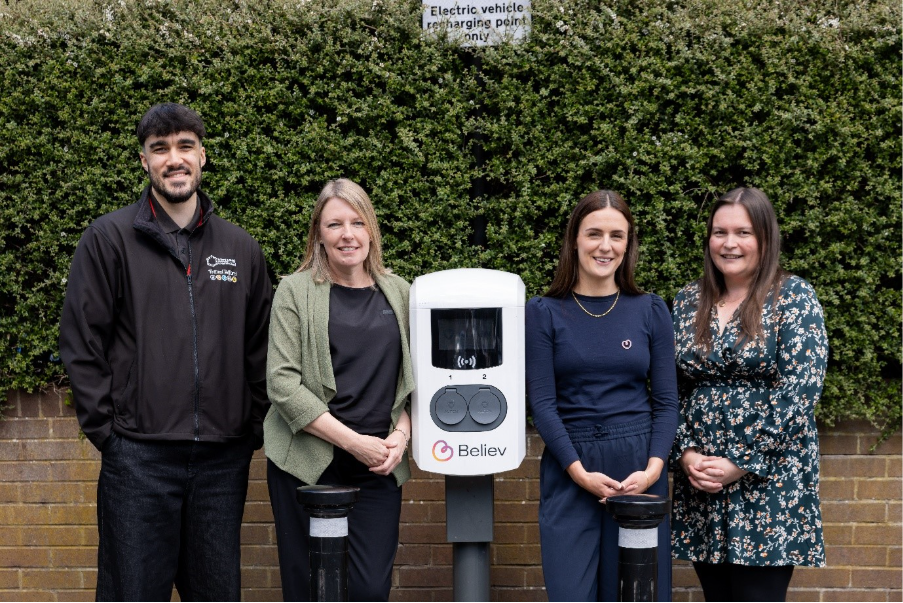
Photo from L-R: Euan Carlin T&W Council, Cllr Carolyn Healy, Lucy Day senior account manager at Believ, Heather Bolton T&W council
Government and public sector websites are among the best-performing for digital accessibility, but new data shows that significant barriers still remain across the web.
The latest WebAIM Million 2026 report, which analysed the homepages of the world’s top one million websites, found an average of 56.1 accessibility errors per page, up from 51 the previous year.
Government websites average 42.4 accessibility errors per page, 24.4% fewer than the overall average.
Despite this stronger performance, 95.9% of all homepages across all sectors still fail to meet basic accessibility standards (WCAG 2 A or AA), highlighting that accessibility issues remain widespread even in leading sectors.
Government and public sector platforms rank at the top of the accessibility league table, reflecting stronger governance, testing and accountability compared to many other industries.
However, the same core issues persist. The most common barriers include low-contrast text (on 84% of home pages), missing alternative text for images (53%), unlabelled form inputs (51%), and empty links (46%) or buttons (31%).
WebAIM also found that homepage complexity is increasing, with pages now containing an average of 1,437 elements (such as images, buttons and links), a 22.5% increase in just one year. Almost 4% of all page elements contain an accessibility error, meaning users encounter a barrier on roughly one in every 26 elements.
Nexer Digital’s latest research into user behaviour highlights how these issues can still have a cumulative impact. Its Hidden Journey study found that 79% of disabled users struggled to browse, 81% found selecting options difficult or impossible, and 81% struggled to complete tasks, showing that even small barriers can affect overall experiences.
Hilary Stephenson, Managing Director of Nexer Digital, said: “Government has shown that improvement is possible when accessibility is prioritised.
“But even the best-performing sectors are still failing many users. The fact that the vast majority of sites still do not meet basic standards shows how much work there is left to do.
“Accessibility is not about perfection, it’s about consistency and intent. The public sector has made progress because of clear accountability and that’s something other sectors can learn from.”
Mphasis TriaTM unifies enterprise insight, foresight, and execution into a governed Enterprise Agency Platform, delivering outcome-led enterprise transformation
Powered by Mphasis Tria, Mphasis unveiled two market-facing product lines- MphasisModerniseTM and MphasisOptimiseTM
Mphasis, (BSE: 526299; NSE: MPHASIS), a global AI-led, platform-driven technology solutions provider, has announced the launch of Mphasis Tria, an Enterprise Agency Platform that enables enterprises to move beyond AI experimentation and into coordinated decision-making and measurable business outcomes across operations, technology, and commercial functions. The platform, connects enterprise knowledge, causal reasoning, and agentic execution to deliver Agency AppliedTM, transforming enterprise intelligence into governed, accountable, and outcome-oriented actions at scale.
Alongside Mphasis Tria, the company also unveiled Mphasis Modernise and Mphasis Optimise, the two product lines through which the platform will be introduced to the market and deployed across enterprise transformation engagements.
Built on years of focused investments in building proprietary assets, including the NeoIPTM suite, Mphasis Tria’s three-layer stack is designed to enable intelligent, enterprise-wide transformation:
Layer 1: Insight, serves as the foundational layer, powering the structured knowledge graph and contextual intelligence engine that creates enterprise-wide visibility and understanding. Powered by Mphasis OntosphereTM and NeoIP, Insight layer creates the enterprise memory layer by structuring enterprise data, processes, constraints, relationships, and operational context
Layer 2: Foresight, anchored by Continuum AITM, transforms data and context into actionable insights through advanced cognitive and reasoning capabilities. It enables causal reasoning, optimisation, simulation, and enterprise decision intelligence
Layer 3: Execute, is the agentic execution and orchestration layer that enables intelligent automation and coordinated enterprise actions at scale. Powered by NeoIP, it orchestrates workflows, automation, governance, and enterprise execution through agentic systems.
“Through Mphasis Tria, Mphasis is introducing a new category of enterprise transformation, one that moves beyond autonomous AI systems into governed Enterprise Agency, reflecting the belief that enterprises do not simply need more AI models or automation, but the ability to convert intelligence into coordinated, accountable action/s,” said Nitin Rakesh, Chief Executive Officer and Managing Director, Mphasis.
Mphasis Modernise and Mphasis Optimise establishes a scalable, repeatable, and platform-based commercial model, beyond bespoke services engagements and into structured transformation offerings with measurable outcomes and recurring revenue potential.
Mphasis Modernise drives transformation in how enterprises operate, modernising not just technology stacks, but also the processes and business operations that power them. Mphasis Optimise focuses on continuous performance improvement across commercial and operational decisions that create enterprise value. While Mphasis Modernise reshapes the structure, Mphasis Optimise fine-tunes the engine, leveraging the Mphasis Tria platform to convert data into faster, smarter decisions across the variables that most directly influence profitability and growth.
“Most enterprises do not lack data, dashboards, models, or AI experiments. What they lack is the ability to turn that intelligence into coordinated, accountable action that drives measurable business outcomes. Mphasis Tria is positioned at that intersection of technology, transformation, and economic outcomes, enabling enterprises to operationalise AI at scale,” said Srikumar Ramanathan, Chief Solutions Officer, Mphasis.
A key milestone in completing the Mphasis Tria stack was the acquisition of Theory and Practice, and its decisioning intelligence platform, Continuum AI, enabling Mphasis Tria to function as a fully integrated “sense-decide-act” enterprise system. Within the stack, Continuum AI provides the foresight and optimisation capabilities that sits between enterprise context and agentic execution, enabling governed reasoning, simulation, and enterprise-scale decision intelligence.
New research reveals half of UK parents are job-hunting for their adult children. Industry experts and CEOs are now sounding the alarm. Career advancement firm Invicta Vita says structured mentorship is the answer parents are looking for.
New research from London-based career advancement firm Invicta Vita reveals that more than half of UK parents (52%) have actively searched for jobs on behalf of their adult children, and one in six have “pulled strings” in an attempt to help secure employment. One in three have delayed their own retirement because their grown-up children are still living at home and unable to find work.
According to recent data the average UK job vacancy now attracts 48.7 applications, a 286% year-on-year increase. Meanwhile, the number of advertised roles fell by 24% over the same period. For graduates entering the market with a degree and little else, competition has never been fiercer.
“Parents are watching their children send hundreds of applications into what feels like a void, and doing what any loving parent would do — trying to intervene,” says Georgina Badine, founder of Invicta Vita. “But what CEOs across the UK and US are now telling us is that this intervention is backfiring. When a parent reaches out on their child’s behalf, it signals to a hiring manager that the candidate lacks confidence, initiative, or genuine interest in the role. In a market this competitive, that impression is almost impossible to recover from.”
The Invicta Vita research also found that 44% of UK parents now believe their child’s university degree was the worst decision they ever made, a figure that sits in striking contrast to the 44% who call it the best. UCAS admissions have already declined by 5% year-on-year as families begin to question whether the traditional higher education route still delivers real-world results.
“The graduate job market has fundamentally changed. A degree no longer differentiates you. What differentiates you is confidence, communication, strategic thinking, and knowing how to position yourself in a competitive environment. Those are learnable skills, but they need to come from the candidate, not from their parents.”
Invicta Vita’s model is built around exactly this. Its team of career mentors — professionals with decades of experience across finance, tech. leadership, high-pressure corporate environments, public speaking, mental health advocacy, and cross-border business, work directly with individuals to build the capabilities that employers are looking for.
“When a young person walks into an interview having worked with a mentor who has sat on the other side of the table, something shifts,” says Badine. “They’re no longer guessing. They understand the environment, they know how to carry themselves, and they’ve had the honest conversations that most parents find too difficult to have. That’s what gives you an edge in a market where everyone has the same degree.”
For parents reading the headlines about overbearing mums and dads and recognising themselves, Badine’s message is one of compassion rather than criticism.
“Your instinct to help is right. The method needs to change. The most powerful thing a parent can do right now is invest in their child’s confidence and capability.”
The Chartered Institute of Logistics and Transport in the UK (CILT(UK)) brought together leaders from across the logistics and transport sector for its annual Partnerships Day on 14 May at the National Space Centre in Leicester. HRH The Princess Royal, Patron of CILT(UK), attended the event as a special guest.
The event also marked the launch of CILT(UK)’s forthcoming Centenary celebrations, recognising 100 years since the Institute was awarded its Royal Charter and celebrating a century of supporting and advancing the logistics, transport and supply chain profession across the UK.
The event welcomed CILT(UK) partners, industry leaders and public sector bodies for a full day of insight, discussion and collaboration focused on strengthening partnerships, driving innovation and promoting excellence across the sector.
This year’s event centred around the themes of change, culture and collaboration, exploring how organisations across logistics, transport and supply chain can work together to navigate transformation, accelerate sustainability, strengthen workforce capability and shape the future of the profession.
The agenda included keynote sessions, leadership insights, panel discussions and masterclasses featuring speakers from organisations including DP World, GXO, Carlsberg Britvic, Stagecoach, NHS, VEV and Transport Intelligence Ltd.
Reflecting the event’s focus on change, culture and collaboration, the day opened with an insight session led by Erin Meehan, Head of Partnerships at CILT(UK), exploring what great partnership culture looks like across different sectors.
Further highlights included: · A keynote session from John Manners-Bell, CEO of Transport Intelligence Ltd, on creating a culture of collaboration and innovation across the sector. · A panel discussion exploring how partnerships can accelerate innovation, technology adoption and sustainability. · A leadership insight session from Vice Admiral Andy Kyte CB, Chief of Defence Logistics, focused on leading through culture and change during periods of transformation. · A panel discussion examining how organisations can successfully manage change and bring people with them on the journey. · A session exploring the future of bus and public transport partnerships, including the role of collaboration in improving connectivity, sustainability and passenger experience. · A masterclass on professionalising the sector through standards, qualifications and workforce expertise.
A major highlight of the event was the special address and visit from HRH The Princess Royal. Her Royal Highness’s presence reflected her longstanding commitment to supporting the logistics, transport and supply chain profession and recognised the vital role the sector plays in supporting the nation and the economy.
Helen Hardy, Chief Executive Officer of CILT(UK), said: “Partnerships Day is about bringing together organisations and leaders to share ideas, strengthen relationships and shape the future of our profession together. This event highlighted the importance of culture, change and partnership working across our industry.
“This year’s event was especially significant as it also marked the launch of our forthcoming Centenary celebrations, recognising 100 years since CILT(UK) was awarded its Royal Charter. For a century, CILT(UK) has represented professional excellence, trusted standards and leadership across logistics, transport and supply chain, while building a strong community connected by shared values, expertise and purpose.
“As we celebrate this milestone, we are proud not only of our heritage, but of the future we are helping to shape through collaboration, innovation and professional development across the sector. We were honoured to welcome HRH The Princess Royal and deeply value her longstanding support for CILT(UK) and the wider profession.”
During her visit, HRH The Princess Royal met with CILT(UK) partners, industry leaders and delegates, reinforcing the importance of collaboration, professional development and innovation in shaping the future of the sector. Her continued support for CILT(UK) and its members since 1990 remains highly valued across the industry.
Partnerships Day forms part of CILT(UK)’s wider commitment to supporting learning, thought leadership, networking and professional development across the profession.
For more information about CILT(UK) and its partnerships, visit: www.ciltuk.org.uk
Browne Jacobson has supported an AI MedTech start-up to roll out innovative wearable technology that enables people to track their heart rate on the go.
Nick Smee
The UK and Ireland law firm advised Cambridge Heartwear on a wide range of legal issues during preparations for the commercial launch of HeartSense – described as the world’s first medical-grade, multi-channel wearable electrocardiogram (ECG).
Spun out of the University of Cambridge, the device delivers real-time ECG data straight to a user’s phone without the need for a prescription, while also allowing results to be shared directly with healthcare professionals to support faster assessment and earlier intervention.
Browne Jacobson’s team, led by Nick Smee, Partner in intellectual property, has worked with Cambridge Heartwear for the past five years on legal matters such as commercial contracts, data protection, intellectual property protection and procurement. Nick has been supported by Cat Driscoll (Partner, commercial) Thomas Gibby (Principal Associate, IT licensing) and Conor Moran (Senior Associate, data protection).
Nick said: “Launching HeartSense on to the open market is a major milestone in Cambridge Heartwear’s journey and represents an exciting step forward in cardiac care.
“Giving people the ability to monitor and better understand their heart health through wearable, medical grade ECG technology connected to their mobile phones is just the kind of innovation that will help to drive the transition from curative to preventative healthcare, as set out in the UK Government’s 10-Year Health Plan.
“We’re proud to have partnered with such a pioneering start-up that is not only at the cutting edge of its sector, but reflects our ambition to work with clients at the forefront of society’s biggest issues.”
Cambridge Heartwear, based at Cambridge Science Park, was born out of research led by Professor Dr Rameen Shakur into using wearable technology for improving the detection of irregular heart rhythms and respiratory problems.
HeartSense, which is manufactured in East Anglia and compliant to UKCA standard, is the world’s first ECG monitoring device designed to form around the chest and is currently the only leadless device of its kind on the market. The company also says it is the first time a medical diagnostic device has been made available to the public, rather than in clinical settings.
Combining advanced AI technology with hospital-quality, multi-channel ECG monitoring in a discreet, everyday format, it has been designed for both women and men, with women specifically in mind so it can be worn comfortably and discreetly beneath a bra. It uses wireless charging and Bluetooth connectivity.
Cambridge Heartwear believes the technology could transform access to cardiac monitoring and empower more people to better understand and manage their heart health, particularly women, whose cardiovascular symptoms can often go undetected through traditional pathways.
Continuous data monitoring aids clinicians in early detection of conditions such as stroke, atrial fibrillation and other types of cardiovascular disease.
Professor Dr Rameen Shakur, Founder and Chairman of Cambridge Heartwear, said: “As healthcare continues to evolve, innovations such as HeartSense have the potential to support earlier diagnosis, improve patient monitoring and contribute to wider efforts to reduce the impact of heart disease and stroke.
“There are 7.8 million people in the UK living with cardiovascular disease, but referral for data analysis to diagnosis can currently take as long as four to six weeks.
“Our breakthrough technology is designed to close this gap in cardiovascular care and place heart health in the hands of patients, who for the first time can continuously monitor their own heart rhythm outside the clinic across multiple channels.
“We’re particularly pleased to have gone from concept to market in just four years – less than half the industry average of about 10 years – and to have secured 86 patents, which underlines the scale of the innovation involved. We’re grateful to have been able to call upon the fantastic support of Nick and the Browne Jacobson team throughout this journey.”
Brightly Software, a Siemens company, has announced a strategic partnership with digital Traffic Order specialist AppyWay to support UK highway authorities in managing digital traffic regulation orders (D-TROs) and kerbside infrastructure more effectively.
The partnership will integrate AppyWay’s Traffic Suite software that manages kerbside and traffic regulations with Brightly Software’s Confirm asset management system, which will enable UK local authorities to manage highway assets and the traffic orders that affect them through connected systems.
The move comes as UK highway authorities prepare for government requirements that state new traffic regulation orders need to be published digitally where, as per the Automated Vehicles Act, authorities will need to maintain digital versions of traffic regulation orders. Regulations are expected to come into force in 2026.
AppyWay’s Traffic Suite allows authorities to create, manage and publish digital traffic regulation orders using a map interface, while supporting public consultation and providing greater visibility of kerbside restrictions. When integrated with Confirm, this information can be connected to asset records, work programmes and operational activities across the highway network. The combined solution will help teams to make better operational decisions when scheduling works and maintenance.
The partnership also helps local authorities simplify procurement by providing a more unified approach to asset and kerbside management. Rather than procuring separate systems, authorities will be able to procure a complete solution from a single vendor.
The partnership will support UK local authorities where digital traffic regulation order requirements are expected to reshape how traffic management and kerbside infrastructure are planned and maintained.
By bringing together asset and kerbside data, Brightly and AppyWay aim to help communities improve their operational efficiency, support smarter mobility and create more accessible and sustainable urban environments.
Chris Thompson, Director of UK&I Sales, Brightly Software, comments: “We recognise that highway authorities are under increasing pressure to digitise their services and meet new regulatory requirements. By partnering with AppyWay, we can extend the capabilities of Confirm to support digital traffic regulation orders and kerbside management, thereby helping our customers to manage their networks more efficiently while preparing for upcoming legislation.”
Dan Hubert, CEO and Founder, AppyWay, says: “Kerbside management and digital traffic orders are becoming critical components of modern transport networks. Our partnership with Brightly Software allows us to connect our technology with one of the leading asset management platforms that’s used by local authorities, so overall, organisations can better manage their traffic regulations, parking infrastructure and highway assets in one connected system.”
Mike Potter, Head of Commercial, AppyWay , adds: “Our partnership helps highways authorities turn compliance into a practical advantage to give their teams clearer visibility, more efficient coordination and ultimately, more control over how their networks perform.”
Government and public sector websites are among the best-performing for digital accessibility, but new data shows that significant barriers still remain across the web.
The latest WebAIM Million 2026 report, which analysed the homepages of the world’s top one million websites, found an average of 56.1 accessibility errors per page, up from 51 the previous year.
Hilary Stephenson
Government websites average 42.4 accessibility errors per page, 24.4% fewer than the overall average.
Despite this stronger performance, 95.9% of all homepages across all sectors still fail to meet basic accessibility standards (WCAG 2 A or AA), highlighting that accessibility issues remain widespread even in leading sectors.
Government and public sector platforms rank at the top of the accessibility league table, reflecting stronger governance, testing and accountability compared to many other industries.
However, the same core issues persist. The most common barriers include low-contrast text (on 84% of home pages), missing alternative text for images (53%), unlabelled form inputs (51%), and empty links (46%) or buttons (31%).
WebAIM also found that homepage complexity is increasing, with pages now containing an average of 1,437 elements (such as images, buttons and links), a 22.5% increase in just one year. Almost 4% of all page elements contain an accessibility error, meaning users encounter a barrier on roughly one in every 26 elements.
Nexer Digital’s latest research into user behaviour highlights how these issues can still have a cumulative impact. Its Hidden Journey study found that 79% of disabled users struggled to browse, 81% found selecting options difficult or impossible, and 81% struggled to complete tasks, showing that even small barriers can affect overall experiences.
Hilary Stephenson, Managing Director of Nexer Digital, said: “Government has shown that improvement is possible when accessibility is prioritised.
“But even the best-performing sectors are still failing many users. The fact that the vast majority of sites still do not meet basic standards shows how much work there is left to do.
“Accessibility is not about perfection, it’s about consistency and intent. The public sector has made progress because of clear accountability and that’s something other sectors can learn from.”
Electric vehicle (EV) charge point operator (CPO) Believ is marking three years following its rebrand from Liberty Charge with a series of major milestones across its growing standard, standard plus*, rapid and ultra-rapid nationwide network.
Over the past three years, Believ has focused on delivering reliable, inclusive and future-ready charging infrastructure for local authorities, businesses and landowners across the UK. Believ’s network has grown to more than 2,300 live chargers nationwide, with further expansion planned through a number of major local authority and commercial partnerships.
Among its landmark public sector projects is Suffolk County Council’s programme, the first LEVI-funded project to sign a contract with a CPO, which will see up to 6,000 sockets installed. Believ is also supporting major local authority rollouts in Brighton, Hertfordshire, Plymouth and North Lincolnshire.
Believ’s rapid and ultra-rapid network has grown 4200% in three years with a new charging hub in Aberdeen, and hotel and restaurant installs spanning voco Zeal Hotel in Exeter and the Ulbster Arms in northern Scotland. Major commercial partnerships set to further build on this growth include a £10 million investment with 9Yards to deliver 96 rapid charging bays across 12 retail parks, a partnership with Mitchells & Butlers covering 65 restaurants and hotels nationwide and a new charging hub, conveniently located on the A40 at Firehouse Oxford – with many more to be announced this year.
In 2025, Believ also secured a £300 million investment facility from Liberty Global, Zouk Capital and leading banking partners to support the rollout of at least 30,000 additional public charge points across the UK.
Further strengthening its offer, the company has made strategic acquisitions including Switch EV and SMS plc’s public EV charging business (formerly Metis). These moves have enhanced Believ’s private sector portfolio while supporting the development of its own integrated charge point management system.
Guy Bartlett, CEO at Believ, says he is excited for the future: “Over the past three years, Believ has built real momentum across the UK, working with local authorities, businesses and landowners to deliver charging infrastructure where it is needed most.
“As demand for EV charging continues to grow, our focus remains on building a network that is reliable, accessible and ready for the future – supporting drivers today while helping communities and businesses prepare for the shift to electric transport at scale, and ultimately helping to deliver cleaner air for all.”
Danielle Cort, Marketing Director at Believ, adds: “Marking three years as Believ is an important moment for the business, but it is also a reminder of how much more there is still to do to support all drivers to make the transition to electric vehicles.
“We have built strong foundations through long-term partnerships, major projects and continued investment, and we are focused on carrying that momentum forward as we continue to grow our network in the years ahead.”
*Previously termed slow and fast, and recategorised in early 2026 by the DfT.
Health and social care staff from two NHS trusts and the wider BNSSG integrated care system will engage with tech companies on 13 May, as Bristol NHS Group advances its digital strategy and looks to take forward the 10 Year Health Plan.
Bristol NHS Group’s Local Health Tech Showcase is the latest in a new series of digital engagement events known as Elevate, which bring relevant health tech directly to NHS organisations, allowing trusts to engage their workforce in the art of the possible.
The event will take place on the doorstep of health and care staff in Bristol, at BAWA Health & Leisure. Designed to be as flexible as possible, staff can come for the day or drop in for an hour. With the programme now being finalised and space limited, technology suppliers are encouraged to request a place soon to be considered for participation.
The Bristol event will bring together major tech companies, niche innovators, and staff from Bristol NHS Group, as well as colleagues from university partners and the wider Bristol, North Somerset and South Gloucestershire Integrated Care Board.
An unmissable day of expert-led discussions will take place against the backdrop of a market hall, with hands-on demonstrations showcasing the latest digital innovations that can tackle real-world challenges in health and social care, and transform the experience of staff and patients.
Neil Darvill, group chief digital information officer at Bristol NHS Group, said: “This digital inspiration event comes at an important moment for Bristol NHS Group, which brings together North Bristol NHS Trust (NBT) and University Hospitals Bristol and Weston NHS Foundation Trust (UHBW).
“We have a clear clinical strategy and an ambition to deliver services that are clinically led, digitally-enabled, and focused on the best possible care for patients. By giving people the chance to explore what technology is available, this showcase will help us understand what’s possible as we support our staff and deliver the shifts set out in the 10 Year Health Plan.”
The newly formed Bristol NHS Group is deploying a new digital strategy, focused on refreshing infrastructure, building on electronic patient record and e-prescribing, consolidating systems, and improving how staff interact with technology day to day. The group and its ICS partners are seeking innovation to drive productivity, modernise workflows, transform patient communications, and strengthen community and prevention services.
Leah Parry, chief clinical information officer, nursing, midwifery and allied health professionals at Bristol NHS Group, said: “We are at a pivotal position with our digital strategy. There is a huge opportunity that comes with forming a group to say: ‘This is what we really need’ – but to do that, we need to know what is out there.
“If we were running this event even two years ago, the types of things that we would be showcasing would be massively different, because there has been such an explosion of development over that time. So, we want suppliers to come and show us things that we don’t necessarily know about.
“We also need staff to see those solutions, the technology, the devices, and to get excited about the IT. Then we can play those narratives back into our conversations about how we’re planning and prioritising what we need to do to deliver better care.”
The Elevate model has already been proven by a pilot at University Hospitals of Derby and Burton NHS Foundation Trust. More than 500 NHS employees – from the chair and chief executive to frontline teams – engaged with vendors, and discussions are already feeding into the trust’s digital strategy and generating opportunities.
Highland CEO Mark Venables said: “When we launched Elevate, we said we wanted to change the way that suppliers access the NHS, and the way that NHS staff access the terrific technology that we know is available to them.
“We are confident that Bristol’s event will achieve these aims, and further demonstrate the value of this new model of NHS-supplier engagement. With just over a month to go, we can feel anticipation building, and we’d encourage vendors who feel they have relevant solutions to request a place now as we finalise the agenda.”
The early impact of Elevate, as a means to engage staff in digital, has sparked excitement with NHS organisations in different parts of the country. At least 10 NHS providers are planning events in 2026.
Technology suppliers interested in showcasing their innovations to NHS leaders and health and social care professionals in Bristol can request their place on Highland’s website.
New research by Development Trusts Association Scotland (DTAS) shows a record 320 communities moved to buy or lease local buildings in Scotland in the past 12 months – an increase of 300% since 2024.
There is now a significant number of buildings in community ownership across Scotland, ranging from libraries and community centres to primary schools, police stations and post offices, as local groups work to revive their town centres and neighbourhoods.
This momentum is particularly pronounced in Dumfries and Galloway, the Highlands, Glasgow and Fife, where the highest number of communities have taken matters into their own hands.
Across the country, much of the growth during this time is being driven by the transfer of former places of worship, with communities seeking ownership of 63 churches.
Linda Gillespie
In Shetland, for example, six churches have been purchased through direct donations and grassroots fundraising – including raffles and bake sales – for as little as £10,000 to £68,000. Around one-third of Shetland’s church buildings are now under community ownership and are being used as arts venues and social enterprises.
Despite this growing momentum, community groups continue to face significant barriers to their ownership bids including complex legal processes, funding gaps and competition from commercial buyers.
Linda Gillespie, Head of Community Ownership at DTAS, said: “We’re seeing a marked increase in communities stepping forward to take control of local buildings, especially former places of worship. These buildings have long been at the heart of local life and, without action, risk sitting empty or being lost altogether.
“Community ownership is helping to protect essential services, create jobs and breathe new life into towns and villages. But the process is still too complex and competitive for many groups. Without the right support, there is a real danger that communities will lose out to private developers or see valued local assets disappear.”
In response to the rising enquiries, DTAS has produced a new Churches Crowdfunder Guide to support communities taking on local buildings. The resource gives practical guidance on how to run a successful crowdfunding campaign and is illustrated with recent case studies.
Groups can access the guide on DTAS’s website here.
By Rory Evans, regional director, LHC Midlands and South East
The Warm Homes Plan is not short on ambition. Running to well over a hundred pages, it sets out the government’s intention to deliver the largest programme of home energy upgrades the UK has ever seen.
The headline commitments are deliberately bold: up to £15 billion of public investment, a major expansion of skilled jobs, millions of households expected to benefit from warmer, cheaper-to-run homes by the end of the decade.
But anyone with experience in social housing knows that ambition on paper does not automatically translate into results on the ground.
The real test of the Warm Homes Plan will not be the size of the budget, but whether it can be converted into programmes that work – across ageing housing stock, tight delivery timetables and communities that have seen well-intentioned initiatives falter at the point of delivery.
Why this matters for tenants and landlords
The case for intervention is a powerful one. The energy price shocks that followed Russia’s invasion of Ukraine exposed how vulnerable the UK remains to global energy markets. The Iran conflict, with oil tankers stalled in the Strait of Hormuz, has reinforced that. With most homes still reliant on gas-fired heating, volatility overseas quickly became unaffordable bills at home.
For social landlords, the consequences were immediate and familiar. Rising costs pushed more households into fuel poverty and reinforced what the sector has long understood: cold, inefficient homes are not just an environmental issue, but a challenge for landlords as well as tenants.
Which brings me back to the Warm Homes Plan, painting energy efficiency and low-carbon technologies not as optional enhancements, but essential infrastructure, integral to tenant well-being.
Planned, long-term investment is needed
It signals to the social housing sector that meaningful change is most achievable where councils and housing providers act at scale, across whole portfolios, rather than relying on isolated, single-measure interventions.
And it points towards targeted finance that supports coordinated programmes, combining fabric improvement, low-carbon heating and on-site generation where appropriate.
In practice, this represents a shift away from reactive delivery towards planned, long-term investment that can be measured, reviewed and adapted over time.
That shift is significant. It places social landlords firmly at the centre of delivery, but it also raises expectations. Managing multi-year retrofit programmes is a fundamentally different challenge to installing individual measures, requiring clear technical oversight and disciplined decision-making throughout.
Lofty ambitions translated into reality
This is where the gap between policy intent and practical delivery often opens up.
Large-scale retrofit programmes raise difficult but unavoidable questions. Which buildings are suitable for which interventions? What should be prioritised first: fabric performance, electrical capacity or generation? How can landlords avoid installing measures that constrain future options? And how can anticipated benefits – lower bills, reduced carbon and improved comfort – be evidenced rather than assumed?
Answering those questions consistently across large and varied housing portfolios demands structured analysis and informed technical challenge. Early-stage decisions around stock suitability, option appraisal and sequencing shape not just immediate outcomes, but the long-term value of investment.
Hackney Council’s work through Hackney Light and Power offers a useful illustration. Its rooftop solar programme across multiple apartment blocks demonstrates what can be achieved when projects are designed around real buildings and resident needs.
Supplying locally generated electricity directly to tenants is not simply someone saying, ‘I know, let’s go electric,’ it needs careful consideration of long-term operational outcomes.
What underpins this approach is not a single technology, but the ability to test assumptions, review proposals objectively and align individual projects with a wider retrofit pathway.
Why retrofit consultancy is the key
One of the risks in large funding programmes is a drift back towards single-measure thinking. Solar panels, heat pumps and batteries all have a role to play, but only when deployed as part of a coherent, long-term strategy.
Installing solar on a block with poor fabric performance or limited electrical capacity may look attractive in isolation, but it rarely delivers optimal results over the life of the asset. Likewise, electrifying heat without a clear understanding of future grid constraints or planned investment elsewhere in the stock can introduce avoidable risk. Retrofit consultants know those risks and how to deal with them.
Effective programmes treat homes as systems rather than collections of components. They sequence interventions so that today’s investment supports future phases of work and build in monitoring so performance can be reviewed. As funding increases, so scrutiny intensifies and discipline becomes essential.
The Warm Homes Plan is national in scope, but delivery will always be shaped by local context.
In rural or low-density areas, ground source heat or standalone systems may be appropriate. But in dense urban environments, particularly London, the constraints – and opportunities – are different. High-rise buildings, limited space and existing infrastructure can rule out some options while making others more viable.
As social landlords develop their Warm Homes strategies, access to objective technical advice, place-based assessment and independent review will be critical in shaping programmes that are deliverable, proportionate and resilient over time.
A lasting legacy or familiar outcome?
The Warm Homes Plan sets a clear direction of travel. It provides political backing and financial intent for a transformation the sector has long argued is necessary.
Whether it succeeds will depend on something far less visible than headline budgets: the quality of decisions made at project level. Whether that be negotiating the complexities of PAS 2035 and 2038 compliance or helping clients manage the financial aspects of retrofit funding, it requires expert guidance.
Getting delivery right means treating retrofit as a system, not a shopping list. A long-term programme, not a funding cycle. A social intervention, not just a technical exercise.
If that happens, the plan has the potential to leave a lasting legacy of warmer homes, lower bills and healthier communities. If it does not, the risk is a familiar one: impressive ambition, uneven outcomes and opportunities missed.
That is why it is crucial that programmes are shaped, tested and supported from the outset.
Can Britain rise to the challenge? Well, that’s the £15 billion question.
Hackney Council is making public spaces safer by leveraging AI-powered video analytics tools to better detect and respond to incidents.
Managing safety during a major event Hackney Council approached long-time security and surveillance partner Synectics to understand how video analytics could help them strengthen public safety.
A trial of Synergy DETECT, part of Synergy’s AI Suite, was agreed, and Hackney Carnival, anticipated to draw over 80,000 attendees, provided the perfect environment to showcase its real-world capabilities.
The council’s surveillance team was keen to see how analytics could help them monitor crowds, detect real-time incidents, and speed up responses to issues like slips and trips common to such large-scale celebrations.
People counting was especially useful for tracking crowd volumes along key access points and transport hubs for the carnival. By setting thresholds, operators were alerted to any bottlenecks forming, helping them coordinate with support teams and the police to maintain crowd safety. As an existing user of cloud evidence sharing capabilities, the council could securely share surveillance footage with police officers in real time, maintaining full control over what was viewed or downloaded.
“We were impressed with Synergy DETECT’s capabilities during the trial”, says Oliver Martin, former public space surveillance service manager for Hackney. “What’s more, we could see even greater potential in how this technology could help us.”
A smarter way to scale up risk detection Synergy DETECT has now become part of Hackney’s broader surveillance strategy.
“It’s the smart way to go for any local authority looking to improve incident detection rates”, explains Oliver. “Adding CCTV cameras doesn’t automatically mean better public safety. You’d need more operators to monitor them, and even then, there’s a limit to what a person can watch at once. Technology like Synergy DETECT, however, means operators spend their time investigating validated alerts and responding where it matters.”
AI-powered analysis is applied to camera feeds across the borough, covering public spaces and council-owned facilities such as corporate buildings, libraries and temporary accommodation. By handling the constant monitoring, the Synergy DETECT tools reduce operator workload and ensure teams can respond quickly to more events.
Hackney is currently testing different alarm types – silent, visual and audible – and plans to integrate with Synergy workflows to make incident management even more consistent and efficient.
Knowing what’s suspicious for specific locations
Using Synergy DETECT, the council can monitor public spaces for rapidly forming crowds or unusual behaviour patterns that could indicate criminal or anti-social activity, such as vandalism.
Hackney’s team can configure detection thresholds based on the distinct behavioural patterns of each location. For example, while a side street near a convenience store may be quiet during the daytime, it’s normal to see longer dwell times when local students finish school. Tailoring analysis in this way helps deliver more accurate and actionable alerts.
Protecting people, assets, and preventing theft
AI-powered video analytics is also helping the council safeguard high-value assets and the staff who work there at six park maintenance yards across the borough.
These depots hold essential maintenance equipment and vehicles, such as diggers, which thieves have targeted in the past.
Oliver explains: “Recently, Synergy DETECT alerted us to movement at our Hackney March Parks Depot. Two individuals wearing balaclavas were attempting to break in. But thanks to the speed and accuracy of the system, police were on site before anything was stolen, saving us thousands of pounds.”
Synergy DETECT
The PPE detection tool flags when employees aren’t wearing the correct safety equipment when performing certain tasks.
Advanced object recognition also reduces false alerts by distinguishing people from animals or other environmental factors. Oliver adds: “This is important. These sites can get very dark, and visibility is often poor, especially in spring and summer when pollen clouds can be dense. Synergy DETECT picks up movement we’d struggle to see and accurately identifies objects, so we aren’t overwhelmed by unnecessary alerts.”
Borough-wide visibility
Using Synergy’s mapping and analytics, Hackney can create precise heat maps of problem areas. Rather than simply identifying the nearest camera, the system can pinpoint an exact location, even something as specific as a single bench on a specific street, which is starting to become a regular spot for drug use or dealing.
The council is now working with Synectics to build on these capabilities, adding layers such as incident severity to improve reporting and decision-making.
“This technology is helping us get a much clearer picture of what’s happening in our borough”, says Oliver. “We’re detecting more incidents, which will increase even further as we fine-tune our approaches.”
Increasing resource efficiency with remote access Alongside Synergy DETECT, Hackney is also rolling out remote access capabilities and Synergy’s mobile app to improve situational awareness beyond the control room.
Rather than being tied to screens in local viewing stations, security staff covering around 30 sites can access live feeds and alerts via mobile devices, enabling them to patrol and respond more effectively.
“This is about smarter use of resources”, says Oliver. “An independent security consultant recommended this approach to reduce static monitoring and allow teams to be more proactive on the ground. We won’t be alone in getting this advice. The benefits of access anywhere surveillance are too great to ignore.
The flexibility of the remote access solution also makes adding new sites to the system cost-efficient and straightforward, maximising our team’s productivity.”
Electric vehicle (EV) charge point operator (CPO) Believ has partnered with the Big Ideas Programme, a Science, Technology, Engineering and Maths (STEM) competition-based initiative aimed at developing creative solutions for sustainability, to support young people in Suffolk to address local and global environmental challenges.
The Big Ideas Competition 2025 National Final Winners – Diploflowcus from Perton Middle School
Delivered by social enterprise, Solutions for the Planet, the year-long programme, runs from October 2026 to June 2027, and will engage secondary school students aged 11-14 in a structured competition designed to build skills in creativity, problem-solving, and entrepreneurship. Students will be challenged to identify a key environmental issue and develop a practical solution, supported by a business plan and team-led implementation within their school. The initiative will include regional heats and finals, concluding in a national final in Westminster.
As part of the partnership, Believ will provide dedicated mentorship to three selected schools in Suffolk. They will support students through virtual workshops and guidance sessions across the programme, helping them to refine their ideas and strengthen their proposals.
Through the programme, students will develop sustainability knowledge, including insight into the EV transition, while working collaboratively to apply STEM skills in analysing and solving real-world problems, and building experience in research, communication, and presenting.
The collaboration reflects Believ’s commitment to delivering meaningful social value and supporting the next generation of talent into the net zero economy. This partnership also supports Believ’s wider mission to accelerate the transition to cleaner mobility and deliver cleaner air for all, by raising awareness of future net zero career pathways and inspiring the next generation to engage with sustainable solutions.
Guy Bartlett, CEO at Believ, says the partnership ideally complements Believ’s work in building accessible, reliable charging infrastructure that supports cleaner transport and healthier communities: “We’re proud to be partnering with the Big Ideas Programme to support young people in Suffolk to develop the skills and confidence to tackle real-world environmental challenges.
“Inspiring the next generation is an important part of delivering our mission to create cleaner air for all. By connecting students with industry and giving them the opportunity to explore solutions, we hope to play a role in shaping a more sustainable future.”
Jen Baughan, CEO at the Big Ideas Programme, adds: “We’re delighted to be launching the Big Ideas Programme in Suffolk with Believ as a founding partner. Suffolk is an exciting new area for us, and Believ brings expertise from the heart of the transition to electric vehicles and the net zero economy.
“Together, we’re giving young people the opportunity to tackle real environmental challenges, connect with industry, and build the skills and confidence to see themselves as part of a more sustainable future.”
The programme will officially launch in October with an initial ‘Big Ideas Day,’ followed by a series of workshops and engagement sessions throughout the academic year. Suffolk has been identified as the starting point for the Believ partnership, with potential for expansion into additional counties in the future.





























Recent Comments