|
|

Counter Terror Expo 2015 comes at a time when terrorism and unconventional threat levels across much of the world are at heightened levels. Recent events in France and Nigeria, to pick just two, have accentuated the myriad of different threats that have proliferated since the 1990s. And as the threats have increased and mutated, so the responses of countries, government agencies, and non-government actors have had to change almost beyond all recognition.
Counter Terror Expo 2015 covers these key terror threat areas under one roof, and uses the underlying principles that form the “UK’s Strategy for Countering International Terrorism”, to link everything. The four principles that make up what is also known as the also known as the “Contest Strategy” are: “Pursue”, “Prevent, “Protect”, and “Prepare”.
- Pursue: to stop terrorist attacks;
- Prevent: to stop people becoming terrorists or supporting terrorism;
- Protect: to strengthen protection against a terrorist attack;
- Prepare: to mitigate the impact of a terrorist attack
At Counter Terror Expo 2015, the overall scene – the “intelligence picture” – is set by the “World Counter-Terror Congress”. Presentations on topics as diverse as communications security in a “post-Snowden Age”, use of digital media by radical groups, and the impact of new terror tactics are joined together under the four “Contest Strategy” headings. More detailed intelligence updates on Al Qaeda, ISIS, Boko Haram, to name just some of the terror groups that are most frequently reported on in the media. Supporting briefings and presentations are provided by the Quillam Foundation, RUSI, University College London, the Metropolitan Police and the Home Office.The cyber terror threat is covered extensively in the exhibition’s “Cyber Threat Intelligence” strand. The past few months have given much to consider here. From the hacking of Sony Pictures – possibly by North Korean agencies – through to the hacking of the US Defense Department’s Central Command (which had its Twitter and YouTube feeds taken over by a group claiming to be aligned with ISIS), this threat has seen massive changes of late. And it isn’t just the state-on-state threats (also seen in hostile Russian cyber attacks on neighbours) that present severe challenges. The use of cyber techniques by criminal groups is an equal challenge to law enforcement agencies as well as commerce. The “Cyber Threat Intelligence” strand sees key updates from UK Government Communications HQ, Europol, and the UK’s National Cyber Crime Unit, backed up by “coal face” presentations from key industry leaders in the area.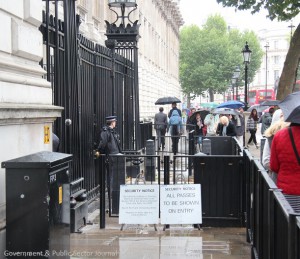
The threat to infrastructure from terror groups has been a constant, but growing one. From threats to oil/petrochemical facilities (such as seen in Algeria in 2012, as well as in Nigeria and Iraq), to potential attacks on nuclear power stations, the sector presents a range of opportunities to terror groups, and thus risks to governments. So taking the “Four P’s” as the guideline, the “Critical National Infrastructure” seminar ranges across the options for identifying threats as well as solutions. Vital concept updates are given by the UK Home Office’s Security and Counter Terrorism department, GCHQ, NATO, and the Organisation for Security and Cooperation in Europe. To provide pin-point clarity about exactly what this can mean on the ground, the seminar also has feature presentations on the challenges of security at sporting facilities such as Wembley Stadium (as an example of the mass of such facilities that can seat close to 100,000 spectators), and the re-built New York World Trade Center.
Furthermore, the myriad of threats aren’t just focussed against fixed infrastructure facilities: transport networks are a regular target for terror groups’ plans and attacks. From the 9/11 aircraft hijackings, through the 2004 Madrid Atocha train bombings to the similar attack on the London Underground in 2005, transport presents ideal targets for terror groups. Although aircraft are the highest profile targets, it is often transports means such as buses that see the most attacks – Boko Haram and Al Shabab have both carried out shocking fatal attacks on buses in Nigeria and Kenya recently. But the Transport Security Live Strand at Counter Terror 2015 will cover all these areas, with key addresses from the UK’s Civil Aviation Authority, the Department for Transport, and industry players such as Boeing.
Lastly, Counter Terror Expo 2015 covers that area whose importance springs into life when terrorists strike or “things go wrong”: the Blue Light Services, the fire and ambulance/medical services. The Ambition seminar covers preparing Blue Light Services for the scale and range of terror attacks, and the building of resilience in the services. On top of this, the manner of response of responders to high scale terror attacks – whether a “Mumbai-style” gun attack, or a chemical/biological attack is also covered by speakers from leading UK and European First Responder organisations.
Ideally, governments and companies wouldn’t have to plan for such events. But the past decades have shown that – unfortunately – the risks and range of terror threats have grown ever higher. Nobody can ignore contingency plans for terror/terror-style attacks, and the recent attack on the Charlie Hebdo magazine shows that the risks to non-government bodies can be as high as those for state entities. This is why Counter Terror Expo 2015 aims to provide context, analysis and answers to the vast topic of counter-terror.>
With 300+ suppliers, from leading UK and international primes to specialist SMEs will be exhibiting their latest technology and equipment for law enforcement and security personnel. Some of the leading and innovative exhibitors will include Winkelmann UK, Tactical Electronics LLC, Alford Technologies, Digital RF and Chemring EOD which manufactures Explosive Ordnance Disposal and Counter-IED equipment; Geoquip Worldwide, Terrafix Ltd and Neosoft, producers of secure communications equipment; Counter Measure Systems which specialises in police and special forces equipment and training; ICM X-Ray which produces groundbreaking miniaturised portable X-ray equipment; and RFA Security, providers of explosive detection and sniffer dogs.
Unmanned vehicles are playing an increasingly important role today and CTX exhibitors include ICOR Technology which manufactures the CALIBER® family of robots, offers five different sized platforms providing remote capabilities for SWAT, EOD and Hazmat teams. iRobot’s unmanned ground vehicles are designed to reduce the risk to personnel, operate downrange, report data and deliver predictive intelligence. Unmanned ground vehicles are also a speciality of NIC Instruments, which develops the lightweight First Responder that can be configured to the needs of specific missions. The unit can easily be repaired in the field.
Visit www.counterterrorexpo.com
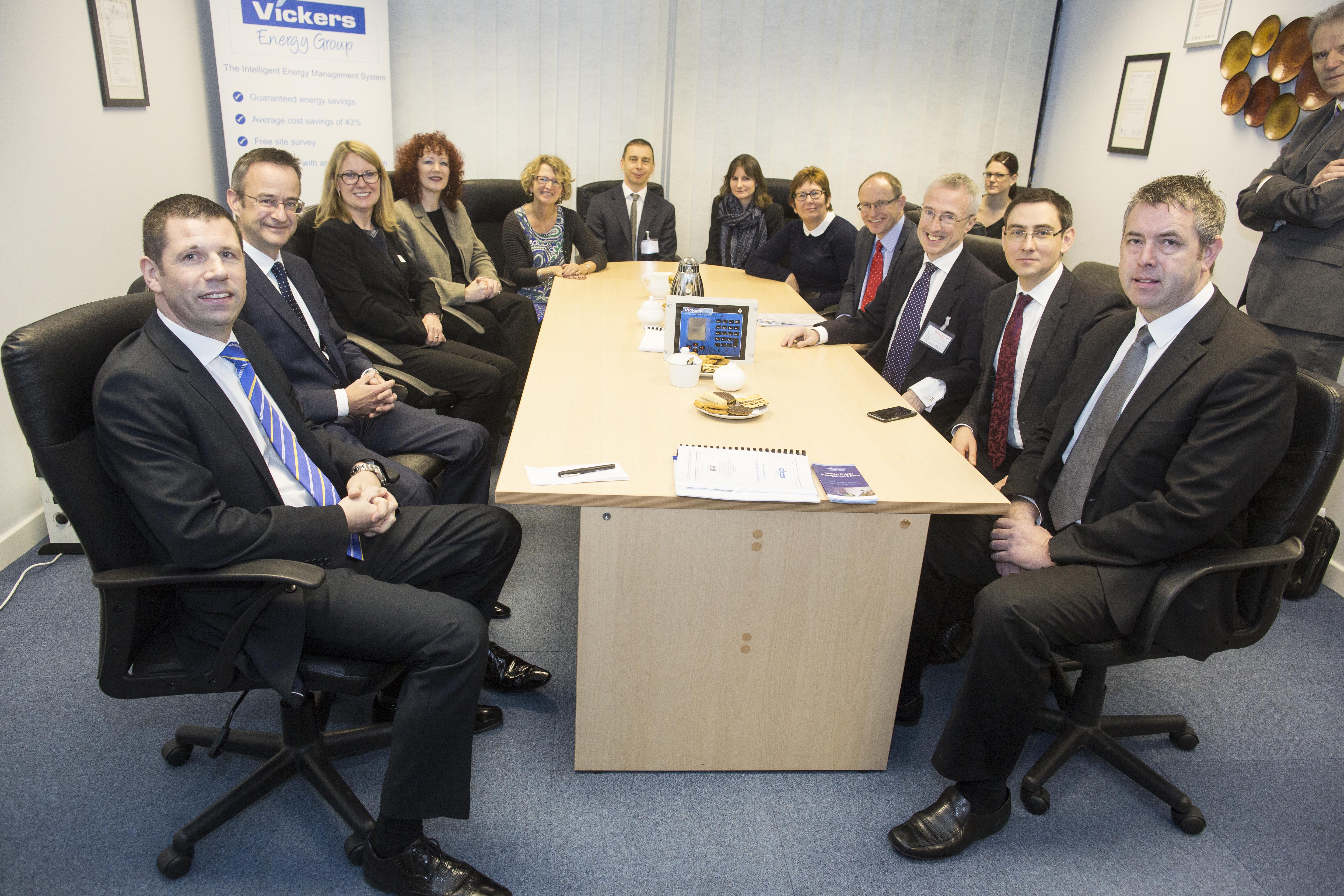
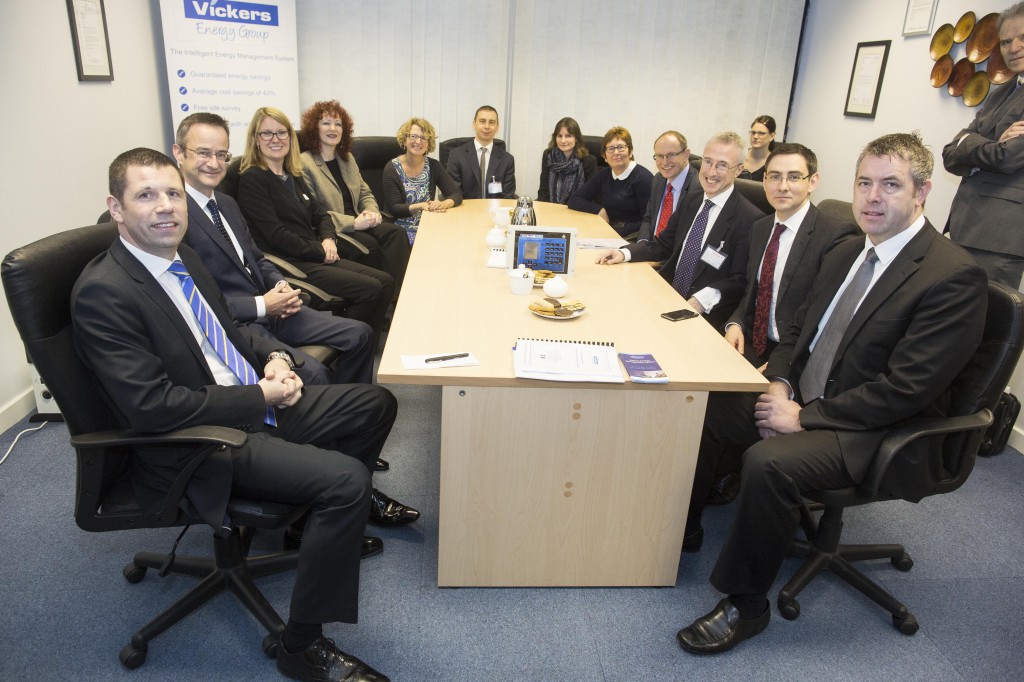 Vickers Energy Group welcomed the Permanent Secretary, Director Generals and policy makers from the Department for Business, Innovation and Skills (BIS) to its Trafford Park site last week to discuss the company’s success in the UK market and its growth overseas. Vickers Energy Group welcomed the Permanent Secretary, Director Generals and policy makers from the Department for Business, Innovation and Skills (BIS) to its Trafford Park site last week to discuss the company’s success in the UK market and its growth overseas.
The visit included a round table discussion about the importance of government support to growth, how exports are helping the company to grow and its plans for future development in the UK. The company is working with clients to help manage their energy consumption more effectively and reduce costs and C02 emissions.
This was part of a tour of Greater Manchester carried out by BIS to witness first hand Manchester’s vision for economic growth. The visit highlighted the importance of areas such as Trafford Park to the growth of Greater Manchester as well as opportunities and challenges for the local economy.
David Hilton from Vickers said: “We were delighted to welcome the Department for Business, Innovation and Skills to our headquarters in Trafford Park to discuss our business alongside the opportunities and challenges we have in reaching out to expand our client base in the UK and abroad. Our proposition is pretty simple – our energy management system saves our clients thousands of pounds in energy bills and reduces carbon emissions. We are looking forward to a busy year as more and more businesses focus on environmental policies and the need to reduce consumption.”
BIS Permanent Secretary Martin Donnelly said: “It is fantastic to see first-hand the innovative British companies that are leading the world, particularly in important fields like energy management.
“In Government we are working hard to support businesses to grow. Just this week, we invested a further £1 billion in local economies across England by expanding the successful Growth Deals. This will help to train young people, create thousands of new jobs, start hundreds of infrastructure projects and boost business support schemes.”
Vickers saves its customers over £75 million per year and is at the forefront of energy management technology in the UK. On average it saves its customers £18,000 per year.
 Sharpes warehouse – Nottingham Community Housing Association Feeling insecure in their own homes is a thing of the past for some Nottingham Community Housing Association (NCHA) tenants. They are one of the first UK housing associations to take advantage of an innovative door entry system. Twenty flats at a converted warehouse, Sharpes Warehouse, have been fitted with the ability to lock and unlock front and entry doors remotely by the use of telephones.
Supplied by specialists in wireless intercom systems, Intratone, the pilot project aimed to improve access to each flat and increase security for tenants. The system uses GSM technology, enabling tenants to control access to their homes via their landline or mobile phone without the need for additional cabling. The whole system is monitored over a web platform, making lost keys, access for carers, contractors or visitors, or conversely restricting access, a thing of the past.
In control
The previous system was a spent hard wired door entry system and the access control on the panel (a coded keypad) was no longer working. Tenants had to gain access with keys and had to physically come down to the main door to let people in.
The NCHA maintenance team look after nearly 300 properties across the Sleaford area, making granting access to properties a difficult physical task. This is becomes time consuming and expensive as traffic increases when factoring in maintenance contractors, carers or tenants losing keys. Now visitors can call the caretaker on his mobile, who can let them in remotely.
Sharon Singleton, Regional Housing Manager said: “We were looking for a system that would put our staff and residents in control of access to Sharpes Warehouse apartments. We are very pleased with the outcome of the project which is already making a big difference, giving our tenants peace of mind and saving time and resources for our maintenance team.”
Putting the system to the test
Part of the challenge of this installation was the rural location. NCHA is a vast Housing Association with housing stock disseminated across the Midlands. So it was crucial that the system worked even with a weak signal, plus the ability to have control of the system remotely from a central location was vital.
The system offers value for money and low on-going maintenance cost, with no need to replace broken handsets or incur call out fees for fault finding on the cables.
Derby based specialist IT installers, Salt Network Consulting, have been NCHA’s preferred contractor for a decade.
Tasked with installing the new system, the team quickly realised the benefits of the new technology over similar industry standard products. Managing Director, Tim Salt said:
“Intratone is a unique and cost effective system that enabled us to install a reliable intercom system with minimal manpower and remote maintenance, making the job more cost effective for everyone involved. Initially, we were assisted on-site by the Intratone team, in order to grasp the new system’s setup process. Although unconventional, we now regard this product as a welcome addition to our portfolio of products and would consider this system as a great advantage to our other clients who have to fit a new system to an existing building, especially if they haven’t any cabling or it is spent.”
A resident’s satisfaction survey carried out on completion of the works show positive feedback on the ease of the system and reports an extra sense of security.
Pleased with the outcome, NCHA maintenance staff are reported to be over the moon with the system.
About Intratone
Intratone Telecom is a subsidiary of Cogelec specialising in wireless GSM intercom systems, including access control and security equipment. Founded in 2000, Cogelec is a French company, by 6 associates who were previously involved in the access control industry, with headquarters located in Mortagne sur Sèvre in the Vendée region. It now has more than 65 employees and a turnover of approximately €12 million across Europe. Established in 2007, Intratone enabled partner Orange be the first telephone operator to provide communication and wireless telephone intercom systems for collective housing. Intratone provides a complete range of GSM door entry systems : audio panels, video door entry systems, Visio intercoms.
At Winter NAMM, audio specialist Sennheiser and Apogee Electronics, industry leader in digital audio conversion technology, have announced their collaboration.
At the NAMM Show in Anaheim, Apogee’s Betty Bennett and Sennheiser’s Peter Claussen have jointly announced the cooperation of their companies. Peter Claussen, COO of Sennheiser, said that “Apogee and Sennheiser are a perfect fit. We both operate in the demanding premium sector, serving professional and semi-professional audio customers across the globe. Our product portfolios perfectly complement each other, and I am looking forward to collaborate with a company that has truly pushed the boundaries of digital audio.”
Betty Bennett, Co-Founder and CEO of Apogee, commented, “This is an exciting collaboration for us. Sennheiser is a highly respected brand with an incredible product portfolio and an extensive global reach. Our reputation for delivering premium products to the pro and prosumer markets are well aligned and our core competencies are very complementary. This collaboration will result in innovative, high-quality products that will truly inspire our customers.”
Details about the collaboration are to be revealed at a later date.
About Apogee
Apogee Electronics is an award-winning manufacturer of professional audio devices that advance audio recording and deliver ultimate sound quality, inspiring simplicity and incredible value. Apogee initially made its name with special anti-aliasing filters that solved many of the early problems associated with digital audio. Later, Apogee’s complete conversion systems pushed the envelope of digital audio quality and established Apogee as a key innovator in the field of professional digital audio. Today, Apogee converters and audio interfaces are regarded as the reference standard in the audio industry. Products such as Symphony I/O, Big Ben, Ensemble and Duet all have set the benchmark by which digital audio recording hardware is judged. Now with its latest products JAM and MiC, designed especially for Apple’s iPad, iPhone and GarageBand software, Apogee continues to be at the forefront of recording technology. Apogee’s mission is to build products that offer ultimate sound quality, innovative design and unparalleled value to all music creators from the aspiring artist to the discerning audio professional.
About Sennheiser
The Sennheiser Group based in Wedemark near Hanover, Germany, was founded in 1945 and has gone on to become a leading manufacturer of microphones, headphones and wireless transmission systems. Sales in 2013 totaled 590.4 million euros. Sennheiser employs more than 2,500 staff worldwide and operates plants in Germany, Ireland and the USA. The company has a worldwide network of subsidiaries in France, Great Britain, Belgium, the Netherlands, Switzerland and Liechtenstein, Germany, Denmark (Nordic), Russia, Hongkong, India, Singapore, Japan, China, Australia and New Zealand, Canada, Mexico, and the USA. It also has long-established trading partners in other countries. Georg Neumann GmbH, Berlin, a maker of studio microphones and monitor speakers, and Sennheiser Communications A/S, a joint venture making headsets for PCs, offices and call centers, are also part of the Sennheiser Group.
More up-to-date information about Sennheiser is available on the internet at www.sennheiser.com
 Laura Thomson, Deputy Director, Property Asset Management, UK SBS Shared business services mutual, UK SBS, has appointed Laura Thomson BSc MRICS as Deputy Director of its Property Asset Management service. She brings over 25 years private sector experience in corporate real estate to help deliver the strategic direction of UK SBS’ public sector clients. UK SBS works with clients across the Department for Business Innovation and Skills (BIS) and its partner organisations, and the company manages a combined property portfolio of 253,000 m2 occupied by over21,000BIS employees.
Prior to joining UK SBS, Laura held senior roles at Cushman Wakefield, Inter-IKEA, and DTZ where as Director for Corporate Real Estate she was responsible for the delivery of national integrated estates services for both Government and corporate clients including the Crown Prosecution Service and the Health and Safety Executive. Latterly she has acted as an independent consultant providing strategic estate management advice to corporate clients including the Manchester Airport Group.
“I am very pleased to be joining UK SBS at this exciting time and I see a great opportunity to bring my extensive experience of corporate real estate management to help create a centre of excellence for the provision of property services for BIS and the government sector”, says Laura Thomson, Deputy Director, Property Asset Management.
The sharing of business services sits at the heart of the Government’s strategy on economy, efficiency and reform. Laura Thomson will support Director, Roger Taylor, and his team in working with Government to help deliver this in the area of property asset management.
 OPSWAT, provider of solutions to secure and manage IT infrastructure, yesterday announced the acquisition of Red Earth Software, developer of email security and secure file transfer solutions. OPSWAT, provider of solutions to secure and manage IT infrastructure, yesterday announced the acquisition of Red Earth Software, developer of email security and secure file transfer solutions.
The Red Earth Software acquisition now enables OPSWAT to extend its advanced threat prevention technology to protect email and file transfer in addition to servers, endpoints and proxy servers. Red Earth Software recently integrated OPSWAT’s multi anti-malware scanner Metascan® into its products Policy Patrol Mail Security, an email security solution for Exchange Server, and Policy Patrol Secure File Transfer, a solution that enables users to securely send large and confidential files. With the Metascan integration, Policy Patrol customers now have access to robust protection against malware threats.
With the acquisition, OPSWAT is acquiring Red Earth Software’s valuable expertise and extensive customer base in the email security and secure file transfer business, helping OPSWAT move faster in achieving its vision of secure data workflow: providing organizations with a central security solution for protecting data originating from various sources.
“We are excited about the Red Earth Software acquisition,” said Benny Czarny, CEO at OPSWAT. “Email security and secure file transfer play an important part in securing data workflow in organisations, and Red Earth Software technologies will be crucial building blocks for our new comprehensive security offerings.”
“With the acquisition, Red Earth Software will be able to grow its existing email security and secure file transfer business, as well as build new comprehensive solutions for securing the total data workflow in organisations,” said Mike Spykerman, CEO of Red Earth Software.
 Hertfordshire County Council is delighted to have been awarded a grant of £4.86m to revolutionise children’s social care in the county. Hertfordshire County Council is delighted to have been awarded a grant of £4.86m to revolutionise children’s social care in the county.
It is the highest of any grant awarded to local authorities in the UK from the government’s Children’s Social Care Innovation Programme.
The money will fund a ground-breaking change in the way we approach child protection and improving the lives of vulnerable families across the county.
“We are planning a completely new way of working for social workers, which represents a great hope for the future,” said Richard Roberts, Cabinet Member for Children’s Services.
“Our pioneering new approach will cut down on red tape and free up our social workers to spend more time with families. We will also be working closely with our partners to ensure vulnerable families get all the help they need, when they need it.
“This grant is the result of the hard work of staff and, crucially, our partners in health and the police and reflects the government’s faith in our innovative plan to improve the health, education and wellbeing of more than 1,000 of our highest risk children and families.
“I am delighted that we have received this money to help us press ahead with our plans, which will give hundreds of children a better start in life. We hope it will become a model for other areas of the country to follow.”
The grant will allow us to extend the work of our safeguarding teams across the county. The teams will now be joined by community psychiatric nurses and domestic abuse specialists, who will all be trained in new ways of supporting families.
The safeguarding teams will work alongside schools, children’s centres, health visitors, police officers and the voluntary sector to make sure children in Hertfordshire have the opportunity to live in a caring home where they can thrive and prosper.
 Cheaper fuel from a CCS Supplier  The Fuel Card Group has signed a Framework Agreement with the Crown Commercial Service (CCS), making it easy for public sector vehicles to access cut-price fuel. The Agreement, RM1027 – Fuel Cards and Associated Services, covers all Group brands including The Fuelcard People, Fuel Card Services and MileageCount. It greatly simplifies the procurement of diesel and petrol, and helps to avoid the £2 transaction fees imposed upon public sector customers by other suppliers. The Fuel Card Group has signed a Framework Agreement with the Crown Commercial Service (CCS), making it easy for public sector vehicles to access cut-price fuel. The Agreement, RM1027 – Fuel Cards and Associated Services, covers all Group brands including The Fuelcard People, Fuel Card Services and MileageCount. It greatly simplifies the procurement of diesel and petrol, and helps to avoid the £2 transaction fees imposed upon public sector customers by other suppliers.
Steve Clarke, marketing manager for The Fuel Card Group, said: “This enabling agreement simplifies the public sector procurement process, because the CCS has established pre-agreed terms and conditions for individual contracts. Anybody in the public sector running vehicles can now arrange fuel cards within minutes, rather than weeks. Whichever fuel card they choose from our range, they can expect to save up to 4p per litre for both diesel and petrol. They can also be assured that there will not be transaction charges, whenever they refuel, or any other additional fees.”
The Framework Agreement can be used by organisations across the UK public sector including central government, local government, health, education, devolved administrations, emergency services, defence and not-for-profit organisations. The Agreement is fully EU compliant, saving customers the time and money associated with conducting their own procurement exercise. Suppliers are carefully evaluated during the tender process and pre-agreed terms and conditions offer customers sound contractual safeguards.
The CCS is an executive agency and trading fund of the Cabinet Office. Responsible for improving government commercial and procurement activity, it provides a professional procurement service to the public sector. CCS framework agreements are a set of pre-tendered contracts with suppliers from which public sector customers can purchase goods and services.
Steve Clarke said: “Whether a public sector body is running just a couple of van or thousands of mixed vehicles, it can now cut its fleet running costs within minutes. The CCS has done all of the legwork, so that an organisation needs only to choose the fuel card or cards that suit its specific needs. Being independent and impartial, with an unbeatable range, we can assure them the best possible combination of service, savings and security.”
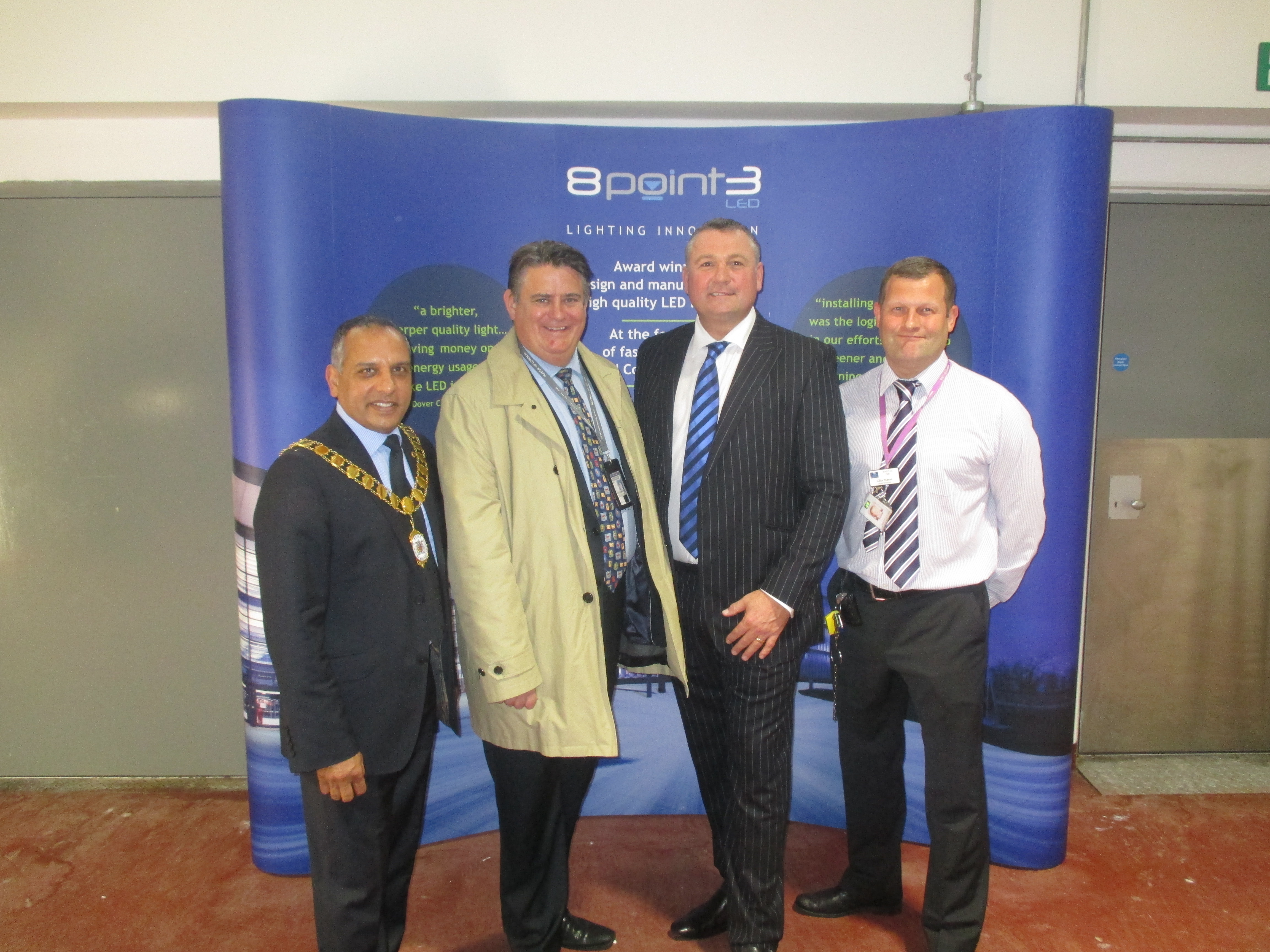
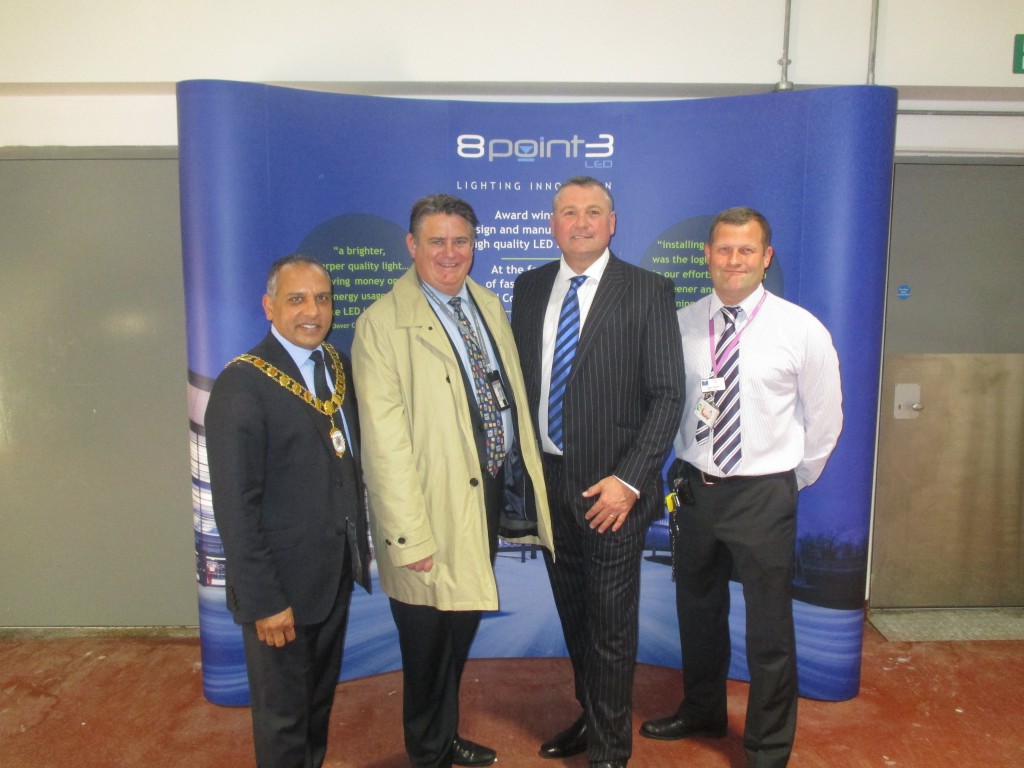 The 8point3 LED/HMP Isis partnership, endorsed by Stephen Greenhalgh, Deputy Mayor for Crime and Police, amongst others  8point3 LED helps Swanscombe Leisure Centre achieve significant cost and energy savings through new LED lighting It is well known that LEDs bring huge cost and energy savings to lighting in the public sector. One company, 8point3 LED, has been taking a creative approach to partnerships to bring LEDs into the public sector – affordably.
Ashley Bateup, MD of 8point3 LED explains: “We are committed to promoting LED lighting and controls and the benefits they deliver to the wider world. With this in mind, we work with many public sector organisations, such as Dover District Council and Her Majesty’s Prison Service, developing partnerships that help them move from traditional lighting to LED lighting into their buildings in a way that is affordable.
“Our latest scheme is the most creative yet. To get LED lighting into a Young Offenders Institute, we have actually set up a training workshop onsite. The offenders are now learning how to construct our latest Sabre LED technology to our exacting quality standards. These are then being fitted throughout the institution and potentially the wider prison network. This is creating a double benefit: bringing engineering training to the offenders and significant energy and cost savings to the institution, affordably.”
8point3’s team is experienced in working with public sector facilities managers to provide cost effective, long lasting LED lighting solutions. Another recent partnership has been with Swanscombe Leisure Centre, run by Gravesham Community Leisure. The ageing sports hall lighting needed replacing and centre manager, Wayne Pedrick, wanted proof about payback times, LED light quality and guarantees against any lamp failures before making the switch.
Working closely with Terry John, Technical Specification Manager at 8point3, the end result is a superbly lit facility that delivers bright, glare-free lighting that saves the leisure centre £3,235 per year on electricity bills, has a 4 year payback period, no maintenance costs and reduces carbon emissions by 16.97 tonnes per year with the opportunity for additional savings to be made through the lighting controls system that was included as part of the installation.
In addition, the lighting meets the new Sport England Appendix 9 Recommendations for Premier, Club and Community levels for Badminton and all of the LEDs are guaranteed for five years – but should give useful light for more than 50,000 hours – meaning that none should need replacing during that time.
Wayne concludes: “The 8point3 LED lighting solution has been very well received by users of the sports hall. They like the better quality light that the LEDs give and we are looking forward to enjoying the cost savings that they bring as well, for many years to come.”
 Small and medium sized enterprises are missing out on a wealth of public sector contract opportunities and are being urged to revise their outdated view of a system they see as overly complicated. Despite local government spend topping £227bn, the lion’s share of SMEs still avoid taking advantage of this opportunity. A lack of technical know-how, fears over red tape and feeling powerless to compete with larger organisations are the primary reasons cited according to Graham Longley, Executive Councillor and Deputy Leader of Southend-on-Sea Borough Council. Small and medium sized enterprises are missing out on a wealth of public sector contract opportunities and are being urged to revise their outdated view of a system they see as overly complicated. Despite local government spend topping £227bn, the lion’s share of SMEs still avoid taking advantage of this opportunity. A lack of technical know-how, fears over red tape and feeling powerless to compete with larger organisations are the primary reasons cited according to Graham Longley, Executive Councillor and Deputy Leader of Southend-on-Sea Borough Council.
At a time when Westminster is placing a strong emphasis on exporting, SMEs are now also advised to look closer to home in search of growth opportunities. A local government contract not only offers a steady revenue stream, it signals the high quality of a business, making it an invaluable new business tool.
Aiming to make winning contracts more accessible than ever, Business Southend has launched a Local Procurement Portal aimed at businesses of any size. A key feature for small businesses is the innovative ability to form consortiums with, so even embryonic sole traders can begin winning lucrative contracts.
The launch of the portal is an important step towards dispelling the myths that public sector contracts are only for larger companies and that they necessarily involve a great deal of effort to achieve. A free Put The Pro in Procurement guide is also available for download and contains invaluable advice to businesses looking to do business with the public sector.
Graham Longley, Executive Councillor and Deputy Leader of Southend-on-Sea Borough Council says:
“We see first-hand how gaining public sector contracts can boost any business, from multi-nationals, to kitchen table start-ups. At Southend-on-Sea Borough Council we are working extremely hard to dispel some of the unhelpful procurement myths which still linger. From where we stand, local government contracts have never been easier to attain and there is a tremendous amount of support available to those who seek it, with the Business Southend Procurement Portal a prime example.”
Alan Davies at SimplyBetter.co.uk says
“We’re a local firm based in Essex. In the past we’ve taken on a lot of smaller contracts which have been great for getting us known and building a loyal group of customers. Going for the opportunity at Southend Borough Council meant that we had to improve our policies and change our internal systems. The result of winning the contract has meant that we’ve practically doubled our staff numbers and significantly grown our turnover. Now that we have the Southend contract we’re looking for other opportunities to continue growing our business.”
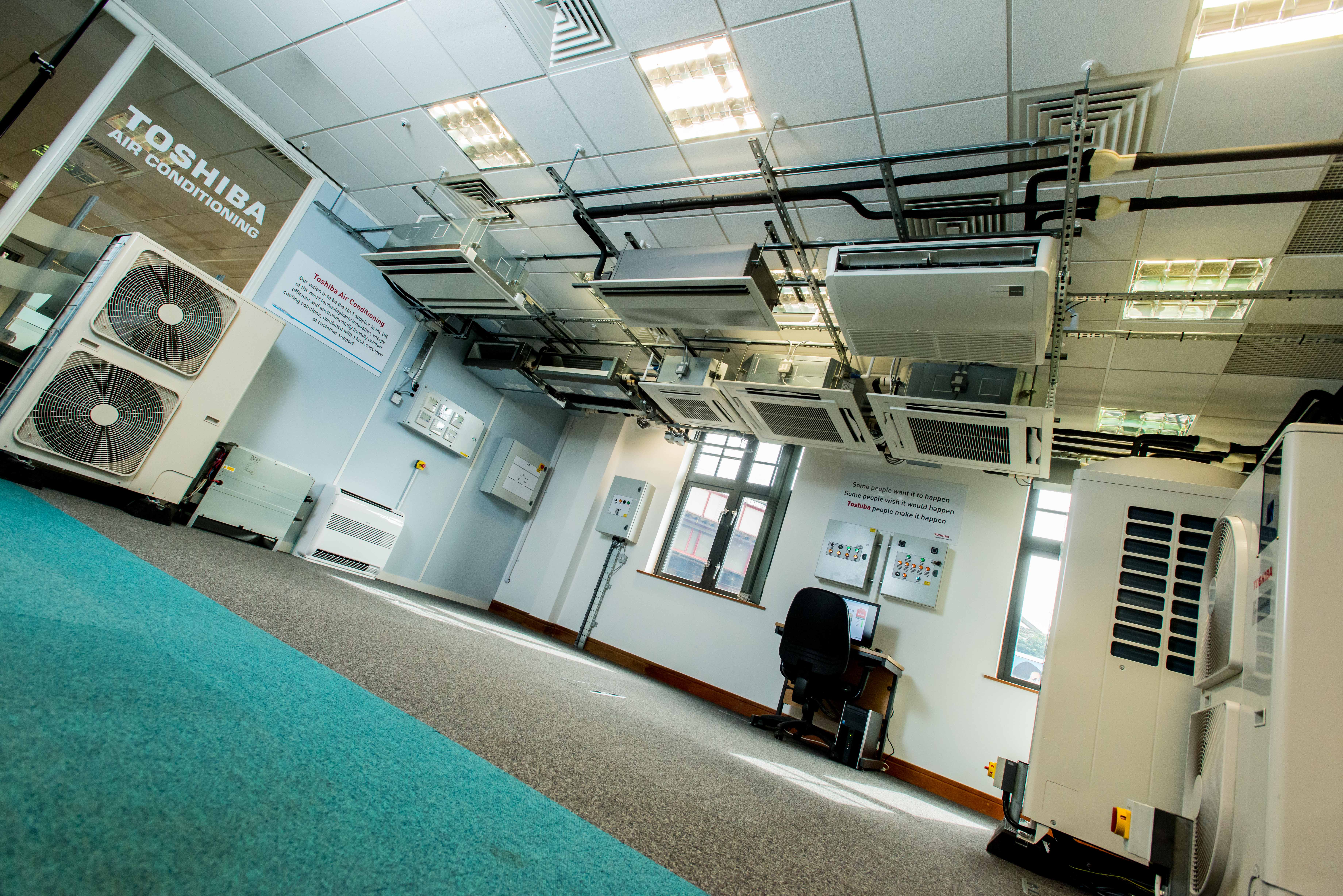
 Air conditioning training equipment 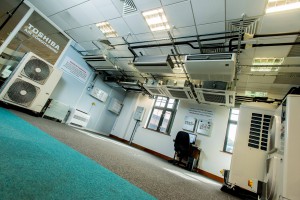 Training centre Toshiba Air Conditioning, a division of Toshiba Carrier UK Ltd, has been shortlisted for three major awards in the National ACR Awards 2015.
The company is a finalist in the Training Provider of the Year category for the creation of a nationwide network of air conditioning training centres, while the latest advance in Toshiba’s Total Refrigerant Leak Protection and Management System is shortlisted in the prestigious Air Conditioning Product of the Year category.
The company has also been shortlisted for the Best Marketing Campaign for its powerful promotional initiatives over the past two years that have gained high profile coverage across the industry.
This latest recognition follows Toshiba’s recent success in being announced as a finalist in CIBSE’s Building Performance Awards 2015, in the ‘Training Initiative of the Year’ category.
David Dunn, Toshiba general manager, said: “It is obviously very pleasing to be recognised by our industry peers in this way. Particularly as it is for our initiatives in the vitally important areas of training and environmental protection.”
“As a major supplier, we see it as our responsibility to take the lead in best industry practice. In little over a year we have accelerated our training initiative and established a UK-wide network of training centres, and become one of the most important providers of air conditioning training in the country.
“That is a considerable achievement, and reflects a huge amount of work and energy by everyone involved, both at Toshiba and our distributors.
“On the refrigerant front, our refrigerant leak protection system is unique in the market and gives end users and building occupants total assurance. It is winning converts among some of biggest air conditioning ends users in the market.”
The winners will be announced at a gala awards dinner, being held at Birmingham Town Hall on 29 January 2015.
 Dumfries & Galloway Council has awarded a four-year contract to Ctrack Dumfries & Galloway Council has awarded a four-year contract to ctrack for the provision of an advanced vehicle tracking solution across its entire fleet that is expected to generate operating efficiencies, enhance health and safety, and reduce environmental impact. Under the agreement, web-based ctrack will be used across more than 600 vehicles made up of cars, vans, HGVs and buses, along with specialist assets such as gritters, sweepers and refuse collection vehicles.
The contract was awarded following a competitive tender process, which identified Ctrack as best placed to support Dumfries & Galloway Council’s diverse tracking requirements across a wide range of services including social work, construction, building services, road maintenance and waste management. The telematics solution will replace an existing system that no longer meets the needs of the council and will be rolled out over the coming months.
In particular, the tracking solution will include Driver ID to provide greater insight into the status and whereabouts of mobile employees historically or in real-time by allowing visibility and reporting by driver as well as by vehicle. Meanwhile, vulnerable lone workers will be provided with panic alarms to enable them to operate safely in isolated or unfamiliar locations without being cut off by giving direct access to assistance in case of an emergency or accident.
Councillor Colin Smyth, chairman of the Economy, Environment and Infrastructure Committee commented: “Using advanced communications technology, this vehicle tracking system will enable us to be more efficient and responsible. It will reduce fuel use, minimise carbon emissions, protect staff, and provide enhanced service levels, meeting our fleet needs now and in the future.”
John Wisdom, Managing Director of Ctrack said: “We are working with an increasing number of local authorities because of our ability to develop and support advanced vehicle tracking system that are tailored to meet precise operational needs. Councils have diverse vehicle fleets responsible for a wide range of services, so any telematics solution needs to reflect these unique requirements with high levels of scalability, functionality and flexibility.”
 Dyslexia Awareness Week started on the 3rd November and runs through till the 9th November, Nuance Communications has announced that it is offering a 10% discount on Dragon NaturallySpeaking 13 Home Premium and Professional editions, and Dragon Dictate for Mac 4, in order to help encourage an equal learning and working environment for people of all abilities. Dragon’s speech recognition technology and play-back function helps to make it easier for people with dyslexia to share their knowledge and creativity, without being hindered by the conventional keyboard and mouse. The offer for customers in the UK and Ireland is available through Nuance’s online store and its authorised reseller partners. It begins on 3 November and ends on 31 December 2014. Dyslexia Awareness Week started on the 3rd November and runs through till the 9th November, Nuance Communications has announced that it is offering a 10% discount on Dragon NaturallySpeaking 13 Home Premium and Professional editions, and Dragon Dictate for Mac 4, in order to help encourage an equal learning and working environment for people of all abilities. Dragon’s speech recognition technology and play-back function helps to make it easier for people with dyslexia to share their knowledge and creativity, without being hindered by the conventional keyboard and mouse. The offer for customers in the UK and Ireland is available through Nuance’s online store and its authorised reseller partners. It begins on 3 November and ends on 31 December 2014.
Dyslexia Awareness Week – which is arranged by the British Dyslexia Association – aims to raise awareness of dyslexia and the resources available to help people with the condition. It is estimated that one in 10* of people is thought to be dyslexic. Without access to solutions like Dragon, their ability to communicate effectively can be compromised, impacting success in the classroom or workplace. Research suggests that use of speech recognition by students who are dyslexic generates significant improvements in reading, decoding, spelling and comprehension. In recognition of this, some education institutions, like Oxford University, allow Dragon to be used in controlled exam conditions by students with learning requirements.
One of many recent example of how Dragon creates an equal pathway to success in education, is student Aidan Clancy. A pupil at Ripon Grammar School, Aidan has severe dyslexia and dyspraxia. This summer, he secured three A-grade A-levels while using Dragon to complete his exams. Talking about the challenge of transferring his thoughts to the PC using a conventional keyboard, he said, “We thought there must be a solution using technology. We found out about voice recognition software and I re-sat my A-levels using it and did so much better. The technology allows me to put down on paper what’s in my head. I’m nowhere near as tired after an exam and no longer get the headaches.”
As well as being well-suited to people with dyslexia, Dragon – which boast accuracy rates of 99% – helps with the needs of those exhibiting early signs of Repetitive Strain Injury (RSI) , or students who are English language learners. This is because Dragon offers a complete voice solution by touching on virtually every aspect of the computing experience – making it easy to navigate, command and control your computer by voice, and supporting fast, accurate dictation for both local applications, such as Microsoft Word, and web applications, including email and social media. Dragon’s ‘Read That’ feature lets students listen and follow what is being read on the screen, which reinforces word pronunciation. Meanwhile, its ‘Play That Back’ feature enables users to hear their own voices, self-assess their writing, and make edits and corrections. Furthermore, by leveraging the latest advancements in Nuance speech recognition science and technology, the Dragon family is faster and more accurate than ever before.
Commenting on the promotional offer, Jonathan Whitmore, UK, Ireland and Middle East Regional Sales Manager, Nuance Communications, said: “Dyslexia Awareness Week reminds us of the challenges that people with all assistive requirements face every day when it comes to sharing their thoughts and knowledge. For them, the keyboard and mouse can hamper what they’re able to achieve academically or professionally. Dragon introduces them to a new world of opportunity, which we hope more people will be encouraged to embrace via the current promotional offer on Dragon.”
Dragon’s ability to assist students has been recognised by disability campaigning organisation
RADAR, which recently merged with a number of charities to form Disability Rights UK. RADAR honoured Nuance with the ‘Technology Provider of the Year’ award for Dragon NaturallySpeaking software at its ‘People of the Year’ Awards. This accolade reflects Nuance’s commitment to developing and supporting desktop speech and imaging solutions that helps to transform people’s personal and professional lives.
Explaining why Dragon was chosen as the winner of the ‘Technology Provider of the Year’ category, RADAR’s former CEO and current CEO of Disability Rights UK, Liz Sayce, said: “Dragon NaturallySpeaking stands alone as a product that has proven itself time and again to be a brilliantly effective alternative interface between a PC and its user. Dragon has provided people with the independence and freedom to search the internet, keep in touch with family and friends, and pursue their education or work interests and activities. We applaud Nuance’s determination to bring the benefits of Dragon to as many influential people as possible, to heighten awareness of what for many is an essential life-line to the connected world.”
For many years, people from all walks of life have used Dragon to be more productive, save time and capture their ideas at the speed of thought – at home, in the office, the courtroom, the classroom, the exam room, or even on the road. Globally, Dragon’s power and performance has been reflected in the many awards and accolades it has already won, recognising the multiple benefits it brings to PC and Mac users of all abilities.
For more information & video testimonials please visit: www.nuance.co.uk/dragon/dyslexia-solutions/index.htm An online press kit is available on www.nuance-media.eu. Join the conversation by liking Nuance on Facebook, or by following Nuance on Twitter at @NuanceUK and @NuanceInc.
  Nuance Communications, Inc. announced at the beginning of this month, that the Paediatric Intensive Care Unit at Alder Hey Children’s NHS Trust in Liverpool has deployed Nuance’s front-end speech recognition solution in order to help enhance patient care through the quick and accurate creation of detailed clinical notes. The deployment enables 180 members of the Paediatric Intensive Care Unit’ nursing and medical team to use www.nuance.co.uk/products/dragon-medical-360-network-edition/index.htm Dragon Medical | 360 Network Edition which has been integrated into the Clevermed Electronic Patient Records (EPR) BadgerNet Platform – to provide a complete managed service solution for real-time patient data management. Funding for the speech recognition element of the project came from a successful application to the NHS England Nurse Technology Fund. Nuance Communications, Inc. announced at the beginning of this month, that the Paediatric Intensive Care Unit at Alder Hey Children’s NHS Trust in Liverpool has deployed Nuance’s front-end speech recognition solution in order to help enhance patient care through the quick and accurate creation of detailed clinical notes. The deployment enables 180 members of the Paediatric Intensive Care Unit’ nursing and medical team to use www.nuance.co.uk/products/dragon-medical-360-network-edition/index.htm Dragon Medical | 360 Network Edition which has been integrated into the Clevermed Electronic Patient Records (EPR) BadgerNet Platform – to provide a complete managed service solution for real-time patient data management. Funding for the speech recognition element of the project came from a successful application to the NHS England Nurse Technology Fund.
As people talk up to three times faster than they type, Dragon Medical’s accurate front-end speech recognition solution for healthcare helps to enable doctors and nurses to quickly and accurately capture the entire patient story anywhere, anytime in its clinical workflow, clinical systems and processes. A ready-to-use, cloud-based speech solution for medical professionals, Dragon Medical helps to enable the Unit’s staff to easily dictate notes directly into the patient record, ensuring the most up-to-date information is captured accurately and made easily available to clinical care teams. This was an important consideration for Alder Hey because quick access to up-to-date and comprehensive patient information is particularly important in a Paediatric Intensive Care Unit given that a condition that may leave an adult unaffected for 24 hours, can cause a young child’s condition to deteriorate rapidly.
In addition to ensuring a more complete and real-time capture of the patient record, Dragon Medical helps the Unit navigate the changes and challenges of today’s complex healthcare environment while doing what matters most – caring for patients and supporting families – by reducing the amount of time doctors and nurses spend on administration.
“Speech recognition has raised the bar on the quality of our clinical notes. There is much more detail, the notes are easier to read and the quality of the information is so much better,” said Peter White, Paediatric Intensive Care Unit Nurse, Alder Hey Children’s Hospital. “Our experience is that nurses use a slightly shorter period of time to produce reports of a higher quality. Now we can capture the progress and treatment regime of the patients much more fully and accurately.”
The Dragon Medical implementation project – led by Alder Hey’s PICU EPR Project Nurse Lead, Elaine Scott – will include all of the unit’s clinical documentation (case notes, discharge and referral notes) and nurse charting by the end of the year. Elaine reported, “Nurses involved in managerial tasks have also seen a decrease in the amount of time producing emails and filling forms.”
“The Dragon Medical deployment at Alder Hey represents a pattern that we see emerging across the country. As the NHS moves toward implementing electronic health records (EPR) by 2018, increasingly more trusts are looking at Nuance speech recognition as the most effective interface to them, while enhancing efficiency, productivity, patient safety and patient care,” said Frederik Brabant, chief medical information officer, for Nuance Communications in EMEA.
Today, Nuance’s solutions are used by more than 500,000 clinicians and 10,000 organisations globally. Its speech recognition solutions for healthcare are available to NHS Trusts nationwide through an NHS Framework Agreement. In the UK, Nuance has already partnered with suppliers to install speech recognition-based solutions at Trusts across the country, including London’s Great Ormond Street, NHS Northumbria, Aberdeen Royal Infirmary and more.
Connect with Nuance on social media through the healthcare blog, whatsnext.nuance.com/healthcare/, twitter.com/NuanceHealth, www.facebook.com/NuanceHealthcare
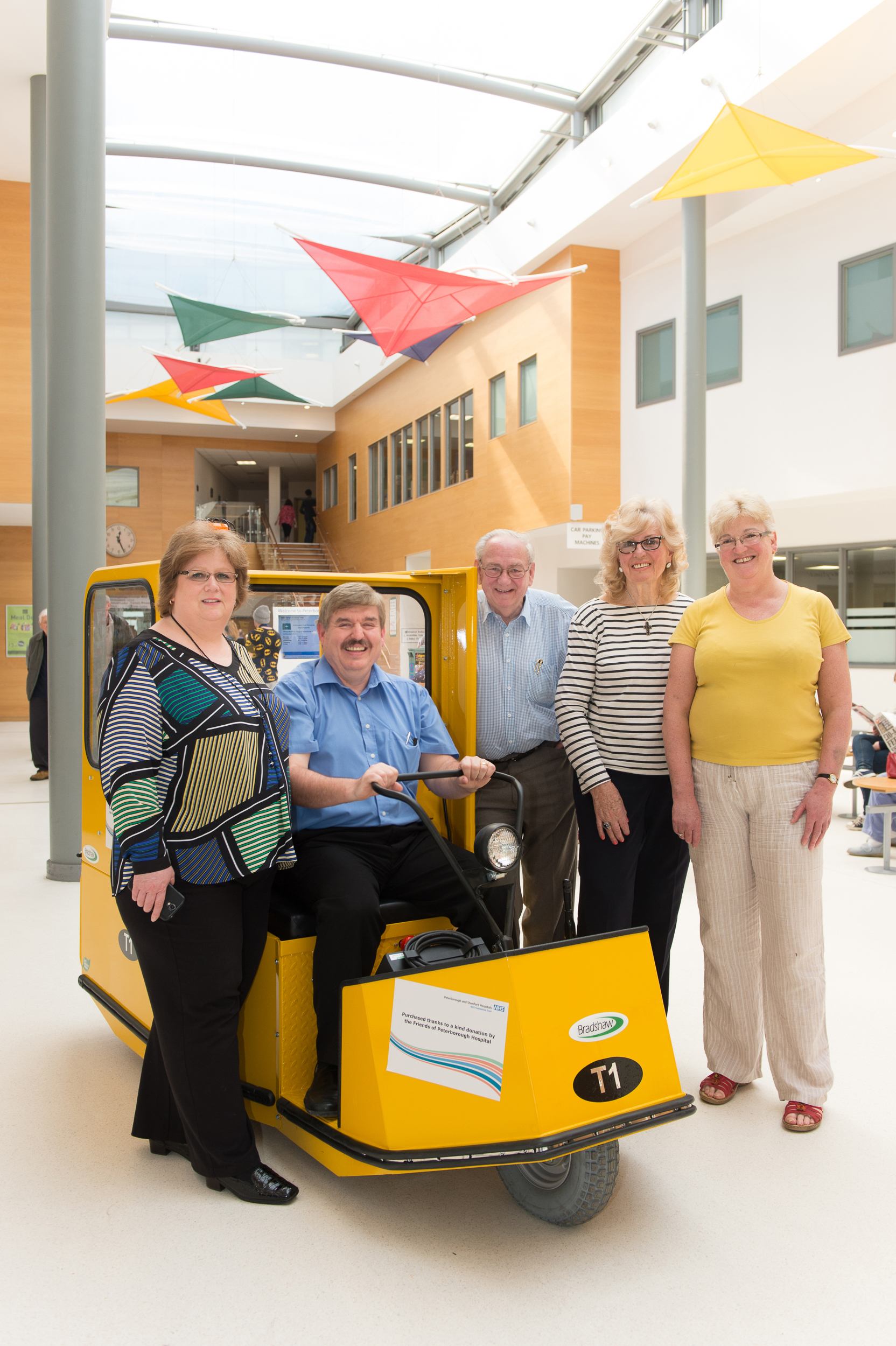
 New hospital transporter buggy launch, March 31st 2014. Pictured left to right: assitant director of nursing and CQ Lesley Crosby, volunteer drivers Rolf Stobbart, Brian Rosan, Barbara Kelly and disability advisor Toni Tuthill  New hospital transporter buggy launch, March 31st 2014. Pictured are volunteer drivers Brian Rosan and Barbara Kelly Bradshaw Electric Vehicles is Britain’s largest manufacturer of industrial electric vehicles, supplying to both the UK and world market since 1975.
Celebrating our 40th anniversary next year, we are proud to be the largest UK-based manufacturer of electric vehicles, growing a loyal customer base across an ever-increasing range of industry sectors. Continuing to develop our showcase of products; we are the preferred supplier for a growing number of global customers looking for electric tow tractors, electric tow trucks and electric utility vehicles.
The Bradshaw product range includes ride on and pedestrian controlled tow tractors, load carriers, utility vehicles and personnel carriers. Our tow tractor range is ideal for transporting waste and recycling or making general deliveries. With a tow load capacity of up to 25,000kg, our range of tow tractors come with options such as PVC door cab or sliding door cab, the decision is yours and will depend on the number of regular stops to be made. We offer a range of service options and vehicles that can be adapted to meet client’s briefs, whatever the time of year and the changing needs may be.
Our products are now used across a diverse range of industries including industrial waste movement and recycling, in manufacturing and line feed, logistics and distribution, hospitals, railways and airports. If a client has the need to transport goods, then we can supply a tailor-made vehicle to suit their requirements.
Frimley Park Hospital NHS Foundation Trust in Surrey recently took delivery of a new PFB500 vehicle from Bradshaw Electric Vehicles.
The pedestrian controlled vehicle is being used to deliver goods around the hospital, which serves more than 400,000 people across north-east Hampshire, west Surrey and east Berkshire.
A 3 wheel vehicle, with a maximum speed of 6.4kph, the PFB500 was ideal for Frimley Park Hospital NHS Foundation Trust, meeting the requirement of a small vehicle but with a big enough payload capacity of 500KG.
The vehicle comes with safety features including an emergency stop button, safety cut out and body protection switch, which automatically stops the vehicle if it comes in to contact with the operator.
As a company we not only prides ourselves on a safe, robust and versatile product range, we also offer a bespoke design service, enabling us to design and bespoke manufacture an electric vehicle to suit a client’s individual requirements, providing a solution to a very particular need.
Whatever your requirements, Bradshaw Electric Vehicles has something to suit your needs.
To find out more about how a vehicle from Bradshaw Electric Vehicles could help you, visit www.bradshawelectricvehicles.co.uk or call 01780 782621
 Occupational physio Two NHS Trusts in the North of England have turned to Physio Med, one of the UK’s leading physiotherapy providers, to help improve the health of staff and reduce levels of sickness absence.
Cheshire and Wirral Partnership NHS Foundation Trust and Airedale NHS Foundation Trust have both awarded contracts to Physio Med after successful trial periods.
Through working with Physio Med since 2009, the Employee Health and Wellbeing department at Airedale NHS Foundation Trust has made fast track access to physiotherapy available to the 2,800 staff at Bradford District Care Trust and another 1,200 at Incommunities.
Bradford District Care Trust reported a 60 per cent increase in productivity among staff who received treatment in 2013. The patients, including school and district nurses, social workers, and healthcare support workers, also reported an average reduction in pain of 68 per cent.
At Incommunities, which is one of the largest social housing providers in Yorkshire and the Humber, productivity amongst the staff treated by Physio Med increased by 31% and they reported a 64% reduction in pain.
Joanne Hoban, Acting Head of Service at Airedale NHS Foundation Trust, said: “The employees at Incommunities and Bradford District Care Trust all provide vital community services and it is in everyone’s interests to ensure they are fighting fit and able to do their jobs to the best of their abilities.
“By the nature of many of the roles within those organisations the employees can be susceptible to musculoskeletal injuries and in fact across the two organisations approximately two thirds of those employees who sought treatment had conditions that were work related or work aggravated. By working with Physio Med we are able to provide fast track access to physio treatment and help them to reduce the pain of these conditions and get back to work as quickly as possible so we are delighted to be able to continue to provide this service.”
Cheshire and Wirral Partnership NHS Foundation Trust’s 3,500 staff provide inpatient and community mental health services and learning disability, drug and alcohol and other community services, across Cheshire and Wirral, plus some specialist services in Liverpool, Warrington and Halton.
The nature of the services provided mean that many of the job roles are physically demanding and the in-house physiotherapy service provided by the Trust was under increased demand, with some staff suffering from musculoskeletal disorders (MSD) waiting more than two weeks for an appointment. This led to employees being absent from work and others working at reduced levels of productivity.
After a successful trial the Trust asked Physio Med to implement a service providing fast-track access to physiotherapy in order to promote staff health and wellbeing, improve productivity and reduce sickness absence.
Any employee who suffers a musculoskeletal injury or disorder (MSD) can be referred to Physio Med by their line manager. The employee is then contacted within four working hours by Physio Med’s award winning Physiotherapy Advice Line (PAL) service, for telephone triage to ensure they are clinically appropriate for treatment, and then has an initial assessment call with a Senior Chartered Physiotherapistwithin a few working days, which incorporates a series of evidence-based clinical questions and series of movements to facilitate diagnosis. The employee is then either advised on the best way to self-manage the condition to assist the healing process or referred for face-to-face treatment.
The initial trial found that approximately 62% of Cheshire and Wirral employees that have used the service successfully self-managed their condition without the need for face-to-face treatment, with remainder being referred for face-to-face treatment within Physio Med’s network of approved practitioners in a timely manner.
Andrea Snagg, Head of Occupational Health at Cheshire & Wirral Partnership NHS Foundation Trust, said: “From healthcare and nursing staff that can face quite physically demanding situations, to estates and domestic teams, and even admin staff, they are all at risk of suffering MSDs and we need to help them back to full fitness as quickly as possible to enable us to provide services to patients.
“We benchmarked our in-house provision against Physio Med’s PAL service and the initial results have been really positive. 85 per cent of those who report an MSD are still in work when they are referred which can have a huge effect on productivity so being able to give them timely access to treatment and helping them return quickly to full fitness is a huge benefit to the Trust.”
Mark Fletcher, Clinical Director of Physio Med, said: “Evidence shows early physiotherapy intervention on musculoskeletal injuries can prevent acute conditions becoming chronic, promote swifter recovery and return to the workplace and improve productivity levels. By providing fast-track access to physiotherapy to employees these Trusts are demonstrating commitment to ensuring their health and wellbeing and we are delighted to be playing a role in that.”
Physio Med has a UK-wide network of 2,500 senior Chartered Physiotherapists in 780 approved practices and received the Chartered Society of Physiotherapy’s Clinical Excellence Award in 2012.
For further information about how Physio Med works with clients visit www.physiomed.co.uk
 Project Challenge EXPO Autumn 2014 Project Challenge EXPO Autumn 2014
A leading resource for project, programmes and process professionals
14th to 15th October 2014, Olympia, London
FREE entry for delegates
www.projchallenge.com
In the modern public sector project management is no longer an isolated function. Today, project, programme and process management are considered core components of successful strategy and accountable delivery.
Granted, the project management sector is thriving. The Project Management Institute (PMI) predicts that by the year 2020 15.7 billion new project managers will be needed to fulfil demand in a skills sector set to grow by US$6.61 trillion. If we fail to meet that challenge, a staggering $3.44 billion of GDP will be at risk.
Yet even in this context, project failure rates remain alarming. Up to 70% of projects worldwide risk failure according to KPMG, Gartner and McKinsey and Company. The reasons are complex, but one thing’s for sure: in the future the project manager who is equipped with advanced knowledge and evolving techniques will be the project manager who wins.
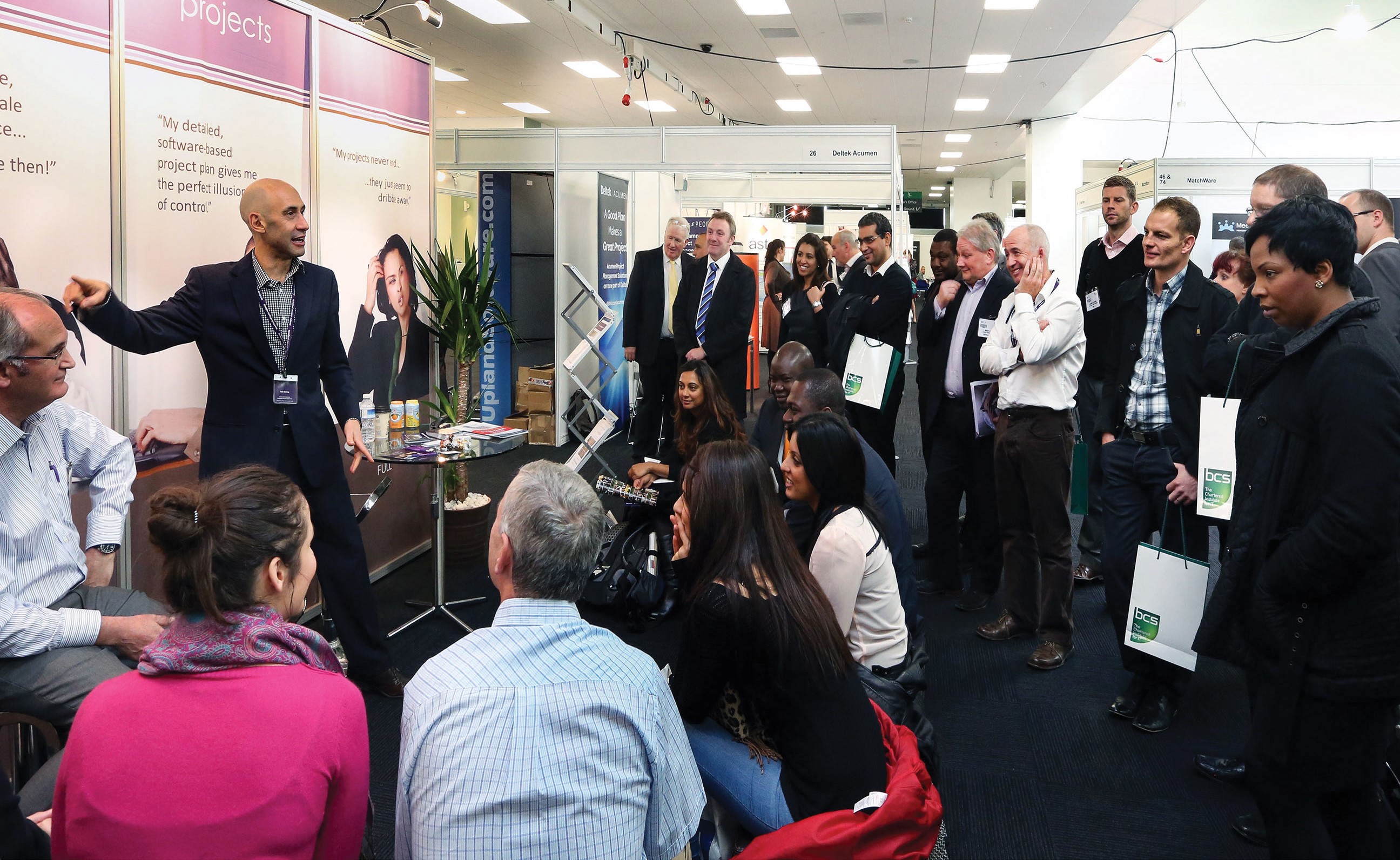
Featuring 40 free seminars from eminent speakers, plus an exhibition floor packed with leading suppliers, new market offerings and advanced PM solutions, Project Challenge EXPO is widely regarded as the leading resource for professionals keen to hone their skills, develop their organisational strategy, and break the project failure cycle once and for all.
2014 Presentations Preview
Global Trends in Project Management
Philip Diab, former Chair of the PMI Global Board of Directors

Explore the major themes emerging from PMI’s Pulse of the Profession® research plus data from IBM, McKinsey, and the Conference Board, for a global benchmark report on major trends in project management.
PRINCE2® Agile – There’s a New Kid on the Block!
Keith Richards, Director, Keith Richards Consultants KRC and
Mike Acaster, PPM Portfolio Manager, AXELOS
AXELOS is developing a PRINCE2 Agile manual and qualification, for PRINCE2 practitioners looking to incorporate Agile approaches and techniques. As the demand for Agile in complex situations grows, this combination may be just what organisations are looking for!
Building a Clients Project Control Function
Simon Springate, Head of Project Controls, Europe, CH2MHILL
CH2MHILL supports iconic projects including the Olympics 2012, CrossRail, HS2 and Thames Tideway. They share their expertise on how to bring people, tools and process together in a harmonious and productive manner.
Automating Governance Using PPM systems
Guy Jelley, Chief Executive Officer, Project Portfolio Office
Project Portfolio Management (PPM) gives better control of projects, but can automation be used for complex decisions like project stage gates or key document approvals? With examples of positive outcomes of project governance automation.
> Project Challenge EXPO Autumn 2014 Project Challenge EXPO Autumn 2014
Making the programme visible – enabling Enterprise-level
Making the Programme Visible – Enabling Enterprise-Level Decision-Making
Richard Butterfield – Service Development Director, Amey Consulting, Rail and Strategic Highways
As one of Network Rail’s largest suppliers, Amey is pursuing an enterprise approach to the management of its complex portfolio of projects and programmes, enabling executive level focus on critical milestones and critical resource allocation.
Plus many more…
Agile • Beneficial Change • PPM • Sponsorship • Risks and Benefits • PMO • Integrated Assurance • Project Controls • Recruitment • CIPD
Exhibitors from the worlds of:
• Change Management
• Consulting
• Cost Control
• Enterprise Management
• Portfolio Management
• Prince2
• Process Management
• Programme Management
• Project Management
• Recruitment
• Resource Management
• Risk Management
• Training
Don’t forget, registration for Project Challenge EXPO is completely free for delegates. Visit www.projchallenge.com and click on register to secure your place.
Follow Project Challenge EXPO:
Web: www.projchallenge.com
Twitter: @projchallenge, #projchallenge
Manchester, UK, has been transformed over the past 20 years to become a leading European city for digital technologies. Mancunians have embraced the concept of the ‘smart city’, seeing the internet integrate with digitally enabled systems across the board and bringing everything into a well-oiled system of activity and communication. The concept of open data is essential to this ambition. Access to information is not only valuable to the individual but also on a city-to-city basis, where it can provide the foundations for commerce, dialogue and new initiatives. Adrian Slatcher, Senior Digital Development Officer at the Manchester Digital Development Agency, joins us to highlight the big areas of progress being made to our world…
Download the rest of the article here: www.smartdataforgovernment.com/redForms.aspx?eventid=8778&id=389080&FormID=%2011&frmType=1&m=25243&FrmBypass=False&mLoc=F&SponsorOpt=False
P.S. Don’t forget if Adrian Slatcher is speaking at the Smart Data for Government Event taking place in London between 23-24 September 2014. If you work in Central or Local Government / NHS / Police then subject to our approval you could be attending the event free of charge. Simply enquire at 020 7368 9737 or email enquire@defenceiq.com using the subject line: FREE PASS REQUEST SMART DATA FOR GOVERNMENT
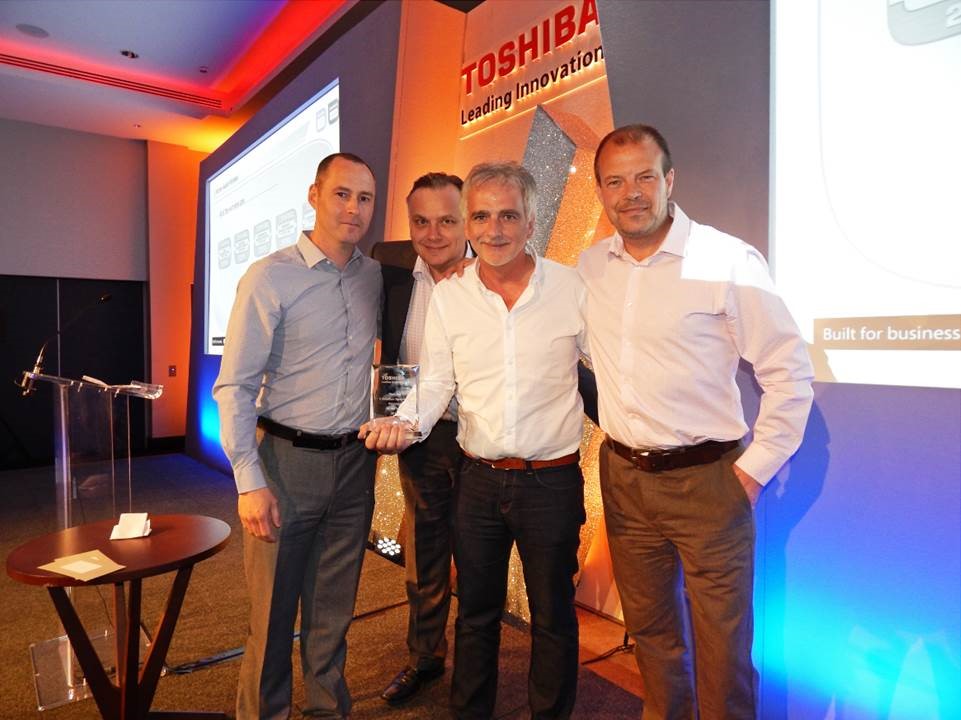
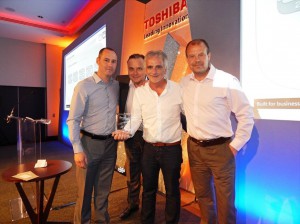 From left to right: Mark Byrne, Head of Corporate, Education & Public Sector, Toshiba; Nick Offin, Head of Channel , Toshiba; Bordan Tkachuk, CEO, Viglen; Neil Bramley, Sales Director Northern Europe, Toshiba Viglen, a British IT company, has been awarded Toshiba UK’s Platinum Partner of the Year and Education Platinum Partner of the Year, in recognition of its all-round performance and commitment to excellence within its Toshiba partnership and also its specialism within the Education market.
Achieving Platinum partner status is recognition by Toshiba of a level of excellence at reselling Toshiba products and consistently adding value to the relationship. The award winners were judged by Toshiba as demonstrating a level of excellence at not just reselling Toshiba products, but consistently adding value to the relationship through product knowledge, support, aftersales and integration services to enhance the Toshiba customer experience.
Viglen has grown its partnership with Toshiba from scratch over less than a decade to become one of the largest Toshiba resellers in the UK. As a result Viglen customers are benefitting from enhanced levels of support, expertise and resources, reducing the cost and simplifying the process of ICT procurement.
Commenting on the award, Viglen chief executive Bordan Tkachuk said; “As a PC manufacturer, Viglen benefits from a very close level of partnership with Toshiba. By pioneering a range of unique support and value-add services, Viglen is able to offer a level of bespoke service to enhance Toshiba’s already strong product portfolio, ensuring that together we offer one of the strongest mobile computing propositions available with justified performance, flexibility and value.
“This has undoubtedly helped in consolidating our position as a leading ICT supplier to the UK Education and Public Sector.”
 Ofsted has awarded CACI a contract to deliver new Social Care inspection IT system CACI has won a major contract to supply a new inspection solution for Ofsted, the Office for Standards in Education, Children’s Services and Skills, to be used in its 4,600 plus inspections of social care providers each year.
Ofsted inspect and regulate all services involving care for children and those providing education and skills for learners of all ages throughout England, working with providers to promote their improvement, monitor their progress and share best practice.
The new contract with CACI covers Ofsted’s social care remit and is part of their vision to use technology for the better safeguarding of children. The CACI inspection software, OfficeBase, will be used to integrate and manage the core areas of Ofsted’s social care processes, covering areas such as registration, scheduling, inspection and enforcement, with accurate, timely and quick-to-access management information as a key outcome. OfficeBase will be a key enabler to the efficient and effective delivery of Ofsted’s social care business, and will be used by more than 200 staff involved in over 4,600 inspections of social care providers each year.
Commenting on the contract, Ollie Watson, Business Development Director at CACI said;
“Following a rigorous procurement process, we are delighted to have been awarded this significant contract by Ofsted. The partnership is both strategic and high profile and demands the highest levels of collaborative working. We’re also proud to be playing a part in ultimately supporting professionals to make the very best decisions for safeguarding our children.”
Central to Ofsted’s decision to implement OfficeBase was its ability to securely capture, share and access safeguarding information. Through an extensive implementation programme, where OfficeBase is required to interface with a range of other IT systems, the launch of the new solution will help Ofsted streamline processes in this area and drive efficiency across a broad remit.
Concluding Tom Zebedee, Head of IS at Ofsted commented, “We are pleased to be working with CACI on this implementation and are looking forward to using OfficeBase to support our core inspection and regulatory work.”
|
NEED AN UP TO DATE DATABASE? 
|





















Recent Comments