Major reforms to empower NHS staff and put patients first
Changes will drive efficiency and empower staff to deliver better care as part of Prime Minister’s Plan for Change
Move will reduce complex bureaucracy and undo the damage caused by 2012 reorganisation
Reforms to reduce bureaucracy, make savings and empower NHS staff to deliver better care for patients have been set out today by the Prime Minister Keir Starmer.
NHS England will be brought back into the Department of Health and Social Care to put an end to the duplication resulting from two organisations doing the same job in a system currently holding staff back from delivering for patients. By stripping back layers of red tape and bureaucracy, more resources will be put back into the front line rather than being spent on unnecessary admin.
The current system also penalises hardworking staff at NHS England and the Department of Health and Social Care who desperately want to improve the lives of patients but who are being held back by the current overly bureaucratic and fragmented system.
The reforms will reverse the 2012 top-down reorganisation of the NHS which created burdensome layers of bureaucracy without any clear lines of accountability. As Lord Darzi’s independent investigation into the state of the NHS found, the effects of this are still felt today and have left patients worse off under a convoluted and broken system.
Health and Social Care Secretary, Wes Streeting, said:
“This is the final nail in the coffin of the disastrous 2012 reorganisation, which led to the longest waiting times, lowest patient satisfaction, and most expensive NHS in history.
“When money is so tight, we can’t justify such a complex bureaucracy with two organisations doing the same jobs. We need more doers, and fewer checkers, which is why I’m devolving resources and responsibilities to the NHS frontline.
“NHS staff are working flat out but the current system sets them up to fail. These changes will support the huge number of capable, innovative and committed people across the NHS to deliver for patients and taxpayers.
“Just because reform is difficult doesn’t mean it shouldn’t be done. This government will never duck the hard work of reform. We will take on vested interests and change the status quo, so the NHS can once again be there for you when you need it.”
Sir James Mackey, who will be taking over as Transition CEO of NHS England, said:
“We know that while unsettling for our staff, today’s announcement will bring welcome clarity as we focus on tackling the significant challenges ahead and delivering on the government’s priorities for patients.
“From managing the Covid pandemic, the biggest and most successful vaccine campaign which got the country back on its feet, to introducing the latest most innovative new treatments for patients, NHS England has played a vital role in improving the nation’s health. I have always been exceptionally proud to work for the NHS – and our staff in NHS England have much to be proud of.
“But we now need to bring NHS England and DHSC together so we can deliver the biggest bang for our buck for patients, as we look to implement the three big shifts – analogue to digital, sickness to prevention, and hospital to community – and build an NHS fit for the future.”
Incoming NHS England Chair, Dr Penny Dash said:
“I am committed to working with Jim, the board and wider colleagues at NHS England to ensure we start 25/26 in the strongest possible position to support the wider NHS to deliver consistently high-quality care for patients and value for money for taxpayers.
“I will also be working closely with Alan Milburn to lead the work to bring together NHSE and DHSC to reduce duplication and streamline functions.”
Work will begin immediately to return many of NHS England’s current functions to the Department. A longer-term programme of work will deliver the changes to bring NHS England back into the department, while maintaining a laser-like focus on the government’s priorities to cut waiting times and responsibly manage finances.It will also realise the untapped potential of the NHS as a single payer system, using its centralised model to procure cutting-edge technology more rapidly, get a better deal for taxpayers on procurement, and work more closely with the life sciences sector to develop the treatments of the future.
The reforms to deliver a more efficient, leaner centre will also free up capacity and help deliver significant savings of hundreds of millions of pounds a year, which will be reinvested in frontline services to cut waiting times through the government’s Plan for Change.
The changes will crucially also give more power and autonomy to local leaders and systems – instead of weighing them down in increasing mountains of red tape, they will be given the tools and trust they need to deliver health services for the local communities they serve with more freedom to tailor provision to meet local needs.
The number of people working in the centre has more than doubled since 2010, when the NHS delivered the shortest waiting times and highest patient satisfaction in its history. Today, the NHS delivers worse care for patients but is more expensive than ever, meaning that taxpayers are paying more but getting less.
Too much centralisation and over-supervision has led to a tangled bureaucracy, which focuses on compliance and box-ticking, rather than patient care, value for money, and innovation. In one example, highlighted by Dame Patricia Hewitt’s 2023 review, one Integrated Care System received 97 ad-hoc requests in a month from DHSC and NHSE, in addition to the 6 key monthly, 11 weekly and 3 daily data returns.
The review also revealed the challenges caused by duplication – citing ‘examples of tensions, wasted time and needless frictional costs generated by uncoordinated pursuit of organizational goals that do not take account of their wider effects’.
Substantial reform, not just short term investment, is needed to deliver the government’s Plan for Change mission to get the NHS back on its feet and fit for the future, and this announcement is one of a series of steps the government is taking to make the NHS more productive and resilient so that it can meet the needs of the population it cares for.
NHS England’s new leadership team, Sir Jim Mackey and Dr Penny Dash, will lead this transformation while reasserting financial discipline and continuing to deliver on the government’s priority of cutting waiting times through the Plan for Change.
These reforms will provide the structure necessary to drive forward the three big shifts identified by government as crucial to building an NHS fit for the future – analogue to digital, sickness to prevention, and hospital to community.
Since July, Government has already taken significant steps to get the NHS back on its feet, including bringing an end to the resident doctor strikes, delivering an extra 2 million appointments 7 months early and cutting waiting lists by 193,000 since July.
Responding to the announcement that NHS England will be abolished, Hugh Alderwick, Director of Policy at the Health Foundation, told GPSJ:
‘Abolishing NHS England is a watershed moment in how the English NHS is governed and managed – and ends a 12 year experiment with trying to manage the NHS more independently from ministers.
‘There is some logic in bringing the workings of NHS England and the government more closely together – for example, to help provide clarity to the health service on priorities for improvement. And – in reality – it is impossible to take politics out of the NHS.
‘But history tells us that rejigging NHS organisations is hugely distracting and rarely delivers the benefits politicians expect. Scrapping NHS England completely will cause disruption and divert time and energy of senior leaders at a time when attention should be focused on improving care for patients. It will also eat up the time of ministers, with new legislation likely needed. Expected cuts to local NHS management budgets will add to the disruption, and may undermine the NHS’s ability to implement the government’s plans for improving the NHS. Reforming NHS bureaucracy is not the same as reforming patient care – and government must be careful that these changes don’t get in the way.
‘Today’s staff survey shows that the NHS workforce is in a fragile state: four in ten staff report feeling unwell because of work-related stress and a third say they feel burnt out. More than one in four think about leaving their jobs. Improving NHS care and productivity can’t happen without a workforce that is stable, feels well, and able to make improvements.’
For more than 140 years, the vaulted arches of historic Manchester Central have represented strength and innovation, originally as the site of one of the country’s key rail stations. Then in more recent history, growth and regeneration.
With the ongoing reset of the NHS, the building’s historical pedigree was symbolic of the important juncture that Avi Mehra, co-chair of the HETT Steering Committee, said the NHS was now facing as he opened HETT North 2025.
He highlighted five themes for the year in terms of the NHS’ digital transformation: the “three big shifts”; tackling NHS data and infrastructure; embracing AI safely; the financial and operational reality; and the NHS workforce. He added: “2025 will be a defining year, the priority will be a shift from ambition and vision to execution and impact.”
Ministerial commitment and keynotes
Karin Smyth, minister of state for health and secondary care, also underlined this in a short, pre-recorded video address. The video chronicled the ongoing discussions on the NHS 10-year plan, and a raft of recent central initiatives to drive digital transformation, enhance clinical care and empower patients.
She declared from a giant screen: “We are committed to change, and we are committed to working with you to transform the NHS for future generations.”
Sir Richard Leese CBE, chair of Greater Manchester Integrated Care Board, presented a positive vision in his opening keynote, drawing on examples of frontline developments to improve healthcare delivery and driving integration through digital innovation.
Amongst a number of areas for future development, Leese cited: further devolution; effective long term planning to move away from capital to revenue finance models; use of more AI and cloud delivery, while also ensuring governance and data systems in which AI was managed rather than AI doing the managing.
The Manchester ICB was also working with the Department for Work and Pensions to understand the impact of health on employment, and vice versa, to create a sustainable future health system – an area that Sir Richard Leese believed Greater Manchester ICB was at the forefront of.
He concluded: “I genuinely believe that in the next few years we can make massive in-roads on poor health, and using the scale and capacity of Greater Manchester as a demonstrator for this.”
Underneath the arches – showcasing healthcare innovation and digital transformation
This year HETT North welcomed attendees, exhibitors and speakers for a vibrant celebration of healthcare innovation and transformation. It featured a main plenary area, digital maturity forum, innovation trail and insights zone, with a floor standout being the world’s first mobile urology truck, exhibited by SAH Diagnostics.
Jamie Whysall, head of health at Netcompany, an IT services and consulting company exhibiting at HETT North, cited the networking value of attending the conference. He said: “We’ve had some really good conversations about what we’ve been doing elsewhere in Europe, and how those can apply to the UK and also how some of the work we’re doing in other verticals, could be translated into healthcare.”
David Holbrook, senior category manager for digital and IT at NHS Shared Business Services, agreed. “There’s a great atmosphere with lots of suppliers and interesting stakeholders from across the NHS, so plenty of great networking.”
The link between health and wealth
Back in the main plenary Richard Stubbs, chief executive of Health Innovation Yorkshire & Humber and chair of the National Health Innovation Network, continued the theme of the link between health and the nation’s wealth in his own keynote on digital innovation.
Currently there are 2.8 million economically inactive long term sick. Statistics from BCG Consulting estimated that reducing this number could boost the UK’s GDP by £109-177 billion over the next five years.
Richard Stubbs advocated a culture of taking world class solutions to common problems, adapting them and then embedding in local healthcare.
But how to go about building a scalable, financially supported and modern NHS?
In a panel session moderated by Ian Hogan, chief digital information officer, Leeds and York Partnership NHS Trust, there was a view that there should be a more strategic approach to long term funding. Otherwise, trusts would continue to raid their capital budgets to invest in the future.
Culturally too, on a number of fronts there needed to be change. Panellists discussed whether clinicians were too risk averse with regard to innovation and what the conditions were for welcoming it.
Andrew Davies, digital health lead at the Association of British HealthTech Industries (ABHI), said there needed to be a bigger focus on measures to help bring in innovation. Olivia Burns, a patient entrepreneur and member of the NHS Clinical Entrepreneur Programme, called for closer collaboration between the NHS and private companies, which had an “abundance of resources”, to help introduce innovation.
Some of these themes were echoed in a subsequent panel examining productivity strategies that initially posed the question as to whether innovation always entailed technology.
Sheikh Mateen Ellahi, a GP partner, said it was important to consider cultural change and Leah Parry, CxIO, University Hospitals Bristol and Weston NHS FT, emphasised the need to get the “bread and butter” issues right so that as a priority staff could get the “most and best” out of the technology that was already available. “We need to develop the core functionality first and ensure everybody has the same level of skill,” Parry said.
There was plenty of evidence at HETT North that getting the basics right is understood and will be of increasing focus in this crucial year for the NHS alongside its future development.
Once a great travel interchange, Manchester Central provided an exciting, buzzing platform for HETT North 2025 and ensured it provided a strong contribution to setting NHS transformation on track this year.
Sodexo UK & Ireland’s Government business has today launched a new client-focussed, data-driven reporting platform to support its public sector clients define, track, measure and evidence the social value over the lifetime of client’s contract.
Aligned to UN Sustainable Development Goals and nationally recognised methodologies for calculating Social Return on Investment (SROI), Sodexo’s new Social Impact Reporting Platform has been custom-built enabling it to operationalise its commitments and demonstrate progress through a client-accessible dashboard.
The new bespoke platform, which will enhance contract management, enables Sodexo to feed in all activity into a central point, with the outcome a rich data profile that provides insights into its operations. It enables Sodexo to measure, audit and share data through a concise, graphically rich dashboard, contract by contract.
Each contractual or bid obligation is attributed to an impact pathway and defines the action, owner and timescale associated with achieving it. With simple reporting tools allowing the quick extraction of key data and clear visibility of activities and performance including percentage completion against target and SROI calculations, Sodexo and its clients are able to monitor performance, drive measurable progress and evidence social value in procurement and delivery.
Paul Anstey, CEO Government, Sodexo UK & Ireland said: “This platform represents a significant advancement in our social impact reporting. By providing our public sector partners with transparent, real-time data, we’re not just meeting reporting requirements – we’re driving meaningful social change with provable results.”
The platform has been designed to enable Sodexo’s clients to log in and discover real time data through a clear summary index; a chain of evidence showing progress against commitments with updated stats and overall percentage progress against key themes, specific to each contract.
Ian Sparkes, Chief Operating Officer, Agencies & Property Professional Services, Government, Sodexo UK & Ireland adds “We share our clients’ desire to affect change in local communities, and rather than see this as a challenge, we grasped it as an opportunity to differentiate ourselves in our bid proposals.
“The platform has been designed with the ability for the platform to be amended and updated as contracts flex and change. This is a contract management tool we’ll continue to refine; working collaboratively with clients to keep pace with each of the social value ‘must haves’ in their communities. Setting clear targets, recording and reporting the impact we’re making in this space has become essential.”
The platform allows Sodexo to showcase an extra layer to its social value activity; anchoring it to its company-wide framework yet pinpointing exactly how and where Sodexo can have a direct local impact and add value beyond what the contract demands. This may include how it manages apprenticeships or providing SME supply partners with the opportunity to engage in the delivery of large public sector contracts.
There is potential to expand the use of the platform across Sodexo’s other business areas.
Sodexo’s purpose has always been to contribute positively to communities in which it operates. 2025 marks ten years since the publication of Sodexo’s first social impact pledge and transparent reporting of its progress and success. Over the course of the last decade, Sodexo has evolved its commitments in line with the changes in legislation and in business and societal priorities.
In February 2025 Sodexo UK & Ireland published its new Social Impact Pledge 2030 outlining its commitments to create meaningful impact for its people, planet, places and partners in the UK over the next five years.
Following a competitive tender process, Fusion21 is pleased to announce the suppliers successfully appointed to its national Workplace and Facilities Management Framework, worth up to £700 million over four years.
A total of 45 specialist firms – 40% being SMEs, have secured a place on the framework – now in its third iteration due to its previous success and designed to provide a range of hard and soft facilities management (FM) services to support the operation of public buildings.
Providing regional and national coverage, the framework offers access to supply chain innovation and efficiencies and will facilitate the outsourcing of building management contracts, enabling organisations to focus on their core activities.
The framework is split into four lots:
Lot 1 FM Principal Contractor (Total FM)
Lot 2 Cleaning and Washroom Services
Lot 3 Security Services
Lot 4 Building Engineering Services
Peter Francis, Group Executive Director (Operations) at Fusion21 said: “Having listened to member and supplier feedback, we’ve streamlined previous lots to create a new generation of the Workplace and Facilities Management Framework, suitable for various building types and covering single sites to national portfolios.
“Working with a team of technical procurement experts and pre-qualified suppliers, our members will be supported to deliver increased operational efficiency, while benefiting from a fast route to market and flexible call-off options.
“As with all Fusion21 frameworks, this latest framework enables our members to deliver social value they can see in communities, aligned with their organisational priorities.”
Successful suppliers appointed to Fusion21’s national Workplace and Facilities Management Framework:
Amey Community Limited, Atlas Maintenance Services Ltd, BAM FM Limited, Bellrock Property & Facilities Management Limited, CBES Limited, CBRE Managed Services Limited, Chase Services Group Ltd, Chequers Contract Services Ltd, City Group Security Limited, Compact Security Services Limited, D2 Facilities Ltd, Diamond Facilities Support Limited, Diamond UK Facilities Management Ltd, DMA Maintenance Limited, EJ Parker Technical Services (Scotland South) Ltd, EMCOR Group (UK) plc, Equans Services Limited, Eric Wright FM Limited, G4S Facilities Management (UK) Limited, Galliford Try Facilities Management Limited, Graffins Services Limited, Grosvenor Facilities Management Limited, Guarding Professionals Ltd, H.& J. Martin Limited, Irwin M&E Limited, ISS Mediclean Limited, Kingdom Services Group Limited, Lancer Scott Facilities Management Limited, Lorne Stewart PLC, M J Quinn Integrated Services Limited, Mitie FM Limited, Norse Commercial Services Limited, OCS Group UK Limited, Oracle Security Services Ltd, Pareto Facilities Management Limited, SBFM Limited, SENCAT LTD, Sewell Facilities Management Limited, Spectrum Service Solutions Limited, Supreme Protection Limited, T3 Security Limited, Tenon FM Limited, Total Clean Services Limited, Wates Property Services Limited, Wetton Cleaning Services Limited.
Voicescape will launch a breakthrough income recovery solution for social landlords and local authorities in April 2025, representing a major step change in the way unsecured debt from tenant repayment agreements is managed across the sector.
Agreements Manager has been developed by the specialist software business in partnership with customers, to enable social landlords to comprehensively manage, track and optimise failing tenant payment agreements in a more controlled, active and lower risk way. The aim is to reduce break rates, lower the cost of managing agreements and improve the financial outcomes of organisations and tenants.
The first-of-its-kind solution combines behavioural science, predictive analytics and artificial intelligence (AI). It provides complete visibility and risk profiling so a landlord can draft and track an agreement that is both suited to the tenant’s needs and in alignment with the organisation’s financial KPIs and objectives.
The launch follows the transformational success of Voicescape Caseload Manager – revolutionary technology that allows social landlords to assess a range of long- and short-term risk factors, to make intelligent predictions about individual rent arrears cases.
Gary Haynes
Gary Haynes, managing director at Voicescape, said: “Although repayment agreements are put in place with good intentions to help social landlords flexibly recover arrears over a period of time, data shows us that the vast majority of agreements fail. This consistent trend has resulted in debt remaining uncollected – only being tackled if and when it’s manually identified and a new recovery approach is implemented.
“Informal or court mandated repayment agreements are used by many social landlords to recover arrears that have built up. They’re a key recovery tool in the sector. When they function as intended, repayment agreements are an effective way of managing debt and meeting regulatory requirements to provide flexibility and support to tenants. However, the real challenge with agreements is that the system support to establish robust agreements, manage them over time, and detect when they start to drift, is simply inadequate.”
According to research carried out by Voicescape, 25-50% of arrears debt is typically tied up in tenant repayment agreements, with the average agreement valued at £700 and scheduled to run for two-and-a-half years. Even more concerning, most agreements break within 3-6 months with a failure rate often in excess of 90%.
Agreements Manager uses dynamic risk profiling to customise instalment amounts and repayment durations for each tenant; provide behavioural insights and data analytics on real customer behaviours, allowing providers to consult with tenants and formalise agreements effectively. It also automates messaging and alerts to maintain optimal tenant engagement and reduce recovery costs, while accurately predicting and monitoring the status, progress and performance of each agreement at an organisational level.
Gary added: “Voicescape is delivering truly innovative capabilities into the hands of housing professionals, with measurable benefits for organisations and the communities they serve. Agreements Manager provides a new set of functionalities that no other system offers to better manage repayment agreements, helping to reduce more debt with less risk, empower teams and tenants, and improve financial outcomes for everyone involved.”
Voicescape works with more than 80 registered social housing providers and local authorities across the UK, empowering them to connect with their communities at scale across various critical touchpoints, including rent collection, customer satisfaction feedback, gas and safety checks.
Its technologies combine machine, automation technology, behavioural insights, and data science to create bespoke communication solutions that help public service organisations drive substantial operational efficiencies and service improvements.
Rock armour from a Welsh Slate quarry is helping to keep local people safe.
Granite from Welsh Slate’s historic Ffestiniog quarry in north Wales is helping to bolster vital sea defences at Kinmel Bay 40 miles away.
Some 2,000 tonnes of the stone are being hauled every week for Conwy County Borough Council’s £13 million redevelopment of the vulnerable site.
Work includes strengthening of the current revetment between Towyn and Kinmel Bay with a total of 80,000 tonnes of rock armour sourced from a variety of local quarries, raising 2km of sea wall by up to 750mm, and replacing two floodgates, to safeguard the local community and infrastructure from the impact of stormy weather and associated coastal flooding.
Earlier this year, the effects of Storm Pierrick meant residents were on standby to evacuate their homes, with an estimated 10 to 20 reported to have been marooned after seawater struck Sandy Bay.
In addition to the mitigation work, the seafront will be enhanced with improved beach access, car park upgrades, and the installation of a toilet block and street furniture.
Welsh Slate is supplying local civil engineers Jones Bros Civil Engineering UK with more than 50,000 tonnes of three to six-tonne each of granite rock armour from Ffestiniog. Work started in September (2024) and is due to complete this winter (2025/2026).
The leading UK manufacturer of roofing slates and architectural products, alongside minerals and aggregates, had stock of up to 25,000 tonnes, sourced from a granite seam in the quarry, and with an additional pull of 1,000 tonnes a week, has been able to supply 15,400 tonnes to date.
Welsh Slate works manager Robin Evans said: “This contract has required a lot of pre-planning and investment including a new drill rig, but it has been good to see the quarry involved in this vital cause.
“The demand for our rock armour is huge and we are fortunate that it is produced as a by-product of our other operations. Nevertheless, our quality control processes ensure it meets the highest standards of durability and performance.”
He added: “As well as reinforcing the coastal defences, this project underlines our commitment to sustainable sourcing and local economic development.”
Work on the sea defences is due to continue until the spring when the project will stand down for the summer tourist season to reduce vehicle movements during the school holidays.
As March marks Multiple Sclerosis (MS) Awareness Month, new research from Zerenia Clinic, a specialist UK medical cannabis clinic, reveals a growing demand for policy change to improve access to medical cannabis treatments for those suffering from MS and other chronic conditions.
A nationwide survey conducted by Zerenia Clinic highlights strong public support for reducing regulatory barriers surrounding medical cannabis:
The new findings revealed that 40% of UK adults believe that strict regulations and complicated prescription processes are the biggest obstacles to accessing medical cannabis treatments.
With 58% of respondents saying that increasing public education and awareness campaigns would help reduce the stigma associated with medical cannabis use for chronic conditions like MS, over 2 in 3 adults (68% ) in the UK think the government should invest more in research on cannabis-based treatments for chronic pain and neurological disorders.
MS is a lifelong condition affecting over 150,000 people in the UK, with around 7,100 new diagnoses each year. Symptoms such as chronic pain, muscle spasticity, and mobility issues can significantly impact daily life. Scientific evidence suggests that medical cannabis may help alleviate some of these symptoms by reducing central neuropathic pain and pain from muscle spasms, helping to ease muscle stiffness and improving the overall quality of life for people living with MS.
Currently, the NHS only recommends a four-week trial of Sativex, a THC: CBD spray, for adults with moderate to severe symptoms. However, many patients turn to other forms of medical cannabis to manage their symptoms more effectively.
Despite growing evidence of the benefits of medical cannabis, many people with MS still struggle to access these treatments due to restrictive UK policies. Dr Guillermo Moreno, Scientific Director at Khiron Europe, emphasises, “Medical cannabis can be life-changing for those with chronic pain and neurological conditions. When other treatments fail, cannabis-based therapies offer rapid relief and help patients regain control of their lives. The UK must take urgent steps to improve access and invest in further research.”
Zerenia Clinic remains committed to challenging misconceptions about medical cannabis and advocating for improved policies that enable more people to benefit from these treatments.
Innovative UK-made tech will help the military monitor space following a new £65m deal agreed today, in British Science week.
The Borealis command, control and data processing system will help the UK military the UK Space Agency to better monitor and protect satellites, through new software which compiles and processes data from multiple sources, more quickly, to monitor space.
The £65 million deal with CGI UK, an IT systems integration specialist, will support around 100 skilled jobs in Leatherhead, Reading and Bristol, boosting the UK’s space capabilities and delivering on the Government’s Plan for Change.
The new technology will provide UK military with a better understanding of the Space Domain, improving military commanders decision-making process and supporting operations, both at home and overseas.
Under the five-year contract, Borealis will provide software for the National Space Operations Centre, which develops and operates the UK’s space surveillance and protection capabilities. It will be a unique, UK-made system which support military operations around the world.
Minister for Defence Procurement and Industry, Rt Hon Maria Eagle MP, said:
“This new deal delivers for our national security by enhancing protection for our satellite technology that millions rely on, while boosting jobs and growth at home.
“This Government continues to work swiftly to develop the new Defence Industrial Strategy. This announcement will support hundreds of highly skilled jobs, unlocking defence as an engine for growth and driving forward this government’s Plan for Change.“
Borealis will enhance the UK’s ability to monitor and protect crucial space assets, which underpin the UK’s security and prosperity, enabling us to navigate the oceans, keep our military personnel safe, monitor the climate, and forecast the weather.
Other key benefits which Borealis provides includes:
· Space Domain Awareness: The ability to understand and analyse what is happening in space around the Earth. This includes space weather – the environmental conditions in space around Earth – and monitoring objects in space, including space debris and active satellites.
· Protection of UK space assets: Borealis will provide a single, bespoke system, which will compile all data related to UK satellites. This enhanced awareness of what is happening in space will enable UK Space Command to better protect critical UK space systems.
· Integrated C2 System: Borealis will provide timely decision-quality information to government and military commanders through an interoperable system, across different tiers of security classification.
Maj Gen Paul Tedman, Commander of UK Space Command, said:
“The use of space is crucial for our economy, prosperity, security, and defence, but assured access to space is becoming increasingly contested by adversaries and congested by users and debris. Therefore, it is imperative that we know what is happening in space.
“Borealis is an innovative system that draws together multiple inputs to enhance the UK government’s understanding of the wide-ranging activity on orbit, allowing the UK to protect not just our own space assets, but those of our allies and partners as well.”
CGI is one of the world’s leading providers of independent IT services to international defence customers including the UK, Australia, Canada and the USA. CGI will work alongside a network of partner organisations hand-picked for their expertise to deliver the programme.
Neil Timms, Senior Vice President of Space, Defence & Intelligence UK & Australia at CGI said:
“We’re proud to support UK Space Command and the UK Space Agency through delivery of BOREALIS. We believe this is a strategic step towards establishing a more holistic approach to the UK’s national space data architecture, with BOREALIS and the National Space Operations Centre (NSpOC) at its heart.”
With women making up only 14% of the 2.1 million people working in UK construction and just 2% of SME housebuilding businesses owned and run by women, HJK Construction is helping to make the industry more accessible to women.
Elli Kiely
Elli Kiely, Design & Innovation Director, at HJK Construction has been appointed a Might Nine Mentor with the ‘I Am a Housebuilder’ campaign. This national initiative, launched by the All-Party Parliamentary Group (APPG) for SME Housebuilders, aims to break down barriers for women in the construction sector and increase female representation in SME housebuilding businesses.
Speaking about the initiative, Elli Kiely said, “Across the North West during the last financial year, 17,910 properties were completed, down from 18,910 in 2022/2023. Labour has promised to deliver 370,000 homes annually across the UK, yet we’re falling significantly short. We need more skilled professionals to meet this goal, and women are key to making this happen. By increasing visibility, providing mentorship, and improving recruitment strategies, we can ensure that housebuilding becomes a more inclusive and thriving sector.”
Elli continues, “Unlocking the potential of the fantastic female talent is essential to driving innovation and boosting housing supply. HJK Construction fully supports this initiative and is committed to creating a workplace culture where women can thrive.”
The ‘I Am a Housebuilder’ Campaign aims to showcase successful women within the sector to inspire and attract more female talent, create a strong mentoring network to help women progress into leadership roles and work with trade bodies and recruitment organisations to promote careers in construction for women of all ages.
Sodexo Health & Care has joined forces with Culinary Medicine UK, a non-profit organisation, to further enhance patient care with a dedicated online platform offering NHS staff access to valuable nutrition education modules.
As a leading provider of food services to the health and care industry, Sodexo understands the critical role nutrition plays in patient recovery and overall health and wellbeing and is proud to elevate its offering to the NHS with this new partnership with Culinary Medicine UK, an organisation dedicated to advancing nutrition education among healthcare professionals.
This industry-leading initiative offers hospital clinical staff the opportunity to enhance their understanding of clinical nutrition through practical, evidence-based learning through five modules which have been developed blending nutrition, health, and culinary expertise, covering critical topics. The online education programme will consist of five modules, all contributing to clinicians CPD:
The role of nutrition in health: Exploring the impact of food on health maintenance and disease prevention.
Culinary skills: Equipping professionals with practical cooking techniques to provide culturally sensitive nutrition advice.
Nutrition for healthcare professionals: Focusing on the importance of self-nutrition and well-being for healthcare workers.
Undernutrition: Addressing the challenges and management of malnutrition in clinical settings.
Introduction to motivational interviewing: Enhancing communication skills to support patient behaviour change regarding dietary habits
Further modules are available in addition to the five core set. Through the Sodexo and Culinary Medicine partnership, on-site training will also be available if the hospital prefers face-to-face training for its frontline teams.
L to r: Dr Sumi Baruah, Chief Executive Officer of Culinary Medicine UK and Simon Lilley, Director of Strategy and Marketing Sodexo Health & Care
Simon Lilley, Director of Strategy and Marketing Sodexo Health & Care, said: “Malnutrition affects up to 50% of hospital inpatients, leading to longer hospital stays and increased healthcare costs. Nutrition is fundamental to patient-centred care, supporting physical recovery, mental health, and long-term disease prevention.
“Through our partnership with Culinary Medicine UK, we are empowering healthcare professionals with comprehensive nutrition education, which will enhance patient outcomes by equipping them with valuable tools to integrate nutrition into daily care routines and support their own wellbeing.
“We are opening this up to the whole market. Hospitals do not need to have Sodexo provide their patient food to be able to take advantage of this education programme.”
These improvements will enhance patient outcomes and contribute to significant cost savings for healthcare providers. Improving earlier discharge, re-admissions, and flow can all be impacted by better nutrition and nutrition advice.
Dr Sumi Baruah, Chief Executive Officer of Culinary Medicine UK, said: “Our collaboration with Sodexo is a significant step towards integrating nutrition education into the professional development of healthcare workers. Together, we are fostering a holistic approach to healthcare that benefits both patients and providers.”
Healthcare providers providing access to nutrition education for their healthcare professionals will become leaders in the delivery of preventative healthcare, demonstrating its role in improving patient outcomes and supporting their ambitions to achieve Exemplar Site Status.
This new initiative is fully endorsed and encouraged by NHS England.
Phil Shelley, Senior Operational Manager and National Lead for Net Zero Food at NHS England added: “By providing healthcare professionals with practical nutrition education, we can improve patient outcomes. This partnership promotes a holistic approach to healthcare by integrating culinary skills with medical knowledge, enabling professionals to provide sensitive, person-centred care tailored to individual patient needs. With one of the modules focusing on the nutrition and wellbeing of healthcare professionals, this initiative also supports NHSE’s commitment to supporting the wellbeing of those caring for others.”
As partners, Culinary Medicine UK will also be working with Sodexo on content to help providers understand the importance of nutrition. Find out more here.
Today, Quantum Trilogy launches to deliver mission-critical and agile solutions aligned to urgent government requirements. Its new and pioneering approach proves essential for high-profile organisations worldwide, such as militaries, governments, and national security organisations.
Quantum Trilogy is adopting an optimal sourcing strategy to develop vendor-agnostic, custom-built secure technology that accurately meets an organisation’s unique demands – at pace. Its problem-centric organisational design serves the complexities of contemporary critical operations in today’s geopolitical world. In addition, the company constantly looks to the future and prepares for tomorrow’s challenges, anticipating the development of technology and the client’s need to innovate purposefully.
Vital for industries including national security and defense, emergency services, humanitarian assistance, and disaster recovery, Quantum Trilogy’s resources provide comprehensive support for intelligence, surveillance, and reconnaissance (ISR) operations and deliver military-grade Command and Control (C2) systems for agile and secure communications. Effective bandwidth optimisation is also essential in Quantum Trilogy services for transferring data, including high-definition video files and critical information, transmitted consistently, with low latency and uncompromised quality.
The company works with high-profile clients for sensitive programs. To date, it has been providing its services to governments and militaries to solve critical connectivity challenges, delivering tailored satellite and bold technological solutions.
Alain Obadia, CEO at Quantum Trilogy, says: “By curating secure, reliable, and adaptive products and services via a wide range of applications, we are helping organisations succeed in critical missions worldwide. Our optimal sourcing strategy gives us and our customers a formidable advantage throughout the lifecycle of critical challenges. We see making a positive impact on the world as our mission and responsibility – building a better future and making a difference on a broader scale.”
“As a people-centered company, we prioritise our clients, employees, partners, and local communities. Our contributions aim to protect and empower those in need, even in challenging environments. By working with the best in the industry who share our vision, we ensure that every aspect of an operation is supported by proven expertise, cutting-edge technology, and our genuine dedication to success – for now and in the future.”
“Our work with high-profile worldwide forces puts us in a trusted position to make a difference and innovate to deliver customised solutions for our clients – all with an unwavering commitment to ethical practices. We aim to become the ‘go-to’ global capability provider for complex crises and shape a brighter tomorrow.”
Quantum Trilogy executes its services through its dedicated manufacturing facility, and 24/7 network operation center alongside a global partner network. This network includes established trusted alliances with industry leaders such as multi-network satellite operators, hardware specialists, and software innovators. This unmatched Quantum Trilogy organisation provides tailored, high-performance offerings to meet the unique demands of every mission.
Quantum Trilogy’s approach enables clients to operate securely, and efficiently in dynamic and complex environments and anticipate future challenges. Its trusted network, innovative technology, personalised frameworks, world-class talent, and bold approach make it a disruptive force within the industry and an emerging leader in the market.
Fusion21 has announced the renewal of its national Construction Consultancy Services Framework, worth up to £175 million over four years, and is now inviting bids from interested suppliers providing regional, or national coverage.
The national procurement specialist is looking for expert and professional consultants operating in the public sector – including SMEs, to provide members with a streamlined approach to source construction-related consultancy services for the built environment.
Designed to support housing providers and local authorities in addition to education, blue light, and NHS organisations, the framework offers new lots including: ‘Clerk of Works – Inspections Regime’, ‘Retrofit’, and ‘BSA Principal Designer Duties and Building Control,’ and covers a full range of design services across construction.
The framework is split into 15 lots:
Lot 1: Multidisciplinary Consultancy Services, PM and Lead Consultant
Lot 2: Stock Monitoring and Appraisal
Lot 3: Information Management (BIM)
Lot 4:Architecture
Lot 5: Fit-Out Consultancy
Lot 6: Heritage and Conservation
Lot 7: Structural and Civil Engineering
Lot 8: Building Engineering Services (M&E)
Lot 9: Facilities Management Consultancy
Lot 10: CDM Principal Designer
Lot 11: Carbon Reduction and Sustainability
Lot 12: Valuations
Lot 13: Clerk of Works – Inspections Regime
Lot 14: Retrofit
Lot 15: BSA Principal Designer Duties and Building Control
Peter Francis, Group Executive Director (Operations) at Fusion21 said: “Set to launch in September 2025, the Construction Consultancy Services Framework has been developed in response to member and supplier feedback and is being set up under the Public Contracts Regulations 2015.
“This compliant framework is suitable for a multitude of disciplines and areas of expertise and will provide access to experienced, qualified, and competent consultants offering both innovative services and sector knowledge. Members accessing this offer will benefit from procurement efficiencies, value for money, flexible call-off options, and a fast route to market.
“Fusion21 has a 22-year history of delivering procurement with purpose, and as with all of Fusion21’s frameworks, the Construction Consultancy Services Framework will help members to deliver social value they can see in communities, aligned with their organisational priorities.”
This tender opportunity is being procured via a two-stage restricted procedure, and applications are welcome from interested suppliers that meet the criteria set out in the tender documentation. To learn more and apply for the framework use the following link: hubs.li/Q034_Tx-0 and click on ‘Current opportunities’.
The submission deadline is Friday 14 March 2025, at 12 noon.
London-based baby bank charity Little Village has received £105,000 in funding from the Fusion21 Foundation towards its maternity packs project.
These packs contain supplies of great quality, pre-loved clothing and nappies for families in need of emergency financial support for their newborns.
The packs are distributed to maternity units at hospitals across London, giving midwives a reliable supply.
New parents struggling to provide essential clothing and nappies for their newborn babies will be able to receive emergency maternity packs at hospitals across London thanks to charity Little Village and funding supplied by the Fusion21 Foundation.
Little Village runs a network of baby banks across the capital, with hubs in Camden, Tooting and Brent as well as a warehouse in Wandsworth.
Since it launched in 2016, it has supported more than 38,000 babies and children under five with essential items such as clothes, nappies, toys, books, buggies, and beds.
Each week, the number of requests for Little Village’s help exceeds its capacity and when its referral lines are open, they receive a request for help every 45 seconds.
The parents who receive support have a variety of reasons for needing help with the essentials they need for their children: from homelessness or insecure housing to relationship breakdown, domestic abuse, and escalating debt, as well as refugees or asylum seekers or those who do not earn enough to keep up with the cost of living.
Many new parents arrive at the hospital without any supplies for their babies. In response to this, Little Village created its maternity packs project at the start of 2024 to provide a more consistent supply of these essential items, meaning that midwives would be able to rely on having them available whenever needed.
Funding of £105,000 from the Fusion21 Foundation is helping make this a reality so that every single mother arriving at a hospital with nothing for their newborn can receive this crucial help and support.
Jo Hannan, Head of Fusion21 Foundation, said: “No parent should have to welcome a new baby without the essentials they need. It’s a time that should be filled with joy, but for too many families, financial struggles cast a shadow over what should be a happy moment.
“We’re proud to support Little Village’s vital maternity packs, which make an immediate difference to families in crisis.
“The £105,000 funding from the Fusion21 Foundation will ensure that families most in need can access essentials for their babies. Supporting health and wellbeing, and financial inclusion and resilience are core funding priorities for us, and this project is a powerful example of those commitments in action.”
Sophie Livingstone, CEO at Little Village, said: “The demand for support from our baby banks never fades and every day, parents tell us about the impossible choices families are having to make like rationing nappies, watering down baby formula so it stretches further or not being able to afford a winter coat. Too many families with young children are struggling to survive so we thank the Fusion21 Foundation for their amazing support. The maternity packs will provide a ray of light for families at a time when they really need our support.”
Introduction to Regulations in the Cosmetic Surgery Sector
By kagan seymenoglu, CEO of Longevita
The cosmetic surgery industry has seen remarkable expansion in the last few years, not least because of technological advances and changing attitudes – there is no longer a stigma around such treatments.
kagan seymenoglu
However, this surge in demand hasn’t been matched by an increase in proper regulatory frameworks in the UK. As with all medical procedures, strict regulation should be at the very core of the cosmetic surgery industry. Without it, the industry is at risk of being swamped by unqualified practitioners and inconsistent care standards, which ultimately will impact people who have the procedures.
Robust regulation is essential to ensure patient protection and maintain the provision of high-quality services. Regulatory measures can help standardise practices, verify the qualifications of surgeons, and establish clear guidelines for patient care and safety protocols.
Dangers of Procedures without Regulation
Without proper regulation and oversight, unqualified practitioners could cause all kinds of damage – from the spread of infection, nerve damage, scarring and even fatal complications. That’s to say nothing of the psychological repercussions botched cosmetic surgery can cause. Mental health screening is a key part of a patient’s cosmetic treatment – without it, they may not receive essential support or counselling, heightening the risk of conditions such as body dysmorphia or post-procedure regret. Aftercare is just as crucial – patients need proper aftercare and follow-up – all of which should be properly regulated.
Acquiring a patient’s comprehensive medical history is crucial when considering cosmetic surgery. Patients should complete detailed forms to identify any underlying health issues, making sure that all aspects of the patient’s physical and mental health are considered before surgery. Regulation should demand this is done for every procedure.
Comparing International Standards
In 2024, over 15 million cosmetic surgery procedures were performed worldwide. In 2019, the global market for cosmetic surgery was valued at $21billion, and its predicted to reach $27billion by the end of this year.
Different countries have taken varied approaches to regulating cosmetic surgery, each with its own set of strengths and weaknesses. South Korea, known for its high volume of cosmetic procedures, has strict regulations, including rigorous certification processes for surgeons and regular clinic inspections to maintain high standards. The United States requires board certification for cosmetic surgeons and mandates that procedures be carried out in accredited facilities. In Australia, regulations emphasise the importance of informed consent, stating that practitioners must provide comprehensive information about the risks and benefits of procedures to potential patients.
By studying these international models, the UK can identify best practices that could be adapted to its own regulatory framework. Such adaptations could lead to improved patient safety, higher satisfaction rates, and a more trustworthy cosmetic surgery industry overall.
In England, all independent hospitals and clinics that offer cosmetic surgery need to be registered with the Quality Care Commission. The CQC publishes quality ratings online, and the hospitals must make sure that all staff members are properly trained. Also, only registered doctors are allowed to perform cosmetic procedures. The General Medical Council has a list of all registered doctors. This all helps to maintain a certain standard, but does it go far enough?
Suggested Regulatory Actions
At Longevita we require patients to complete a detailed medical history form before leaving their home country. If we identify any condition listed among the NHS’s mental health conditions, we ask the patient to inform their GP about their intention to travel for medical treatment. We also require them to provide a GP letter confirming the GP’s approval for such travel. We’d like to see these standards become mandatory across the industry.
There are several regulations and systems that should be established in the cosmetic surgery industry, but here is what we believe is needed to ensure safety in the industry:
First of all, there should be a level of mandatory complications qualifications for all cosmetic surgeons, ensuring they possess the necessary training and expertise. Alongside this, there should be a comprehensive system for verifying surgeons’ credentials
Secondly, there should be standardised industry-wide protocols for patient screening and aftercare.
Thirdly, regular inspections and audits of cosmetic surgery clinics should be implemented to ensure adherence to established standards and guidelines.
Lastly, a centralised registry for tracking patient outcomes and practitioner performance should be established. This will provide valuable data, allowing the regulatory bodies to continually refine and improve their oversight and regulation of the industry.
Summary and Urgent Appeal for Action
Implementing mandatory qualifications, standardised patient screening, and comprehensive aftercare protocols are crucial steps in ensuring the safety and efficacy of cosmetic surgery procedures. It is essential to involve General Practitioners in the preoperative process, allowing for a more thorough assessment of a patient’s suitability for surgery. This collaborative approach can help mitigate potential risks and enhance patient outcomes.
Learning from international models can provide valuable insights for establishing a robust regulatory framework in the UK.
Policymakers should prioritise patient protection by establishing laws that demand these standards, while healthcare providers must fully commit to adhering to these regulations.
By adopting and adapting these best practices, we can elevate the standards of the cosmetic surgery industry, ultimately ensuring higher patient satisfaction and safety.
General Practitioners’ Role in Cosmetic Procedures
GPs’ intimate knowledge of a patient’s medical history and overall health makes them invaluable in assessing whether an individual is fit to undergo a cosmetic procedure. Before any surgery, patients should disclose their intentions to their GP, who can then evaluate any potential risks and provide advice accordingly.
In certain cases, obtaining a GP approval letter is vital, as it certifies that the patient’s health has been thoroughly assessed and that they are deemed suitable for surgery. This can prevent complications due to underlying health conditions or mental health issues.
All independent hospitals and clinics that provide cosmetic surgery in England must be registered with the Care Quality Commission (CQC). Check if the hospital or clinic is registered with the CQC, or ask them to show you its certificate.
The CQC publishes quality ratings online, and hospitals and clinics must make sure all staff are properly trained to safely do their job.
Only registered doctors can perform cosmetic surgery in England.
Some surgeons have a cosmetic surgery certificate from the Royal College of Surgeons (RCS). This means they’ve been assessed and they meet an agreed national standard.
Some surgeons are also members of professional associations, which make sure they have the relevant qualifications, experience and insurance to perform particular types of surgery.
By Elli Kiely, Design & Innovation Director, HJK Construction
As an SME house builder in the North of England, we at HJK firmly believe that the responsibility for building sustainable, vibrant communities requires a fully collaborative effort. In this article, we’ll look at the various bodies that can work together to help create such communities.
SME house builders are a key part of the UK’s housebuilding landscape, offering unique contributions that larger developers often overlook. With a focus on quality over quantity, these builders deliver diverse, high-standard homes tailored to local needs. Their smaller scale can offer a more collaborative and adaptable approach, which helps foster close relationships with communities and allows them to respond swiftly to local demands.
Elli Kiely
SME projects often incorporate features that reflect the character and requirements of the area, contributing to a sense of place and belonging. By engaging directly with residents and stakeholders, SME builders can design spaces that truly meet the needs of the people who live there.
The Influence of Local Authorities and Government
Local authorities and government bodies play a crucial role in shaping the environment in which housebuilders operate. Planning policies need to be adaptable, helping create smoother development processes. When regulations are too rigid, they can delay projects and stifle creativity.
Local authorities should also ensure that adequate land is allocated for development and that they can supply the necessary infrastructure like roads, schools, refuse disposal and utility installation. This infrastructure will, in turn, attract further investment.
Builders and local authorities can work together and communicate closely to identify and mitigate any potential obstacles, creating a more straightforward and productive environment for housing projects.
Financial Institutions and Accessibility
Unlike large corporations, which can secure substantial investments with relative ease, SMEs often struggle to obtain the necessary financial backing for their projects. This lack of funding can be a real hindrance to their ability to meaningfully contribute to housing supply and market diversity.
One of the main obstacles is the stringent criteria and high costs associated with traditional lending options. Financial institutions often perceive SMEs as higher-risk ventures compared to their larger counterparts, often leading to less favourable loan terms and limited access to capital. This scenario restricts SMEs’ capacity to innovate and expand, ultimately impacting the overall housing market.
To address these issues, financial institutions need to offer more accessible and varied funding solutions. For instance, government-backed loan schemes and grants specifically tailored for SME builders could alleviate some of the financial burdens they face. More flexible and competitive loan terms could make it easier for these smaller businesses to secure the funds needed for development.
Another way forward is by fostering stronger partnerships between financial institutions and SME housebuilders. By recognising the unique contributions SMEs bring to the housing sector, such as localised knowledge and innovative design approaches, lenders can develop bespoke financial products that better meet the needs of these builders.
Community Involvement in Development
Engaging communities in the development process is essential for creating housing projects that genuinely serve their needs.
For too long, people have felt excluded or powerless in the face of local planning and housing development. By involving local people at all stages of development, local authorities and builders can ensure that new homes are designed with real-life requirements in mind, whether it’s for multi-generational families, eco-friendly living, accessible spaces, or making sure that local amenities are preserved.
Involving residents early on can be achieved through public consultations, workshops, and regular dialogue, allowing them to voice their preferences and concerns. This helps developers understand the unique characteristics and priorities of the local area, resulting in housing that reflects the community’s identity and priorities.
This engagement can foster a sense of ownership and belonging, making residents more invested in the success of the development. It can also lead to innovative solutions that might not have been considered otherwise. For instance, community feedback can inspire the inclusion of shared spaces like gardens, playgrounds, or communal facilities that enhance the quality of life for everyone.
When developers and residents collaborate, the outcome is more likely to be a vibrant, cohesive community where people feel connected and supported.
Empowering SME Builders for the Future
The future of housing should not be dictated solely by large corporations and policymakers. SME housebuilders must be empowered to contribute to well-designed, locally integrated, and forward-thinking housing solutions.
To fully realise the potential of SME builders in shaping the future of housing, it is crucial to support their unique strengths and contributions. This can be achieved through a balanced approach that ensures SMEs have equal opportunities alongside larger corporations.
By fostering partnerships between builders, local authorities and communities, we can create a more integrated and responsive housebuilding sector. What’s more, recognising and harnessing the unique strengths of SME builders will mean we can ensure a diverse, sustainable, and adaptable future for housing in the UK.
Piyush Mahapatra, a consultant orthopaedic surgeon and chief innovation officer at Open Medical, considers the latest consultation on the future of the NHS, and argues that what is needed is not a new vision, but a plan for delivery; and some radical new thinking on the role of healthcare technology.
There is a new ten-year plan for the NHS. It will “focus efforts on preventing, as well as treating ill-health”; make “out of hospital care a much larger part of what the NHS does”; and “upgrade technology and digitally enabled care.”
Are we talking about the 10 Year Health Plan that will be published next summer? Yes and no. In order, these quotes come from The NHS Plan in 2000, the Five Year Forward View in 2014, and The NHS Long Term Plan in 2019.
But they closely mirror the three shifts that the present government wants to see – from hospital to community, treatment to prevention, and analogue to digital. If these three shifts are not new, then the question is: how do we make them a reality this time?
Technology is going to be an important part of the answer, but for that to happen we need some new thinking. We need to make sure that technology is not seen as a ‘nice to have’ or even as an ‘enabler’ of change, but as an essential, everyday tool.
And we need a shift in mindset as to what that technology looks like, so that we can move away from time and capital-intensive IT programmes, and adopt revenue-funded, zero-footprint platforms that drive efficient, high-quality pathways that work for clinicians and patients alike.
Hospital to community
How does this work in practice? Consider the ‘left shift’ from hospital to community and primary care settings. This can deliver many benefits for patients, including faster access to care and reduced travel times and costs.
However, it will generally be more efficient for clinical expertise to remain in acute settings, serving larger populations. So, the key is to get the mix right, and to move aspects of the pathway, rather than the whole pathway, into the community.
Tele-dermatology is a great example of how this can be done. Diagnostic-quality photographs of skin problems can be taken in skin hubs or community diagnostic centres and sent for expert review, after which the patient can be reassured and discharged, or referred for specialist care.
This has been in the operational planning guidance for several years but many regions have still not deployed despite NHS England having funded extensive health economic studies evidencing the benefit of turnkey solutions such as eDerma, which already serves significant areas of the country.
For this to work effectively, information needs to flow between primary care, these new care settings, secondary care and the patient.
Treatment to prevention
Similarly, prevention can deliver many benefits for the system and for patients, including the avoidance of more costly treatment. However, it can be difficult to deliver in practice.
Prevention may require the analysis of large data sets, to identify suitable cohorts of patients for intervention, and ring-fenced, dedicated services to make sure they receive that intervention. So, this is another area where technology is essential.
Open Medical’s eTrauma system is used by trauma teams across the NHS to manage their orthopaedic trauma patients and theatre operation as efficiently as possible. Building on that experience, Pathpoint FLS has been developed to replace cumbersome, time-consuming, manual patient identification processes.
It provides a centralised system for patient identification and management. Then, it automatically generates the worklists and patient communications required to make sure patients are assessed and managed. Critically, Pathpoint FLS provides data to monitor outcomes.
All new services represent a cost to the NHS in terms of facilities, staff and resources; so we need to show they are delivering the cost and outcome benefits that were expected.
Analogue to digital
Tele-dermatology and fracture liaison services are good examples of the government’s first two shifts in action. But to deliver them, it is not enough to simply digitise existing records and paper-based workflows.
Since the NHS Plan, the NHS has focused on rolling out national infrastructure, electronic patient records and, more recently, shared care records to try and join-up secondary, primary, and social care. This is capital and time-intensive activity.
It can take years for a trust to procure, implement and optimise an EPR, and in that time requirements and technology will have moved on. We need to develop a more evolutionary mindset, one that embraces software-as-a-service models that can be deployed in hours and updated rapidly.
We also need to become far more clinically focused. At heart, EPRs and SCRs are repositories of patient records and operational data, in which it can be difficult for clinicians to find the referral, or note, or key piece of information that they need to help the patient in front of them.
What clinicians need are platforms that can integrate with these big record systems, to drive communications along the clinical pathway, and provide the contextual information they need to make a patient decision, when they need to make it.
New thinking on decision making, funding and technology
Some additional changes will be needed to drive the three shifts. The big question is who is going to plan and implement new models of care and preventative services.
Integrated care systems evolved out of the Five Year Forward View and should be well-placed to take on this role; but as things stand many are focused on finance and performance management.
Whatever new or revamped planning bodies emerge from the 10 Year Health Plan will need budgetary authority to implement change. At the moment, funding is directed to primary or secondary care and it needs to follow the new pathways. That money also needs to include IT, so information can move around the system.
There also needs to be a shift in thinking away from IT procurement as capital investment, and a move towards revenue-based, software-as-a-service models that can flex in response to demand and further innovation. Also on the IT front, we need a renewed focus on enabling applications and on enforcing standards, particularly for interoperability.
The NHS’ central, digital bodies could have an important role here, not by building new, national applications, but by requiring the big suppliers to open-up their systems or creating middleware to make their data accessible to smaller and more innovative companies at a reasonable cost.
From vision to execution
There are many other issues to consider. How do we persuade the NHS to run smaller, more agile technology projects that solve specific problems for clinicians and patients? How do we get more clinical involvement?
How do we make sure that we have a workforce equipped to embrace and manage all this change? How do we engage our patients, and make sure we are not increasing digital and health inequalities? However, what matters is that we ask the questions and find answers.
The government’s three shifts are well understood, so we don’t need the 10 Year Health Plan to create another vision for healthcare. What we need is for it to lay the groundwork for execution.
That means identifying decision makers, funding pathways, recognising that healthcare technology is essential for delivery, and then moving away from large, capital and time intensive IT implementations to revenue-funded, cloud-native, browser-based solutions that can scale and flex at need.
Over the past two decades, companies like Open Medical have developed the clinically-focused, patient-centric platforms that we need. Now, it’s time to use them.
2025 is set to be the year in which the government and public sector entities more actively embrace AI within their operations.
Back in October 2024, Labour MP Nick Smith revealed that the House Authorities, alongside the House of Lords administration and Parliamentary Digital Service (PDS), have been actively exploring the potential for AI and other new technologies to support the work of Members.
Sam Peters
“PDS is undertaking a cost-benefit analysis of Microsoft’s Co-Pilot AI tool, which includes AI for mailboxes,” Smith stated, acknowledging the potential for such tools to support staff in their management of day-to-day administrative activities.
It’s a noteworthy headline. Indeed, the PDS considering the use of AI tools to assist MPs reflects the growing integration of AI into public services and the desire to increase efficiency and improve service delivery.
Indeed, back in January 2024, the head of the National Audit Office, Gareth Davies, gave a speech in parliament in which he outlined that greater productivity could release tens of billions for government priorities, noting the important role that technology could play to “transform service delivery, reduce costs and improve the user experience”.
With budgets under scrutiny, the government must be seen to be practicing what it preaches, working to ensure every penny goes further. Clearly, this latest move from the PDS appears to be a step in that direction.
Effective governance is just as important as AI itself
Like many other sectors, AI has the potential to significantly modernise and improve efficiency in governance within parliamentary functions.
Indeed, AI could be used to deliver a variety of benefits that support the ambitions laid out by Gareth Davies, from enhancing productivity and increasing efficiency to optimising decision-making and improving service delivery. Yet despite the benefits, there are several key considerations that public sector entities must keep in mind when developing and deploying AI systems.
Data privacy, for example, must be made a key priority, with individuals increasingly seeking assurances that their sensitive and personal information won’t be misused by AI systems – a risk that Smith acknowledged during his speech.
“Before a pilot of Co-Pilot could happen within Parliament, there are important information rights protections to put in place to make sure that sensitive information is handled appropriately,” he stated, affirming that steps are being taken to put those protections in place.
In this sense, good governance will be just as important as the technologies themselves, with regulations now also emerging to drive the adoption of ethical AI development and deployment and safeguard sensitive information.
The European Union is leading this charge, with the EU AI Act being one of the first and comprehensive such regulations, focused on the protection of digital rights, fairness, and the elimination of algorithmic bias. However, such legislation isn’t without its critics.
Some circles argue that the EU AI Act is too strict, serving to dissuade investments into AI development due to excessive compliance demands. In the private sector, frictions have already begun to emerge, with both Apple and Meta having refused to sign the EU’s AI pact. Further, in June 2023, the former of these tech giants announced delays to the release of three new key AI features in Europe, citing “regulatory uncertainties”.
PDS: An example for others to follow?
Clearly the challenge for AI regulators is to strike the right balance between sustaining public safety without impeding the potential merits that these technologies can provide.
For this reason, in the case of the UK, the PDS’s exploration of AI tools is particularly interesting. Given that it is the responsibility of the government to strike this balance, parliament’s own approach to AI adoption will be closely watched, setting an example which others may follow.
Scrutiny or not, the PDS will have much to consider to get this right, with some of the key priorities likely to include:
Ensuring that important government and public data is protected.
Ensuring that it adheres to GDPR alongside other relevant legislation.
Ensuring that AI tools are driven by transparent, auditable decision-making processes so that constituents can understand how AI is being used to serve them.
Ensure that algorithmic biases are avoided in critical public-sector applications.
Data privacy and compliance are incredibly sensitive issues, yet ticking each of these vital boxes will not be easy. In effort to do so, it would be wise for the PDS to lean heavily on establish frameworks that have been specifically designed to guide organisations in achieving best AI practices.
Looking to key standards: ISO 42001
Enter ISO 42001 – the latest standard for AI management systems that aims to help ensure their responsible development, deployment and operation.
Placing significant emphasis on factors such as transparency, accountability, bias identification and mitigation, safety and privacy, its goal is to ensure that AI systems are built and implemented safely and ethically.
For the PDS, ISO 42001 could provide a roadmap that may be used to identify, evaluate and mitigate the risks associated with AI, ensuring that they can properly protect important government information and constituent data. Equally, it can provide a pathway through which the PDS can streamline its AI processes, identify and rectify vulnerabilities earlier, and reduce the potential financial and reputational costs associated with AI failures.
At ISMS.online, we recommend leaning heavily on ISO 42001 for good reason: it is likely to become a key benchmark for AI management systems in the future, and so leveraging it now will enable organisations and departments of all shapes and sizes to embrace best practices from the outset, rather than playing catch up or taking action only in the wake of a crisis.
By adhering to these compliance standards and addressing ethical considerations properly, parliament will be well placed to get this right and set a benchmark for responsible AI adoption that other government departments and organisations across the country can in turn follow.
Sodexo has published its Social Impact Pledge 2030, setting out new clear and ambitious commitments to create meaningful impact for its people, planet, places and partners in the UK over the next five years.
2025 marks ten years since the publication of Sodexo’s first social impact pledge and transparent reporting of its progress and success. Over the course of the last decade, Sodexo has evolved its commitments in line with the changes in legislation and in business and societal priorities.
Today’s publication of its Social Impact Pledge 2030: everyone, every day, everywhere represents the next phase in the company’s social impact strategy, recognising how much more there is still to do, building on the foundations of the last ten years, how complex societal challenges are and how its understanding of those challenges has deepened.
Sodexo recognises that addressing these, by delivering on the commitments within its Social Impact Pledge 2030, requires every one of its 30,000 employees in the UK and Ireland to embrace them and take action every day.
Split into four impact pathways, Sodexo’s 2030 vision is:
People: Sodexo will nurture inclusive and equitable workplaces, measuring its progress through its position on the Social Mobility Employer Index.
As a large employer, Sodexo knows it has the power to be a driver of social mobility everywhere that it operates. Sodexo will continue to promote equitable opportunities with examples of its work in this area including providing access to apprenticeships; driving sustainable employment for individuals with criminal convictions and supporting veterans, reservists and military families find employment opportunities.
Planet: Sodexo will continue to decarbonise its business, staying on track for Net Zero 2040.
The business will do this by following the science, taking steps such as re-baselining, as its knowledge and systems evolve and its understanding of the data and how it is used continues to improve. Sodexo’s near-term target to reduce its emissions across all three scopes by 55% is 31 August 2030.
Acknowledging it can’t achieve this alone, Sodexo supports its supply partners, who account for 38% of its emissions, through its award-winning engagement programme. Tackling food waste remains a high priority and Sodexo remains committed to incorporating sustainable procurement into its sourcing strategies. The company also continues to take a world-leading role in encouraging the adoption of sustainable eating and low-carbon meals.
Places: By 2030 the Sodexo Stop Hunger Foundation will have supported more than 12.5 million direct and indirect beneficiaries**
The Foundation celebrates 20 years in the UK & Ireland in 2025 and is committed to working with a diverse range of charity partners, supporting national and regional projects, large and small.
As the Foundation’s strategy continues to evolve, it anticipates having a more transformational impact with a further 2 million beneficiaries expected over the next five years. Its work will remain focused on fundraising, grants giving, providing meaningful volunteering opportunities to Sodexo colleagues and fostering collaboration and knowledge sharing with its extensive network and charity partners.
Partners: We will increase diversity in our supply chain and spend over £1 billion with SMEs and diverse suppliers by 2030.
Sodexo will continue to support its supply partners in their journeys to net zero through its engagement programme. As pioneers of the BSA Modern Slavery Council, Sodexo will play a key role in evolving and expanding this into Ireland to further reduce risk and raise awareness through radical collaboration.
Jean Renton, Chief Operating Officer, Sodexo UK & Ireland said: “When Pierre Bellon founded Sodexo, he understood that people’s daily environment – whether at work, in school or in hospital – has a profound impact on their wellbeing, productivity and happiness. He created a business to provide services that add true value to those daily environments. From serving nutritious and sustainable meals, to delivering welcoming and functioning spaces. It’s just how we do business.
“Through our new Pledge, which launches nearly 60 years later, we are building on that legacy to add ever more value for the people, businesses and communities whose lives we touch.
“Today we face new complex societal challenges, and it is right that our commitments evolve to reflect those. Our Social Impact Pledge 2030 illustrates our mission to foster a more sustainable, equitable and inclusive future, with every one of our 30,000 colleagues playing a role every day in delivering this positive change.
“I truly believe that if we accomplish what we have set out today, we have every reason to be confident of a better tomorrow.”
Guy Battle, CEO, Social Value Portal commented: “I would like to congratulate Sodexo on the impact it has had since the launch of its first pledge 10 years ago, and on these ambitious new commitments. It is so important for businesses such as Sodexo – as a major UK employer – to take the lead on issues such as social mobility and sustainability.
“This is what makes them such valued members of the National Social Value Taskforce. I have long been impressed by the company’s purpose-driven ethos, and how this manifests throughout their business practices – from their supply chain, through to their client sites. I look forward to seeing Sodexo deliver on this pledge.”
Angela Maragna is a transformation and change leader with expertise in driving digital innovation, co-director of One HealthTech, and a member of the HETT Steering Committee.
Here, she shares her excitement about HETT North in Manchester and tells visitors about the many agenda sessions, features, and networking opportunities they can expect.
Angela Maragna
Angela Maragna didn’t begin her career in the NHS. In fact, she started out in investment banking and ran a homeless charity in South London before she joined the Care Quality Commission.
Since then, however, she worked for the NHS for 20 years, holding senior roles at NHS Digital and NHS England, before leaving in 2023 to pursue a freelance consulting and advisory career. She now advises Liaison Workforce, Channel 3 and Healthia, and is interim director of change for the General Chiropractic Council.
For the past eight years, she has also helped to steer her “passion” One HealthTech, a buzzing, grassroots, volunteer-powered movement that is on a mission to make health, care, and life sciences more equitable, inclusive, and accessible for all.
“Eight years ago, I got a secondment from NHS Digital to One HealthTech. It was only for six months, but I stayed longer and now I’m co-director,” she says. “It’s my passion, because it’s all about being a place for conversations that spark collaboration, turn ideas about equality and accessibility into action, and bring communities alive.”
Shaping the health tech agenda
The desire to create connections also led Angela to Healthcare Excellence Through Technology (HETT), which is getting ready to hold the HETT North conference and exhibition in Manchester at the end of February.
“One HealthTech prides itself on being super-friendly and informal. It’s ‘leave your badge at the door’, whoever you are, and get involved – and that’s the vibe I want for HETT,” she says. Angela also works with the other advisory committee members to shape the HETT agenda.
This year, HETT North will take place just seven months after the general election, and as the government gets ready to finalise the 10 Year Health Plan that will enact its three shifts from hospital to community, treatment to prevention, and analogue to digital.
A minister will deliver a ‘special address’ at the start of the day to set the scene, after which there will be a panel debate on how to deliver ‘innovation without borders’ and build ‘a scalable, financially supported, and modern NHS’.
Artificial intelligence, cyber security, and technology to support everything from productivity to prevention and mental health to women’s health are also on the agenda. And Angela says the committee wanted to find novel and northern takes on these subjects.
“HETT North is such a great opportunity for people who are not based in London or the South to get together and discuss the big issues facing the industry,” she says. “Manchester is very accessible, so it’s a great opportunity to learn about what is going on and what other people are doing: to make those meaningful connections.”
Big opportunities for NHS staff – and patients
In her last role at NHS England, Angela was head of improving people practices. She led teams leading the implementation of flexible working across the NHS and enabling staff to move freely from one job to another using digital tools.
So, for her, another exciting aspect of HETT North is its focus on workforce and on how technology can help organisations to work smarter and safer. “There are so many worrying statistics,” Angela says. “The NHS is short of 100,000 secondary care staff, while there are more than 160,000 vacant posts in social care.
“The NHS staff survey suggests one in five staff want to leave within the next year – and one in six want to leave as soon as possible. We need to address that, by using digital tools to improve working lives.”
For this to happen, she adds, staff need to be involved in design and implementation, because systems that don’t integrate, or require multiple clicks to carry out basic tasks, can make working lives worse. “I spent a lot of time in hospital last year because my dad was ill, and it was eye opening,” she says.
“While my Dad had amazing care, the technology is still outdated and not fit for purpose. Occasionally staff were still doing observations on napkins. Patients had to repeat their medical history every time they moved wards, or missed tests and appointments because their details didn’t follow them.
“I disagree that the NHS is ‘broken’ because the people in it do such amazing work, but the opportunities to make it better are huge and we need to get everybody involved in realising them.”
Addressing the equality agenda
As the NHS moves from analogue to digital, it will be particularly important to make sure it does not worsen health and digital inequalities. Angela and other leaders from One HealthTech will be holding a workshop session on ‘championing equity in digital health leadership’ to address this.
“We want to create a conversation about whether we are really tackling equity and inequality,” she says. “We are going to put out a survey to ask people ahead of HETT North about the key issues in their organisations and lessons that others can learn from.
“Then, we’ll have a workshop at the show, which we’ll write up as a blog for people who can’t attend.” The workshop is one of a number of innovative features at HETT North that are being run to add learning and networking opportunities for visitors.
Other features include a breakout session on ‘bridging the knowledge gap’ or new learning approaches in digital health, a round table on ‘AI for good?’ and events showcasing the Federation for Informatics Professionals and the Health Innovation Networks.
HETT North will also host an exhibition for up to 50 innovative health tech companies, with an ‘innovative trail’ to enable visitors to take a curated journey around the stands that will align precisely with their goals. And it will close with a networking drinks reception, where visitors can unwind and – once again – connect.
Take a buddy, find a friend – make connections
“I would really encourage people to go to HETT North,” Angela concludes. If you’re feeling unsure about attending a big event like this, don’t worry – there are so many ways to make it easier. You can go as an observer and simply take in the sessions at your own pace.
“Bring a buddy along. Or strike up a conversation with someone in the coffee queue – it’s a fantastic way to connect with others. These events are such a valuable opportunity to learn about what’s working for others, explore new ideas, and see what suppliers have to offer.
“Personally, I can’t wait to attend, soak up the energy, and collaborate with others to improve health outcomes for patients and staff alike.”
Advanced analytics provide real time visibility and assessment of environmental conditions within the property, such as risk of damp and mould
Vericon Systems, a leading manufacturer of remote technologies to manage and control essential building services, has launched HomeHub, a sophisticated in-property device that has been specifically developed to help Housing Associations and property managers monitor and manage their resident’s living environment.
HomeHub, with its intuitive user-friendly touchscreen, provides real-time visibility into environmental conditions within a property, such as humidity levels and alerting residents to potential issues such as damp and mould, by assessing the risk in each room every five minutes rather than providing a general view over a 24-hour period.
Thanks to its intelligent machine learning, the HomeHub system ‘learns’ the property’s unique heating characteristics, enabling it to accurately calculate the time needed to achieve the desired temperature. This data can also help landlords and property managers better identify properties with inefficient heating systems or inadequate insulation, providing valuable insights for optimisation and improvement.
HomeHub enables direct communication between landlords and residents, including proactive communication with residents, available in multiple languages, to address concerns or when an issue occurs, with regular updates to provide tenants with reassurance that the relevant parties are working to resolve the issue.
In the event of maintenance or repair works being required, the device’s Track My Repair feature enables residents to follow their case with a simple flow chart that automatically updates once each milestone is reached with detailed notes and information, and a full audit log for both residents and landlords. The system can also be used by property managers to notify residents of any disruption to boiler performance, providing reasons for the interruption and contact details to schedule an engineer visit, as well as provide reminders for booking annual gas safety checks.
With remote update capabilities, HomeHub can be continuously enhanced and tailored to meet evolving needs, offering landlords a convenient and adaptable solution for managing their residents living spaces effectively.
Bernard Cook, Managing Director at Vericon System, says HomeHub has been specifically designed to promote resident engagement and provide housing providers with a deeper understanding of their tenant’s environment: “HomeHub not only facilitates environmental monitoring but also provides a platform for housing providers to foster proactive and seamless communication with residents.
“HomeHub works to promptly and proactively address the challenges posed by poor environmental conditions. While various issues may contribute to the problem, it’s crucial to identify the root cause. With it’s intelligent analytics and AI learning, the system autonomously alerts the HomeHub device to inform landlords and residents of the issue with recommended actions. This proactive approach provides a deeper understanding of the living environment and enables housing providers to make informed decisions to improve conditions for residents.”































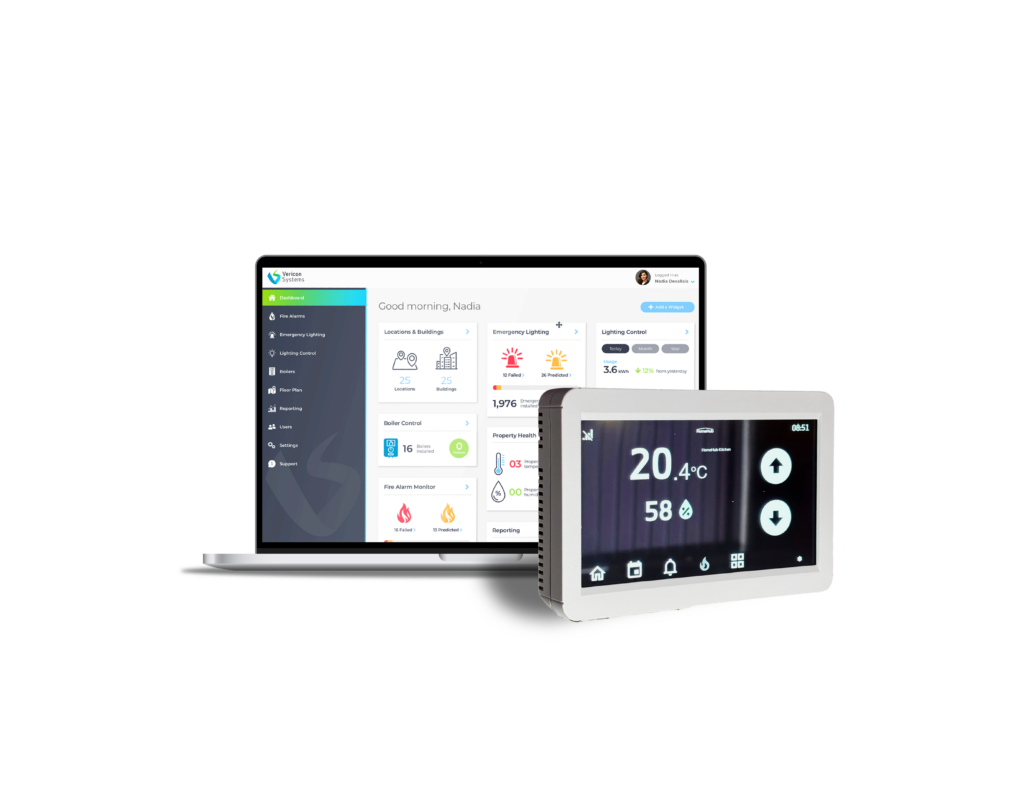




Recent Comments